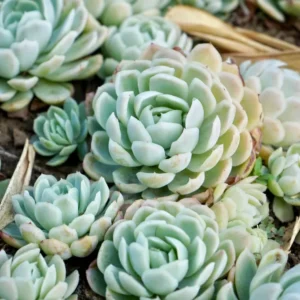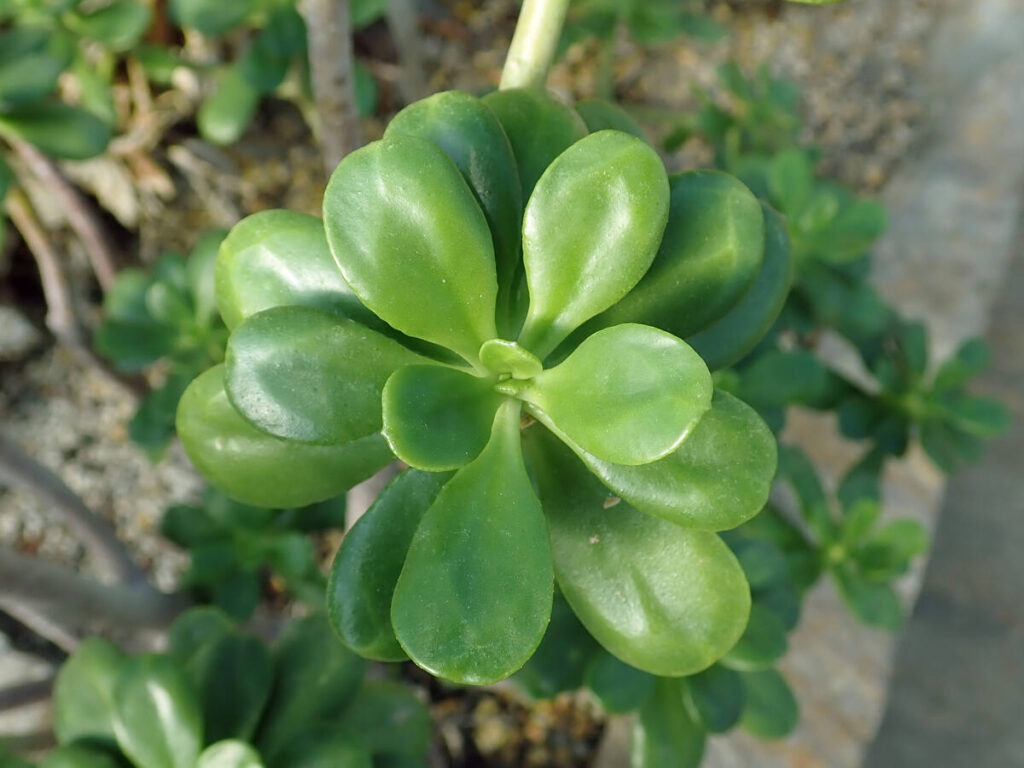
Tree stonecrop, Sedum dendroideum, brings fleshy green leaves and a branching silhouette to a succulent collection. In Brazil it is often called “bálsamo”, a name also used for unrelated plants. Knowing which plant you have is more useful than trusting the common name alone, especially when medicinal claims enter the conversation.
Which bálsamo is this?
Kew accepts Sedum dendroideum as a species in the Crassulaceae family, native from Mexico to Guatemala. It is a succulent subshrub, not a plant that invariably stays just 30 cm tall. A UFPR study described examined plants averaging around a metre, with glossy, fleshy leaves wider toward the tip and attached alternately along the stems. These observations describe the study material, not a promised size for every pot.
A close relative, Sedum praealtum, also appears in older references as S. dendroideum subsp. praealtum. Kew currently treats it separately. This guide and its photograph concern S. dendroideum; they should not be used to authenticate an unidentified plant sold under a shared popular name.
Start with light and drainage
Choose a bright position and a pot with drainage holes. The plant’s succulent habit makes persistent wetness a more important concern than frequent watering. For container growing, a cactus-and-succulent mix is a practical starting point. Water thoroughly, let the excess escape and wait for the mix to dry before watering again. Empty saucers or decorative outer pots instead of leaving the roots standing in water.
These are general succulent-growing principles, not a fixed schedule for every climate. A small exposed pot and a large sheltered pot dry at different rates. Check the actual mix rather than copying a weekly calendar.
Watch the plant as conditions change
When moving a plant into stronger sunlight, acclimatize it gradually rather than exposing shaded leaves abruptly. Growth stretched toward a window can indicate insufficient light. Soft, discoloured stems deserve a check of roots and moisture, not another automatic watering. Inspect new plants before placing them beside an established collection, and look around leaf bases for pests.
Succulents generally need modest feeding. Follow a suitable product’s directions and avoid using fertilizer as a substitute for adequate light or drainage. Remove dried material and trim only where needed to keep the plant within its available space.
Making a new plant from a stem
Stem cuttings are a standard method for Sedum. Take a healthy piece with clean tools, remove the lower leaves and let the cut surface dry and callus before placing it in a free-draining medium. Keep it from becoming waterlogged. New roots and growth, rather than a guaranteed two-week deadline, indicate progress. Iowa State’s succulent propagation guide explains why allowing the wound to dry helps reduce rotting.
Traditional use is not a treatment recommendation
S. dendroideum has a history of medicinal use, but that is different from proving an effective, safe home treatment. The 2009 study often cited for pain and inflammation tested isolated compounds in mice. Its findings do not establish a dose, effectiveness or safety for treating human eczema, joint pain or wounds.
Brazil’s Ministry of Health advises professional guidance when using medicinal plants because self-medication carries risks. Do not turn a garden specimen into a drink, food or wound preparation on the strength of its name or an animal experiment. This article focuses on ornamental cultivation and offers no medicinal recipe.
References
Kew: Sedum dendroideum; Kew: the name subsp. praealtum; Duarte and Zaneti: leaf morphology; Iowa State: growing succulents; Iowa State: propagation; University of Minnesota: succulent care; De Melo et al. (2009); Brazilian Ministry of Health: medicinal plants.
Cover: Salicyna / Wikimedia Commons, CC BY-SA 4.0. Sedum dendroideum subsp. dendroideum, Berlin Botanical Garden. Image resized and compressed, retained under the same license.