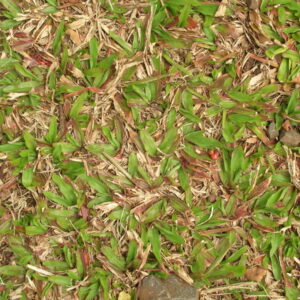
A fine, soft-looking grass can be tempting when planning a decorative garden. But “Korean grass”, “Japanese grass” and “Korean velvetgrass” are not reliable identification labels on their own. Before choosing a mowing height or deciding how much traffic a lawn can take, find out which Zoysia the supplier is offering.
This English adaptation takes a comparative approach because the name Z. tenuifolia has been applied in different ways. It does not identify the plants in the Portuguese article’s photographs as a particular species.
Three names worth separating
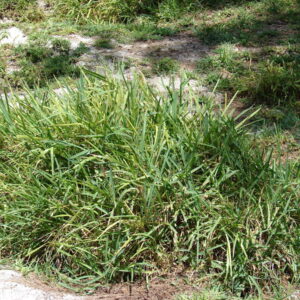
The University of Florida’s zoysiagrass guide distinguishes Z. japonica, often called Japanese or Korean lawngrass; Z. matrella, commonly called Manilagrass; and Z. pacifica, Korean velvetgrass. It describes pacifica as extremely fine and dense, with a puffy appearance from accumulated thatch and an ornamental role rather than a conventional lawn. These are not interchangeable names for one grass.
That comparison helps explain why a picture of rounded green cushions is not a sufficient specification for a lawn. A decorative surface and a regularly mown area used by people are different design goals. Decide which result you need before ordering material.
Why does Zoysia tenuifolia cause confusion?
Kew’s Plants of the World Online treats Z. tenuifolia Thiele as a synonym of Z. matrella, while accepting Z. pacifica separately. The latter includes the name Z. matrella var. pacifica in its synonymy.
The USDA’s GRIN records distinguish Z. tenuifolia Willd. ex Thiele from Z. tenuifolia auct., a name applied by authors to the plant it places under Z. matrella var. pacifica. The databases do not use identical taxonomic treatments. It would therefore be misleading simply to say that every plant called tenuifolia has been renamed pacifica.
You do not need to memorise that history to plan a garden. The useful lesson is to ask for a scientific identification and cultivar name, where applicable, rather than choosing care instructions from a common name alone.
Questions to ask before planting
Ask the grower which species or cultivar is supplied, whether it is intended for an ornamental bed or a walked-on lawn, and what established examples look like in your region. Clarify the expected maintenance and how the material will be established. A nursery label, invoice and specific care sheet are more useful than a promise of the “most beautiful grass”.
Check the site’s actual light, drainage and intended use. If people will cross a decorative planting, include a suitable path rather than expecting the planting itself to solve circulation. A small test area may reveal whether the visual effect fits the design before the whole space is committed.
Care should follow identification
Do not adopt a universal temperature, humidity target or mowing height for every grass sold as Korean. Nor does slow growth mean that an established planting will never need water. Species, cultivar, soil and local weather change the practical decisions.
The Florida source is valuable for distinguishing the grasses, but its regional calendar should not be copied unchanged into a Brazilian garden. Have local recommendations matched to the identified material. For the broader planning sequence, see our lawn planning and care guide.
A successful choice begins with the right plant for the intended use. The soft texture may be the attraction, but a clear identity is what makes the care advice meaningful.
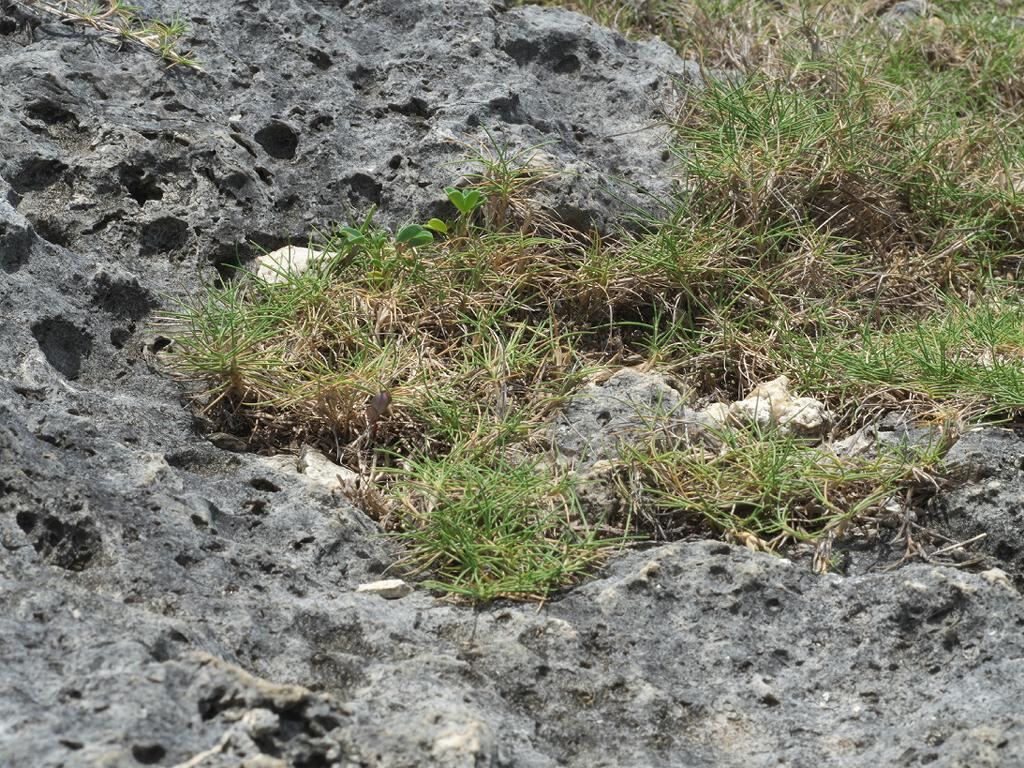
Cover: Zoysia pacifica photographed in Okinawa, Japan, identified by the source. Keisotyo / Wikimedia Commons, CC BY 4.0. Compressed. This image illustrates that species, not the identity of the grass in the original Portuguese article.