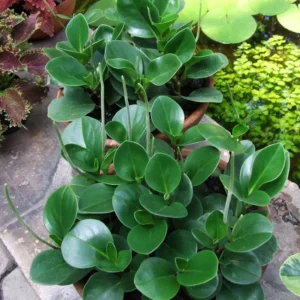
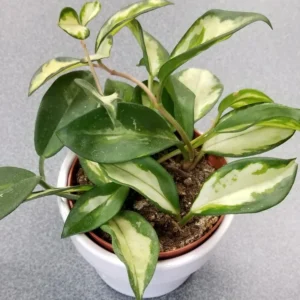
A jade plant (Crassula ovata) looks like a miniature tree: thick branches carry glossy, fleshy leaves, and an older specimen develops a sturdy trunk. It is a succulent, so its leaves and stems store water. That makes it forgiving of an occasional missed watering, but not of constantly soggy soil.
Also called friendship tree or money plant, it is associated with prosperity in some traditions. Those names express a cultural belief, not a promise that the plant will bring money. For gardeners, its real appeal is its shape and the ease with which new plants can be grown from cuttings.
Start with light and a suitable pot
Choose a bright position. Indoors, a window receiving some direct sun is preferable to a dark corner. Move a plant into stronger sunlight gradually: leaves accustomed to shade can burn if suddenly exposed to intense sun. Long, stretched growth is a reason to reassess the light rather than add more fertilizer.
Use a stable pot with drainage holes and a well-draining cactus or succulent mix. A heavy container helps balance the weight of the branches. Do not choose an oversized pot simply to avoid future repotting; the aim is a container that suits the root system and drains freely.
Water according to the plant, not the calendar
Check the potting mix before watering. Let it dry somewhat between thorough waterings, then allow excess water to drain away and empty the saucer. During cool weather or slow growth, the plant needs less water. A pot in a warm, sunny spot will not dry at the same rate as one indoors in winter.
Soft stems, persistent dampness and falling leaves can indicate too much water. Prolonged drought can also cause shrivelling and leaf loss, so do not diagnose the problem from a fallen leaf alone: check both the soil and the stem. Feed during active growth with a suitable fertilizer, following its label rather than increasing the dose to speed growth.
Making new plants
Jade can be propagated from stem or leaf cuttings. Use healthy material and clean tools. Allow a cut stem to dry and form a callus before placing it in a suitable free-draining mix. An intact leaf can also produce a new plant, although this is slower than starting with a branch.
Keep the cutting in bright light without harsh direct sun while it establishes. Avoid soaking the mix in an attempt to make roots appear faster. Once new growth develops, introduce the plant gradually to its longer-term position. Rooting speed varies with temperature and growing conditions.
Flowers and everyday checks
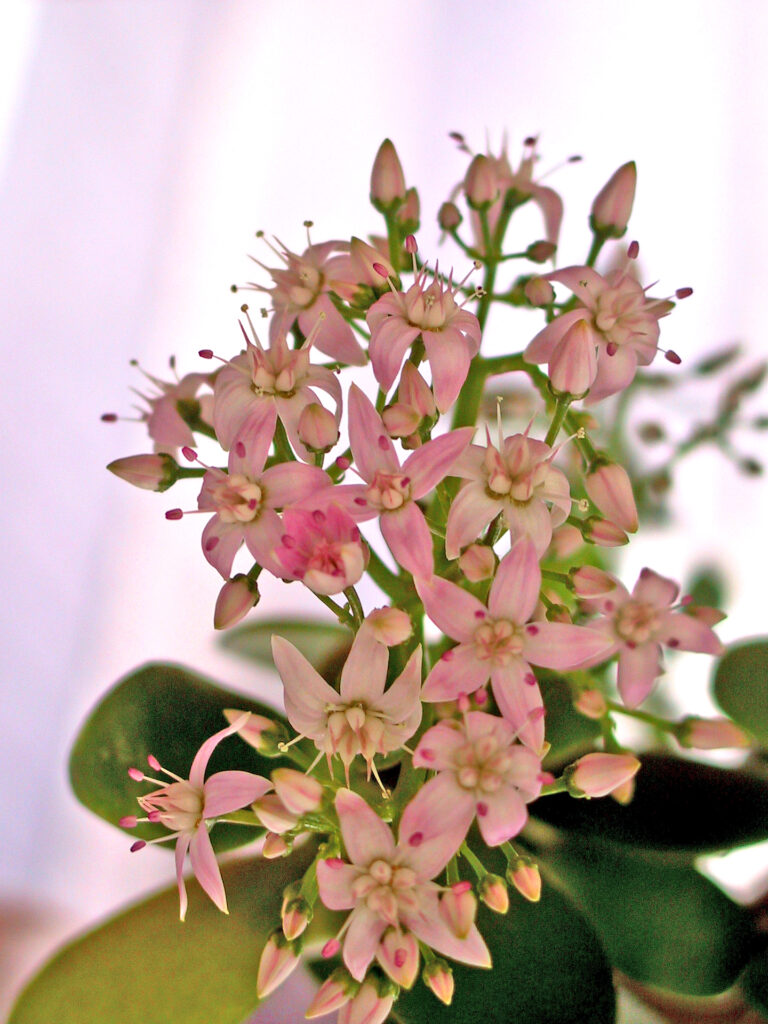
Mature plants can produce clusters of small white or pink star-shaped flowers. Flowering depends on maturity and growing conditions, including light and seasonal changes; it is not guaranteed for every indoor specimen. A healthy plant without flowers is not necessarily receiving the wrong care.
Inspect leaf joints and the undersides of leaves for pests, especially mealybugs. Isolate an affected pot from nearby plants and identify the problem before applying a treatment. Avoid improvised pesticide mixtures or repeated spraying without checking the product label and the plant’s response.
Keep it away from pets
Jade is toxic to pets if eaten. Place it where cats and dogs cannot chew the leaves, and keep fallen leaves out of reach. If ingestion is suspected, contact a veterinarian promptly. This is an ornamental plant, not an ingredient for food or home remedies.
Usamos cookies em nosso site para fornecer a melhor experiência de uso, lembrando suas preferências e visitas repetidas. Ao clicar em “Aceitar”, concorda com a utilização de TODOS os cookies.
Este site usa cookies para melhorar sua experiência enquanto você navega pelo site. Destes cookies, os cookies que são categorizados como necessários são armazenados no seu navegador, pois são essenciais para o

funcionamento das funcionalidades básicas do site. Também usamos cookies de terceiros que nos ajudam a analisar e entender como você usa este site. Esses cookies serão armazenados em seu navegador apenas com

o seu consentimento. Você também tem a opção de bloquear esses cookies. Porém, a desativação de alguns desses cookies pode afetar sua experiência de navegação.
Os cookies necessários são absolutamente essenciais para o funcionamento adequado do site. Esta categoria inclui apenas cookies que garantem funcionalidades básicas e recursos de segurança do site. Esses cookies não armazenam nenhuma informação pessoal.
Quaisquer cookies que possam não ser particularmente necessários para o funcionamento do site e sejam usados especificamente para coletar dados pessoais do usuário por meio de análises, anúncios e outros conteúdos incorporados são denominados cookies não necessários. É obrigatório obter o consentimento do usuário antes de executar esses cookies no seu site.