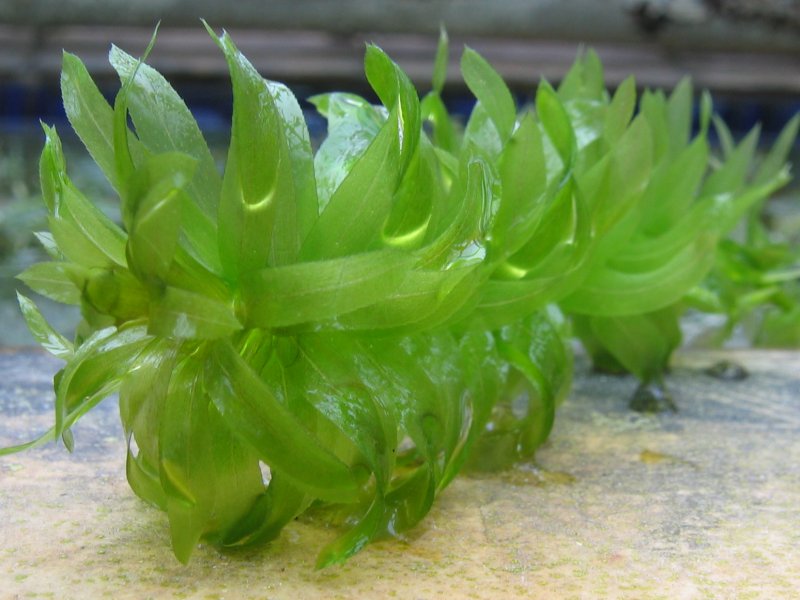
A green stem covered in small leaves can make an aquarium look fuller very quickly. Brazilian waterweed, widely sold as Egeria densa or anacharis, is known for that vigorous growth. The same ability also makes responsible containment essential: fragments must never reach natural waterways.
First, know which plant you have
This guide concerns Egeria densa, which Kew currently accepts as Elodea densa. These two scientific names refer to the same species. They do not mean Elodea canadensis, a different plant that is also called waterweed. The species is native to parts of South America, including Brazil; its presence elsewhere does not necessarily mean it is native there.
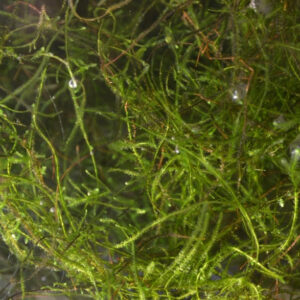
The leaves are narrow and arranged in rings around the stem, rather than round or oval. The botanical study Flora do Rio de Janeiro describes four leaves per ring in its material. White flowers rise above the water. Similar-looking aquatic plants can be difficult to separate, so a common name or one leaf count alone is not a reliable identification.
Planting and growth in an aquarium
Before acquiring or propagating it, check the rules where you live: restrictions vary between places. The following care notes apply only where keeping it is permitted, in a contained aquarium.
The aquarium plant producer Tropica recommends separating bundled stems, removing the anchor and damaged leaves, and planting individual stems with space between them. Remove leaves from the section inserted into the substrate. Roots then develop along the stems. It can also grow floating; being rooted is not its only viable form.
Light and available nutrients influence growth. Pale, thin shoots call for checking conditions, not automatically adding more fertilizer. A plant listed as easy still needs observation, trimming and suitable aquarium management. Do not treat a single temperature, pH or water-change percentage as a universal recipe for every tank and its animals.
It does not replace aquarium maintenance
Plants absorb nutrients, but this is not a promise of an algae-free aquarium. Nor does oxygen production during daylight guarantee enough oxygen at night. UF/IFAS explains that dense growth can deplete dissolved oxygen overnight through respiration. Keep growth controlled and assess the whole aquarium rather than relying on the plant as a substitute for its life-support system.
Every cutting needs containment
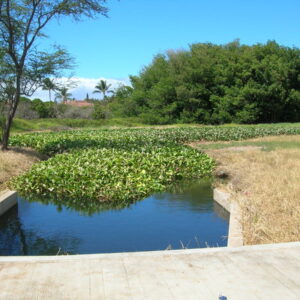
Small stem fragments can establish new growth. Collect trimmings and dispose of them according to local guidance; never release them, aquarium contents or unwanted plants into streams, ponds or drains leading outdoors. Dense escaped stands can displace other vegetation and interfere with waterways. A plant’s usefulness indoors does not justify introducing it outside.
For a different kind of aquatic planting, see our waterlily guide; those floating-leaved plants have different requirements.
Usamos cookies em nosso site para fornecer a melhor experiência de uso, lembrando suas preferências e visitas repetidas. Ao clicar em “Aceitar”, concorda com a utilização de TODOS os cookies.
Este site usa cookies para melhorar sua experiência enquanto você navega pelo site. Destes cookies, os cookies que são categorizados como necessários são armazenados no seu navegador, pois são essenciais para o

funcionamento das funcionalidades básicas do site. Também usamos cookies de terceiros que nos ajudam a analisar e entender como você usa este site. Esses cookies serão armazenados em seu navegador apenas com

o seu consentimento. Você também tem a opção de bloquear esses cookies. Porém, a desativação de alguns desses cookies pode afetar sua experiência de navegação.
Os cookies necessários são absolutamente essenciais para o funcionamento adequado do site. Esta categoria inclui apenas cookies que garantem funcionalidades básicas e recursos de segurança do site. Esses cookies não armazenam nenhuma informação pessoal.
Quaisquer cookies que possam não ser particularmente necessários para o funcionamento do site e sejam usados especificamente para coletar dados pessoais do usuário por meio de análises, anúncios e outros conteúdos incorporados são denominados cookies não necessários. É obrigatório obter o consentimento do usuário antes de executar esses cookies no seu site.