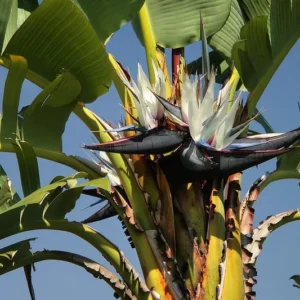
The white egret orchid looks as though a tiny bird has paused in flight. Its beauty is real, but so are its particular growing needs. Unlike an orchid kept leafy indoors throughout the year, this plant follows a seasonal rhythm. Understanding that rhythm matters more than following a fixed weekly watering schedule.
One orchid, two familiar scientific names
Kew accepts Pecteilis radiata; Habenaria radiata is a synonym still used in cultivation. It is a tuberous orchid native to parts of eastern Asia, including Japan, Korea, China and the Russian Far East. The names refer to the same species, not two different orchids.
Why the flower has fringed wings
The “wings” are the fringed side lobes of the lip, a specialised petal. A study reported by Kobe University in 2022 found that pollinating hawkmoths grip this fringe while feeding. Experimental flowers with the fringe removed produced fewer healthy seeds per fruit. The delicate outline is therefore more than decoration: it helps the visitor hold a stable position.
Follow the active season and the resting season
The Pacific Bulb Society describes a small plant, about 15–40 cm tall, growing from tubers in seasonal bogs. Its cultivation notes emphasise continuous moisture during growth and a dry dormant phase. This is a seasonal wetland plant, not a tree-growing orchid to be treated exactly like every epiphytic species.
The useful lesson is the change between seasons. A pot with fresh leaves and an actively growing shoot is not in the same condition as one whose above-ground growth has finished. Before watering, ask which phase the plant is in. Do not interpret a normal seasonal rest as an automatic request for extra water or fertiliser.
Practical points before planting
The RHS recommends a sunny position and free-draining orchid medium, generous watering in growth and very little water during dormancy, keeping the medium just moist. Its dormant-temperature guidance is cool and frost-free, at 1–10°C. New tubers replace depleted ones; separate these for propagation as growth restarts. Avoid wet dormant conditions, which can rot tubers.
That guidance is not a promise that the plant will thrive on every tropical balcony. If your climate stays warm throughout the year, discuss the resting conditions with a specialist grower before buying. Likewise, do not copy the months of a Northern Hemisphere guide: identify the plant’s stage and your local season.
“Sunny” should also be read in context, not as a reason to move a newly purchased plant straight into the hottest position available. Ask how it was grown, observe the actual exposure and adjust gradually. Choose the location for the plant’s needs rather than only for the display.
Choose documented nursery-propagated stock. A photograph of an unusual flower is a good reason to learn about its habitat, not to remove it from that habitat. For a home collection, the most useful purchase is a correctly identified plant whose seasonal care you can realistically provide.
Usamos cookies em nosso site para fornecer a melhor experiência de uso, lembrando suas preferências e visitas repetidas. Ao clicar em “Aceitar”, concorda com a utilização de TODOS os cookies.
Este site usa cookies para melhorar sua experiência enquanto você navega pelo site. Destes cookies, os cookies que são categorizados como necessários são armazenados no seu navegador, pois são essenciais para o

funcionamento das funcionalidades básicas do site. Também usamos cookies de terceiros que nos ajudam a analisar e entender como você usa este site. Esses cookies serão armazenados em seu navegador apenas com

o seu consentimento. Você também tem a opção de bloquear esses cookies. Porém, a desativação de alguns desses cookies pode afetar sua experiência de navegação.
Os cookies necessários são absolutamente essenciais para o funcionamento adequado do site. Esta categoria inclui apenas cookies que garantem funcionalidades básicas e recursos de segurança do site. Esses cookies não armazenam nenhuma informação pessoal.
Quaisquer cookies que possam não ser particularmente necessários para o funcionamento do site e sejam usados especificamente para coletar dados pessoais do usuário por meio de análises, anúncios e outros conteúdos incorporados são denominados cookies não necessários. É obrigatório obter o consentimento do usuário antes de executar esses cookies no seu site.