A slipper-shaped pouch makes Paphiopedilum flowers instantly recognisable. Some have softly mottled leaves; others carry several flowers on a tall stem. Their variety is part of the appeal, but it also explains why a single care recipe can be misleading. Start with the name on the label, then match the plant to the conditions you can actually provide.
What is a slipper orchid?
Paphiopedilum is a genus in Orchidaceae, not one species. The American Orchid Society’s introduction explains that the pouch is the labellum, a specialised floral part. Plants grow as leafy fans connected by a short rhizome. Flowers and leaves vary considerably among species and hybrids.
Many grow in loose organic material near the forest floor, but the genus also includes plants associated with rocks or trees. “Terrestrial orchid” therefore does not mean that ordinary compact garden soil is automatically suitable. The aim in a pot is a healthy root environment, not a literal imitation of a flowerbed.
Identify the growing group
The New York Botanical Garden guide distinguishes warm-growing mottled-leaf plants, cooler-growing green-leaf plants and multifloral types that generally need warmth and more light. There are exceptions. Leaf pattern is a useful clue, not a complete identification.
Ask the nursery for the species or hybrid name and its preferred conditions. A plant chosen for a comfortable room should not need the same treatment as a specialist species from a cooler habitat. Record what the seller recommends and compare it with a reliable species-specific source before changing temperature or watering dramatically.
Light without overheating the plant
Bright, filtered light is a good starting point for many commonly grown types. The AOS care sheet also notes that artificial lighting can work. Avoid assuming that a dark decorative corner provides enough light for flowering.
Window direction alone is not a recipe: nearby buildings, curtains, glass and your latitude change the exposure. Watch how sunlight reaches the leaves over the day, especially in hot weather. Move a plant gradually when changing its position rather than taking it straight from shade into strong sun.
Keep moisture and air in balance
These orchids lack the water-storage pseudobulbs found in many other orchids. Let the surface begin to dry, but avoid prolonged complete drying or a permanently saturated pot. NYBG stresses both drainage and air movement. Empty runoff water and keep the plant out of a standing-water saucer.
Higher humidity does not mean wetter leaves all day. A humid, stagnant enclosure can create a different problem from a dry room. Check the medium, roots and ventilation together. Watering frequency will change with temperature, pot size and the condition of the potting mix; a weekly reminder is a prompt to inspect, not an instruction to water regardless.
Potting and feeding
Use an appropriate orchid medium and a pot that comfortably fits the roots. The RHS growing guide advises avoiding an unnecessarily large container and repotting after flowering. Choose timing according to the plant and local season, rather than copying the calendar months of a British guide.
Feed lightly with an orchid fertiliser according to its label. More fertiliser is not a shortcut to flowers, especially when roots are struggling. Before adding lime or changing the mix, confirm whether the particular species calls for it; the genus includes different habitat preferences.
Divide plants, not isolated leaves
Division is possible when a healthy clump has enough well-rooted growth to separate. A division is not simply three loose leaves. The RHS describes separating a rooted offshoot from the edge of a large clump after flowering. If the plant is small or weak, leave it intact rather than dividing it for the sake of multiplying a collection.
Seed propagation is a specialist route, usually involving controlled laboratory-style conditions. It is not equivalent to sprinkling ordinary garden seed into a pot. For most home growers, a healthy nursery-propagated plant is a more practical beginning.
Enjoy the flowers without sacrificing the plant
Choose a display position that still meets its growing needs, with access for watering and inspection. A table or shelf can work only if the light and environment are suitable. Do not assume a hanging display or vertical garden is appropriate just because the flowers look attractive there.
Inspect new plants before placing them beside an established collection. If you notice insects, damage or persistent decline, identify the cause before choosing a treatment; “organic” does not automatically mean harmless. Long-lasting flowers are a reward for steady conditions, not a reason to keep the plant in a place that suits only the decor.
Photo credit
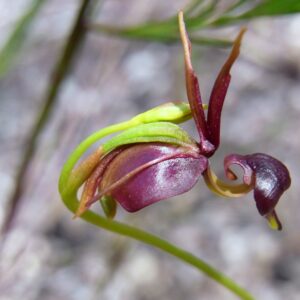
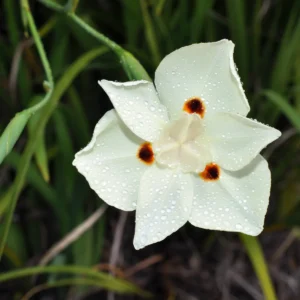
Featured photograph: Paphiopedilum hennisianum, by Dalton Holland Baptista, CC BY-SA 3.0. Reduced version; the same licence applies to the photograph. It illustrates one species, not every plant in this varied genus.
Usamos cookies em nosso site para fornecer a melhor experiência de uso, lembrando suas preferências e visitas repetidas. Ao clicar em “Aceitar”, concorda com a utilização de TODOS os cookies.
Este site usa cookies para melhorar sua experiência enquanto você navega pelo site. Destes cookies, os cookies que são categorizados como necessários são armazenados no seu navegador, pois são essenciais para o

funcionamento das funcionalidades básicas do site. Também usamos cookies de terceiros que nos ajudam a analisar e entender como você usa este site. Esses cookies serão armazenados em seu navegador apenas com

o seu consentimento. Você também tem a opção de bloquear esses cookies. Porém, a desativação de alguns desses cookies pode afetar sua experiência de navegação.
Os cookies necessários são absolutamente essenciais para o funcionamento adequado do site. Esta categoria inclui apenas cookies que garantem funcionalidades básicas e recursos de segurança do site. Esses cookies não armazenam nenhuma informação pessoal.
Quaisquer cookies que possam não ser particularmente necessários para o funcionamento do site e sejam usados especificamente para coletar dados pessoais do usuário por meio de análises, anúncios e outros conteúdos incorporados são denominados cookies não necessários. É obrigatório obter o consentimento do usuário antes de executar esses cookies no seu site.