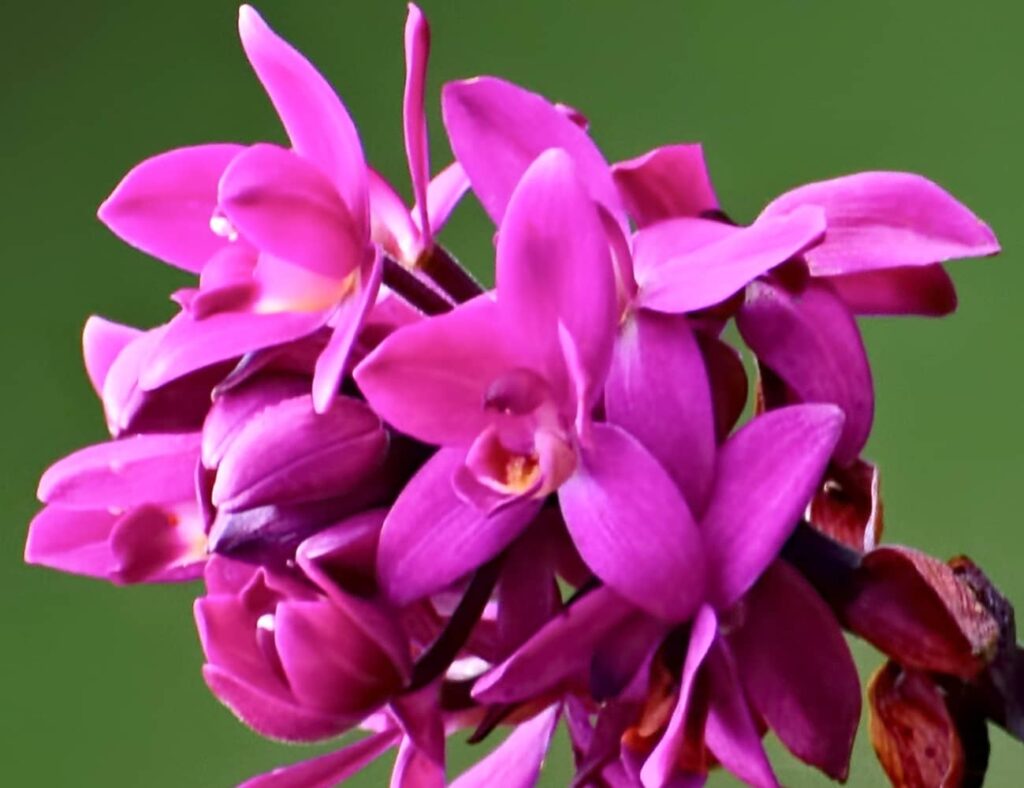
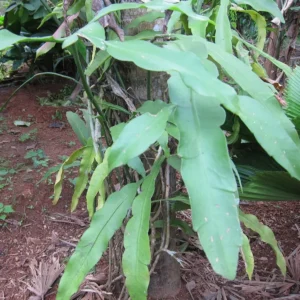
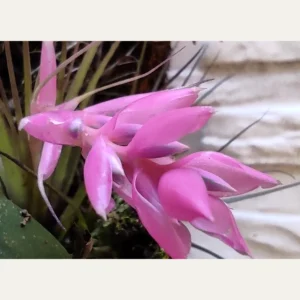
An orchid does not always need a tree trunk or a basket of bark. Spathoglottis unguiculata, known in Brazil as orquídea-grapete, is a terrestrial orchid grown for its purple flowers and grape-like scent. Its long, pleated leaves also make an attractive clump between flowering periods.
The English common name recorded by Singapore’s NParks is clawed Spathoglottis. The scientific name is useful when buying a plant: common names can cover more than one orchid, and a similar-looking flower does not establish its identity.
What kind of orchid is it?
This perennial belongs to the orchid family, Orchidaceae. Unlike orchids that normally grow attached to branches, it grows in the ground. Kew lists its native distribution as New Caledonia and Vanuatu in the southwestern Pacific. It should not be described simply as a species native to Malaysia or the Philippines.
Its purple blooms appear in flower clusters above long green foliage. Fragrance is part of its appeal, but flowering is not a fixed appointment: light, plant condition and the growing environment influence the result. Avoid treating an advertised number of flowering days as a guarantee.
Choosing a place in the garden
A bright position is important. NParks lists full sun for this tropical species, together with moderate watering and well-drained soil. A plant coming from a shaded nursery should be introduced to stronger light gradually rather than moved abruptly into the hottest exposure.
In a bed, check where rainwater collects before planting. A low spot that remains saturated is a poor choice. For a container, choose drainage holes and a growing medium that retains some moisture without becoming a dense, waterlogged mass. A terrestrial orchid needs a suitable root environment, not simply the same bark-only arrangement used for every other orchid.
Planting step by step
Start with a healthy nursery-grown plant. Prepare enough space for its root ball, loosen compacted ground and improve the planting area where needed. Keep the base at approximately its previous level rather than burying the leaf bases deeply.
Settle the growing medium around the roots without compressing it excessively. Water after planting and let the excess drain away. In the following days, check moisture and watch how the leaves respond. A newly planted specimen has not yet established the same root system as a mature clump.
Water, feeding and maintenance
Water according to conditions, not a fixed weekly timetable. A pot in a hot, exposed position may dry much faster than a sheltered bed after rain. Check the growing medium first, and do not leave the container standing in a saucer of water.
If you use fertiliser, choose one suitable for the plant and follow its label. More product is not a shortcut to more flowers. It is better to correct poor light or drainage than to keep increasing fertiliser while the underlying problem remains.
Remove fully dried flower stems and dead foliage with clean tools. Do not cut off a healthy flower spike merely because its first flowers have faded. If a leaf has a mark, inspect it and the rest of the plant before assuming that every blemish is an infectious disease.
Watching for problems
Check young growth and the undersides of leaves regularly. Slugs and snails can damage tender tissues; sucking insects also deserve attention. Our guide to mealybugs and scale insects explains how to identify them before choosing a treatment.
Soft, declining growth in wet conditions calls for a review of drainage and roots, not another routine watering. Keep an affected pot separate while identifying the cause. For multiplication, division of a well-established clump is a practical option; avoid reducing a weak plant into tiny pieces.
The main advantage of this orchid is the combination of foliage, flowers and scent in a garden plant. A suitable position and attentive, moderate care matter more than a complicated calendar of interventions.
Usamos cookies em nosso site para fornecer a melhor experiência de uso, lembrando suas preferências e visitas repetidas. Ao clicar em “Aceitar”, concorda com a utilização de TODOS os cookies.
Este site usa cookies para melhorar sua experiência enquanto você navega pelo site. Destes cookies, os cookies que são categorizados como necessários são armazenados no seu navegador, pois são essenciais para o

funcionamento das funcionalidades básicas do site. Também usamos cookies de terceiros que nos ajudam a analisar e entender como você usa este site. Esses cookies serão armazenados em seu navegador apenas com

o seu consentimento. Você também tem a opção de bloquear esses cookies. Porém, a desativação de alguns desses cookies pode afetar sua experiência de navegação.
Os cookies necessários são absolutamente essenciais para o funcionamento adequado do site. Esta categoria inclui apenas cookies que garantem funcionalidades básicas e recursos de segurança do site. Esses cookies não armazenam nenhuma informação pessoal.
Quaisquer cookies que possam não ser particularmente necessários para o funcionamento do site e sejam usados especificamente para coletar dados pessoais do usuário por meio de análises, anúncios e outros conteúdos incorporados são denominados cookies não necessários. É obrigatório obter o consentimento do usuário antes de executar esses cookies no seu site.