A living Christmas tree can be more than a decoration for December. With the right choice, it can become a plant you enjoy through the year. But a tree that looks perfect in the shop is not necessarily suited to your living room, your climate or the space available after the holidays.
This guide compares the conifers commonly sold for Christmas in Brazil and explains what to check before bringing one home. The aim is not to promise that every tree will survive indoors. It is to choose a plant whose needs you can meet, rather than trying to rescue the wrong tree after the decorations come down.
Start with the roots, not the ornaments
A cut Christmas tree has no functioning root system and cannot be planted afterward. A rooted tree is different, but a pot alone does not prove that it has been grown in a container: some trees are dug up and potted shortly before sale. Ask the nursery how the plant was produced and where it should live after Christmas. The Royal Horticultural Society distinguishes these types when discussing Christmas-tree care.
Before buying, ask for the scientific name and cultivar, the mature size and the light requirements. Then consider your actual home. Is the intended spot bright? Is there a suitable outdoor position for a garden conifer? Could the plant eventually outgrow the balcony or planting area? These questions matter more than the number of ornaments it can carry.
Why a Christmas tree may decline indoors
There is no single countdown to a tree’s death. Species, root condition, light, temperature, watering and drainage all influence the outcome. Browning branches do not identify one cause by themselves: inspect the growing conditions before responding with more water or moving the plant abruptly into a different exposure.
Most outdoor conifers should be treated as temporary indoor visitors, not permanent houseplants. Christmas in Brazil also falls in summer, so advice written for heated houses during a northern winter needs context. A cool-climate nursery recommendation is not a guarantee for a hot Brazilian apartment.
Six familiar choices, with important differences
1. Norfolk Island pine: a genuine indoor option
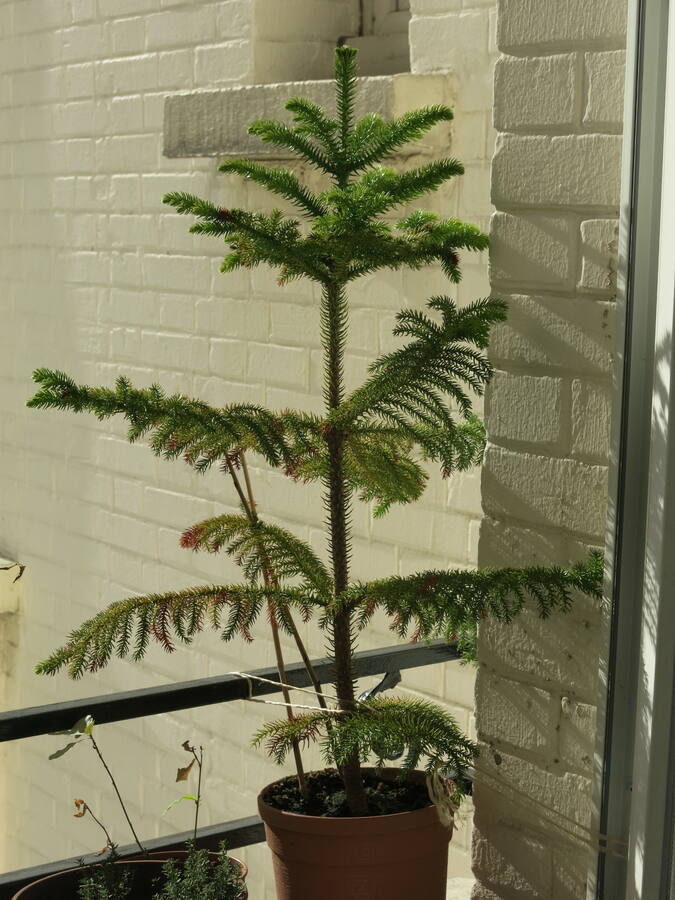
Araucaria heterophylla is native to Norfolk Island, not the Brazilian araucaria forests. Its tiered branches make it a popular living Christmas tree. NC State Extension describes it as suitable for houseplant cultivation, with bright light and a well-drained potting mix. Avoid keeping the roots persistently wet. Outdoors it becomes a very large tree, so planting a small holiday specimen in the ground requires long-term planning. It is not a miniature tree simply because it was sold in a small pot.
2. Lemon cypress or Goldcrest
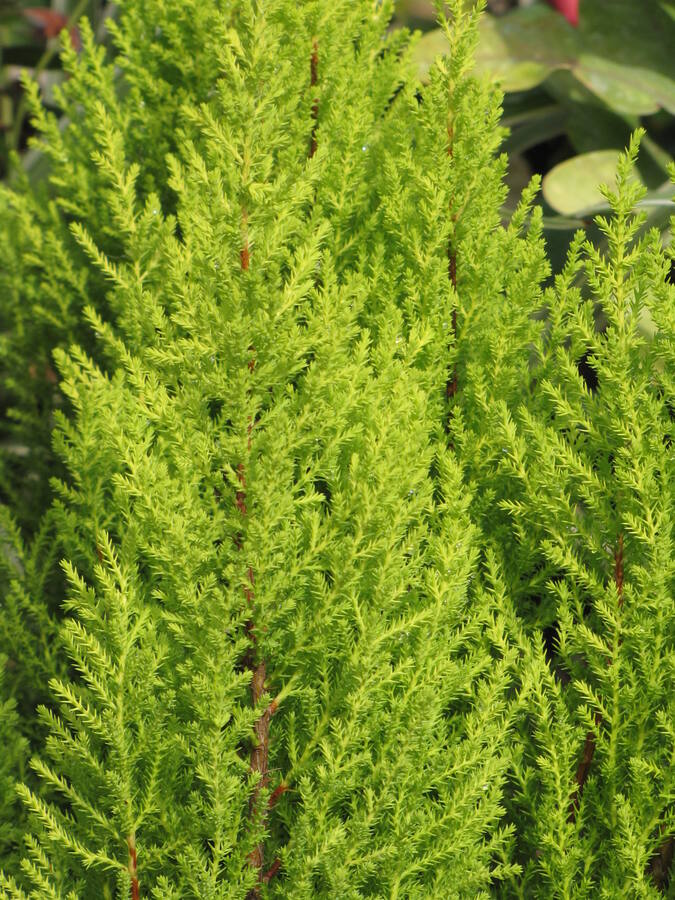
The golden foliage and citrus scent make Hesperocyparis macrocarpa ‘Goldcrest’, also sold under Cupressus macrocarpa, appealing. In Brazil it is often associated with the name tuia-holandesa. The cultivar was selected in a British nursery; that is different from the native origin of the species. NC State emphasizes drainage and notes that partial shade can help in hotter climates. Do not translate its bright appearance into a promise that it will tolerate a dark room for weeks.
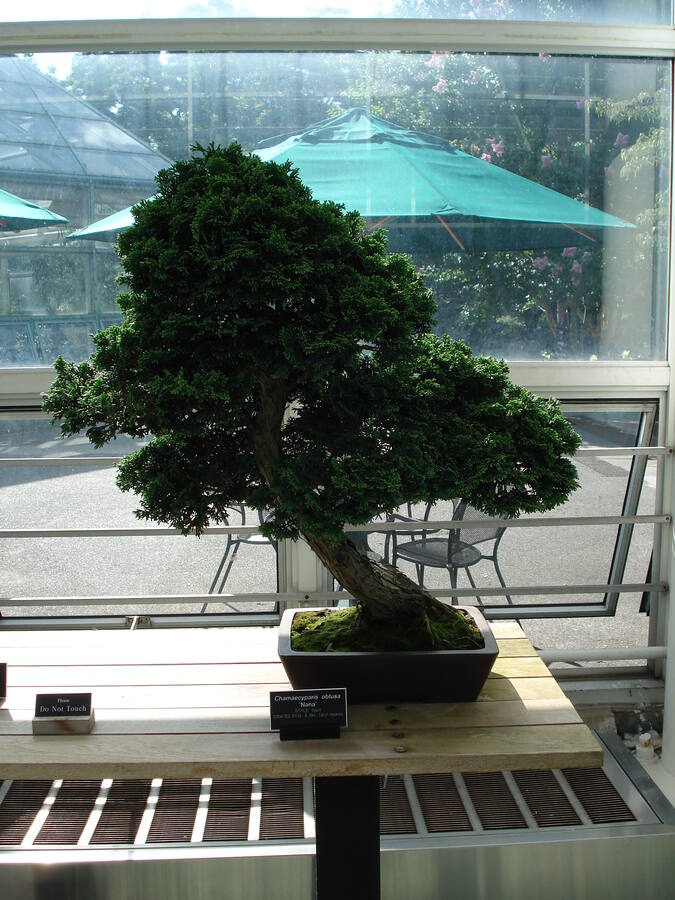
Chamaecyparis obtusa, sometimes sold as tuia-europa in Brazil, includes both large trees and compact cultivars. That distinction changes whether it fits a small garden. According to NC State Extension, it needs well-drained soil, generally prefers sun and benefits from protection from wind. Ask for the cultivar rather than assuming every small specimen will stay small.
A trained hinoki bonsai at Brooklyn Botanic Garden, not the natural size of an ordinary nursery tree. Jeffrey O. Gustafson, CC BY-SA 3.0. Resized and compressed.
4 and 5. Stricta and Kaizuka Chinese junipers
‘Stricta’ and ‘Kaizuka’ are selections associated with Juniperus chinensis. Choose them for their garden form, not as interchangeable indoor trees. Chinese junipers vary greatly in shape and eventual size; NC State describes sunny positions and well-drained soil as central to their cultivation. The tolerance of an established outdoor plant does not mean a small potted specimen can be left without attention.
6. Italian cypress
Cupressus sempervirens is familiar for its upright garden forms. It is an outdoor tree, not a permanent solution for a dim corner. NC State notes that drought tolerance develops with age, while young plants still need appropriate watering. Poor drainage can encourage root problems. Decide on its eventual planting position before choosing it for a temporary display.
Water and light: avoid a rigid calendar
“Twice a week” is not a universal watering rule. A small pot in a warm, bright place can behave differently from a larger container in a cooler room. Check the growing medium and follow advice for the identified plant. Keep drainage holes unobstructed and do not let a decorative outer container hide prolonged waterlogging.
Likewise, placing the tree near a window does not automatically provide enough light. Notice how much daylight reaches the foliage and avoid using the darkest corner simply because it suits the furniture. For outdoor conifers brought in temporarily, keep the display brief and plan their return to suitable conditions. A Norfolk Island pine grown as a houseplant is a different case from a garden cypress.
Decorate without forgetting electrical safety
Use light ornaments that do not pull down the branches. LED lights generally produce less heat than conventional decorative lights, but they do not remove electrical risks. Check the manufacturer’s instructions and discard damaged sets. Unplug lights before arranging them, switch them off before sleeping or leaving home, and keep connections away from moisture. Outdoor decorations need products intended for outdoor exposure. These precautions are supported by Neoenergia and the Paraná Fire Department.
Could your Christmas tree be a tropical plant?
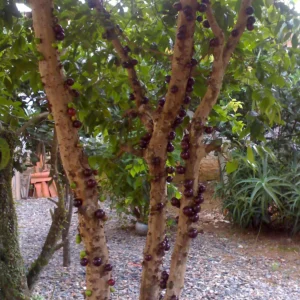
It does not have to be a conifer. A tree you already grow successfully can inspire a more personal display, especially outdoors. The original Brazilian guide suggests jabuticaba, pitanga and acerola. Treat these as ideas to evaluate for your garden, not a list of plants guaranteed to remain indoors for several weeks.
Acerola, for example, is a tropical and subtropical fruit crop, as discussed in Embrapa’s cultivation guide. Being a fruit tree suited to a warm region does not make it a low-light houseplant. Decorating a plant in its established position can be more sensible than moving it into an unsuitable room.
The best choice is the one with a future
Before paying, answer one question: where will this tree live in January? If you have an appropriate place and know the species’ needs, the holiday purchase can become part of your home or garden. If there is no suitable long-term spot, choose a different form of decoration rather than relying on a survival promise.
Cover photograph: potted Araucaria heterophylla, listed under its synonym Araucaria excelsa. Tangopaso, public domain. Orientation corrected, resized and compressed. The image illustrates the plant’s form; some tips show browning.
Usamos cookies em nosso site para fornecer a melhor experiência de uso, lembrando suas preferências e visitas repetidas. Ao clicar em “Aceitar”, concorda com a utilização de TODOS os cookies.
Este site usa cookies para melhorar sua experiência enquanto você navega pelo site. Destes cookies, os cookies que são categorizados como necessários são armazenados no seu navegador, pois são essenciais para o

funcionamento das funcionalidades básicas do site. Também usamos cookies de terceiros que nos ajudam a analisar e entender como você usa este site. Esses cookies serão armazenados em seu navegador apenas com

o seu consentimento. Você também tem a opção de bloquear esses cookies. Porém, a desativação de alguns desses cookies pode afetar sua experiência de navegação.
Os cookies necessários são absolutamente essenciais para o funcionamento adequado do site. Esta categoria inclui apenas cookies que garantem funcionalidades básicas e recursos de segurança do site. Esses cookies não armazenam nenhuma informação pessoal.
Quaisquer cookies que possam não ser particularmente necessários para o funcionamento do site e sejam usados especificamente para coletar dados pessoais do usuário por meio de análises, anúncios e outros conteúdos incorporados são denominados cookies não necessários. É obrigatório obter o consentimento do usuário antes de executar esses cookies no seu site.