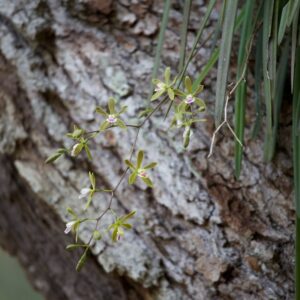
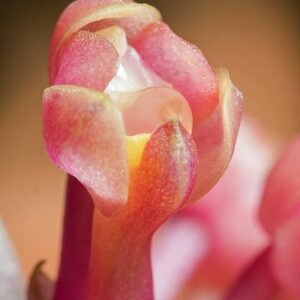
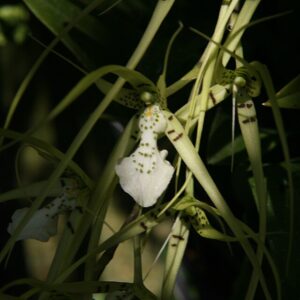
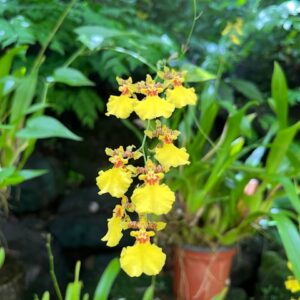
The bamboo orchid, Arundina graminifolia, is an orchid with upright, reed-like stems, not a bamboo. Kew recognises it as a species native to tropical and subtropical Asia. Its roots grow in the ground: treating it exactly like an orchid mounted on a tree misses an important difference.
What the plant looks like
NParks describes clumps reaching about 1.2–2.5 metres, with narrow leaves and flowers at the stem tips. The pale petals contrast with a rosy-purple lip and yellow central marking. It provides vertical structure rather than trailing growth, so leave room for the stems instead of expecting a cascading plant.
A succession of flowers can keep a plant attractive, but each individual flower is short-lived, as the American Orchid Society notes. Repeat flowering is not a promise that one bloom will last for weeks or that every plant flowers continuously in every climate.
Light and position
The American Orchid Society recommends warmth, full sunlight and regular watering. It suggests large pots with a terrestrial mix, greenhouse beds or outdoor cultivation in the tropics. A dim living room is therefore not a reliable choice simply because the plant is sold as an orchid.
GardeningSG recommends several hours of direct sun; lower light can mean fewer flowers. Think first about the available light, then about the decorative position. If the leaves look healthy but flowering is poor, review the location before trying to solve everything with fertiliser.
Water and soil
Keep the root zone moist but well drained. NParks specifically advises against letting it dry out between waterings. The aim is neither prolonged drought nor stagnant water. Check the mix rather than adopting a fixed weekly schedule, especially when a pot dries faster in hot weather.
Use a container with drainage holes and a suitable airy terrestrial mix. Good drainage must be built into the container and substrate; do not rely on a decorative layer of stones to make unsuitable soil work.
Clump care and propagation
GardeningSG describes division of the shoots produced by a clump. The American Orchid Society also records plantlets developing after flowering. Retain healthy growth and do not cut all green stems simply because a flower has faded. Get advice before dividing a weak or very small plant.
Inspect new growth for pests and check watering and heat stress if the plant repeatedly wilts. Correcting the growing conditions matters alongside dealing with the visible problem. Buy cultivated plants rather than removing orchids from the wild.
Usamos cookies em nosso site para fornecer a melhor experiência de uso, lembrando suas preferências e visitas repetidas. Ao clicar em “Aceitar”, concorda com a utilização de TODOS os cookies.
Este site usa cookies para melhorar sua experiência enquanto você navega pelo site. Destes cookies, os cookies que são categorizados como necessários são armazenados no seu navegador, pois são essenciais para o

funcionamento das funcionalidades básicas do site. Também usamos cookies de terceiros que nos ajudam a analisar e entender como você usa este site. Esses cookies serão armazenados em seu navegador apenas com

o seu consentimento. Você também tem a opção de bloquear esses cookies. Porém, a desativação de alguns desses cookies pode afetar sua experiência de navegação.
Os cookies necessários são absolutamente essenciais para o funcionamento adequado do site. Esta categoria inclui apenas cookies que garantem funcionalidades básicas e recursos de segurança do site. Esses cookies não armazenam nenhuma informação pessoal.
Quaisquer cookies que possam não ser particularmente necessários para o funcionamento do site e sejam usados especificamente para coletar dados pessoais do usuário por meio de análises, anúncios e outros conteúdos incorporados são denominados cookies não necessários. É obrigatório obter o consentimento do usuário antes de executar esses cookies no seu site.