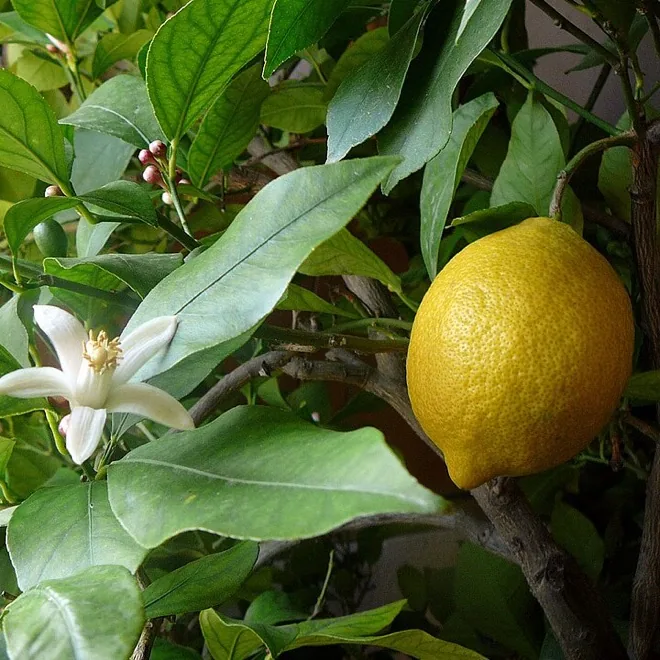
Want to harvest your own lemons? Check the nursery label for Citrus × limon and the cultivar offered. In Brazil, the name limão-siciliano distinguishes true lemons from Tahiti and Galego, which are acid limes despite also being called limão locally. Choosing the right tree is the first step toward harvesting the fruit you expect.
Plant profile
Scientific name: Citrus × limon.
Family: Rutaceae.
Group: fruiting citrus.
Uses: culinary fruit and ornamental flowers.
Light: a sunny outdoor position.
Usual commercial propagation: grafting, including budding, which joins parts of two plants.
Buying a tree: identify both the fruiting cultivar and the rootstock.
How to choose a lemon tree
Ask for an identified, grafted plant from a known source. The scion is the grafted part that forms the canopy and produces fruit. The rootstock supplies the roots and the lower stem. ESALQ/USP stresses that the two must be compatible and recommends soil analysis before correcting fertility.
Ask the nursery: “What is the rootstock, and is it compatible with this lemon cultivar?” Brazil’s IAC describes Siciliano IAC 262 as vigorous and incompatible with trifoliate orange and its hybrids, a group used as rootstocks. That restriction concerns the named material; do not generalize it to every lemon. Equally, do not buy solely on a promise of dwarfing. Confirm the combination, especially for a container-grown tree.
Planting in the ground
1. Check light and space. Observe sunlight through the day and allow room for the canopy. A corner shaded by walls or other trees is not a good choice.
2. Check drainage after rain. If water pools or the subsoil is compacted, assess improvements or choose another site before digging.
3. Protect the root ball. Plant on a mild day if possible. Keep the nursery root ball intact and do not bury the root collar, where stem meets roots, or the graft union.
4. Settle and water. Fill around the sides, firm gently and water. Use a support stake if needed for wind stability, with ties that do not constrict the stem.
Embrapa’s citrus planting guidance for northeastern Brazil keeps the root collar slightly above the surrounding ground and emphasizes waterlogging risks. These principles are useful, but soil correction and feeding should follow testing and regional advice, not copied doses from another property.
Caring for a lemon tree in a pot
Choose a container with clear drainage outlets and a free-draining growing mix. A decorative outer pot must not leave the inner pot standing in water. Before watering, check moisture; water and allow excess to drain, adjusting the interval to heat, rainfall and growth rather than a fixed number of days.
Watch root development. When roots fill the container, plan a move to a slightly larger pot while preserving the root ball. Apply fertilizer according to its label and advice suited to the crop. Do not increase concentration to force flowering.
Match seasonal advice to your climate. A British citrus calendar should not be copied unchanged in Brazil or another region. On balconies, plan for space, container stability and access for maintenance.
Why is my lemon tree not fruiting?
A seed-grown plant may take several years to fruit. Check sunlight, water and pruning history too. Grafting does not guarantee a harvest date; drastic pruning or extra fertilizer is no substitute for evaluating growing conditions.
Look at where new shoots start. Growth below the graft union belongs to the rootstock, not the purchased fruiting cultivar. Ask the nursery to show you the union so you can recognize and manage these shoots without confusing them with productive branches.
Yellow leaves, blotches and fruit drop
Yellowing does not automatically mean a fertilizer shortage. Record when it began, which branches are affected, moisture conditions and any recent changes in care. Bring that information and photographs to a qualified adviser rather than applying a homemade mixture without a diagnosis.
Fundecitrus describes citrus greening symptoms including yellow and green blotches that are not symmetrical across the leaf, misshapen fruit and premature fruit drop. These signs warrant expert assessment but do not confirm the disease on their own. Contact your local plant-health authority or agricultural extension service if concerned, and do not distribute propagation material from a suspect plant.
When to harvest lemons
Lemons tend to turn yellow, but they need not be fully yellow at harvest. The University of Florida guide describes harvesting mature pale-green fruit that yellows afterward. Ask the nursery about the expected size and appearance of your cultivar: color alone does not establish maturity in a small fruit. Cut it off with pruning scissors, leaving a short piece of stalk rather than pulling. Do not automatically use the harvest stage for Tahiti lime as your reference.
A note on the scientific name
Kew lists Citrus × limon (L.) Osbeck among accepted taxa in the genus. The multiplication sign is part of that taxonomic presentation. Embrapa distinguishes true lemons, including Siciliano, Eureka and Lisbon materials, from acid limes known in Brazil as Tahiti and Galego. Use the botanical and cultivar names to avoid confusion when buying.
Sources
Royal Botanic Gardens, Kew
Embrapa: lemon production and classification (Portuguese PDF)
University of Florida (UF/IFAS)
RHS: general citrus growing guide
Embrapa: planting citrus in northeastern Brazil (Portuguese)
IAC: Siciliano IAC 262 (Portuguese)
ESALQ/USP: rootstocks and feeding (Portuguese)
Fundecitrus: citrus greening and psyllids (Portuguese)
Photo: Elena Chochkova, CC BY-SA 4.0. Cropped to 1:1 and converted to WebP without upscaling. Adapted image shared under the same license.