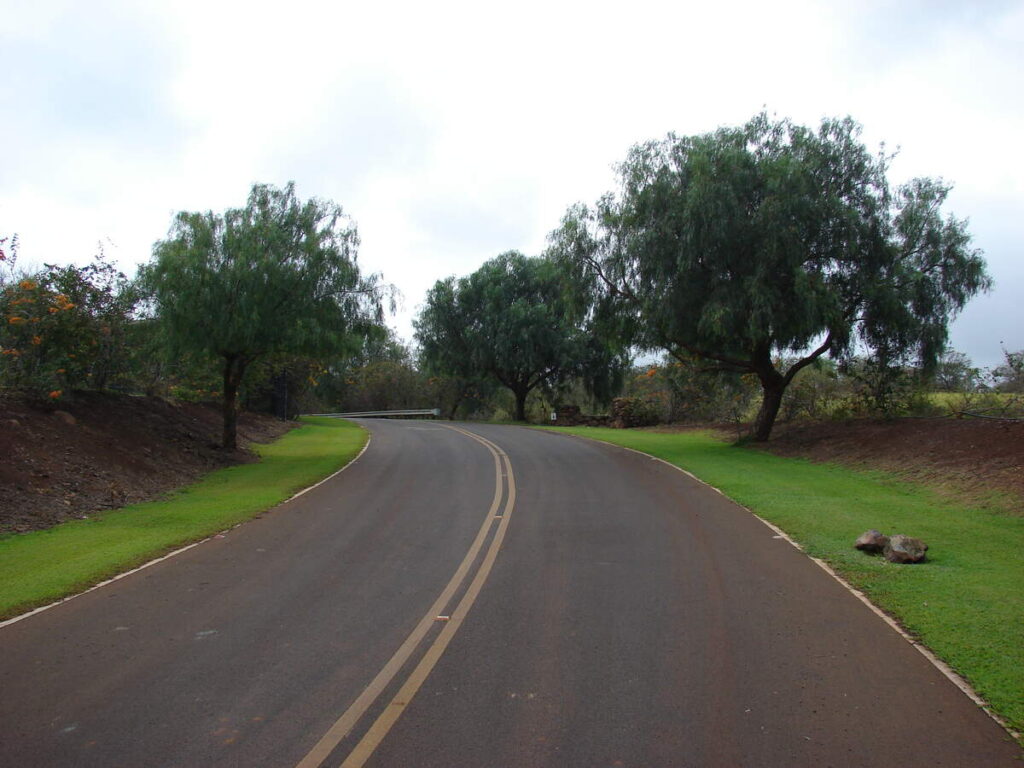
The fine, hanging foliage of Schinus molle gives this evergreen tree a soft outline, quite unlike a dense hedge. Known as Peruvian pepper tree or pepperina, it can be beautiful in a spacious garden. Choosing the right site matters more than trying to keep a large tree small through repeated pruning.
Know the tree before planting
Schinus molle belongs to the cashew family, Anacardiaceae. Kew records a South American native range that includes parts of Peru, Chile, Brazil, Paraguay, Uruguay and Argentina. It is not exclusively Brazilian. Common names such as “pink pepper” are not enough to distinguish it from other Schinus species.
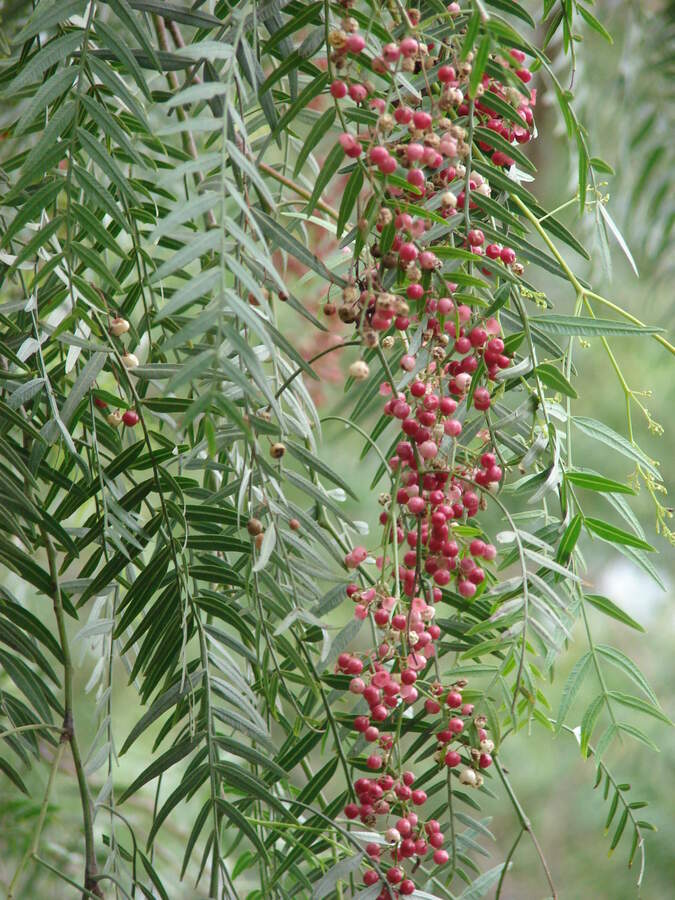
The leaves are divided into narrow leaflets, and the small, pale flowers develop into clusters of rounded pinkish-red fruits. Embrapa describes trees commonly reaching 3–12 metres, with much larger individuals possible. Flowering and fruiting dates vary by region; a calendar observed in southern Brazil should not be applied worldwide.
Sun, soil and space
Choose full sun and well-drained ground. This is a drought-tolerant tree, not a plant for permanently waterlogged soil. Being native somewhere in Brazil does not mean it suits every Brazilian soil or climate.
Leave generous space around buildings and paving. NParks warns that surface roots can damage pavements, drains and foundations. A narrow sidewalk is therefore not automatically an appropriate site. Check local street-tree guidance and the tree’s suitability in your region before planting: it has become invasive in some places outside its native range.
Establishment and maintenance
Watch a newly planted tree closely while its roots establish. Drought tolerance is not a reason to ignore a drying root ball. Adjust irrigation to rainfall and drainage rather than adopting a permanent daily schedule. Base soil amendments and fertilizer on local advice and soil conditions, not an automatic monthly dose.
Seed propagation is possible, but patience is needed: Embrapa reports variable germination, taking 20–120 days. Young roots are sensitive to transplanting, so avoid unnecessary disturbance. For a garden, a correctly identified nursery tree may be the simpler starting point.
Are the berries safe to eat?
Traditional food and medicinal uses are documented, but they do not establish the safety of harvesting an ornamental tree or using homemade remedies. Queensland’s poisons centre states that the berries can cause vomiting and diarrhoea, sap can cause dermatitis in sensitive people, and flowering can irritate the respiratory tract. Avoid sap contact, use gloves when handling the tree, and keep fallen fruit away from young children. Seek poison-centre or medical advice after ingestion or concerning symptoms.
For this tree, the safest gardening focus is its landscape value, with enough room and appropriate care, rather than treating it as a home medicine cabinet or an unidentified source of seasoning.
References
Embrapa: Aroeira-Salsa, Espécies Arbóreas Brasileiras; Kew: Schinus molle; NParks: Schinus molle; Queensland Poisons Information Centre: pepperina.
Cover: Forest & Kim Starr / Wikimedia Commons, CC BY 3.0. Resized and compressed.