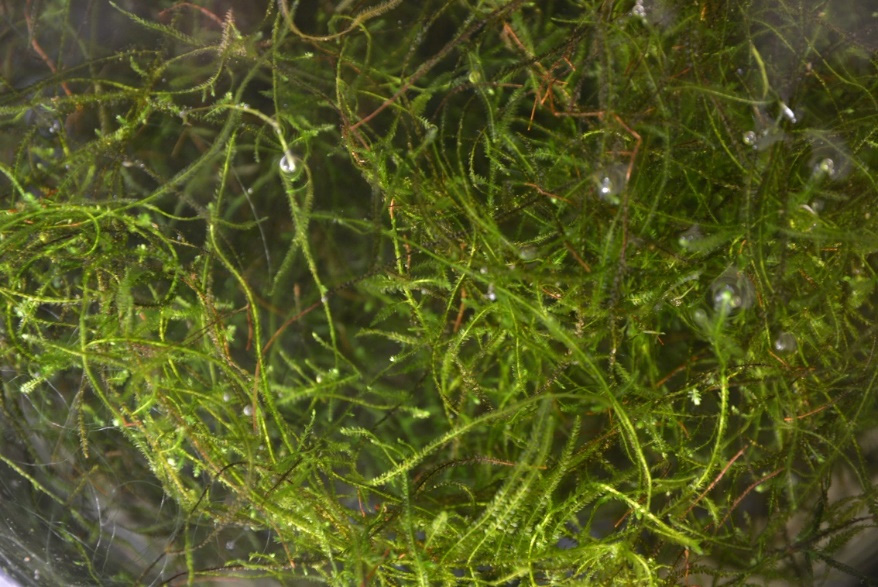
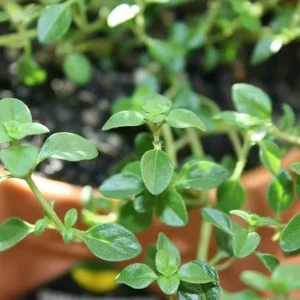
Java moss can soften the outline of aquarium rocks and wood without needing a bed of soil. Its fine green branches are also useful as cover for young fish. Easy to grow, however, does not mean an aquarium can be left without maintenance.
Which moss are you buying?
This guide concerns Taxiphyllum barbieri, widely sold as Java moss or Bogor moss. It is not the same species as Vesicularia dubyana. Botanist B. C. Tan and co-author Loh Kwek Leong explain that different aquarium mosses have been sold under the same common names, and reliable identification can require microscopic examination. A trade name alone is not proof of identity.
Light and water: start with the whole aquarium
Tropica classifies this moss as an easy plant with low light and carbon-dioxide demands. Dennerle lists 22–28°C for cultivation and notes its tolerance of different water conditions. These are growing guidelines, not a reason to change a tank abruptly or ignore the needs of its fish and other inhabitants.
Choose a suitable position on aquarium wood or rock. The moss can develop a several-centimetre-thick covering; it is not a lawn that automatically stays short. Its appearance and rate of growth vary with conditions.
Attaching and multiplying it
Secure a small portion to the intended support using cotton thread or fishing line until it attaches. Trim unwanted growth with scissors. Dividing an established portion is the practical way to start another patch; do not rely on buying or collecting spores as a routine aquarium method.
If you prefer adhesive, use a product explicitly intended for aquarium plants and follow its own instructions. For example, Seachem identifies Flourish Glue as a cyanoacrylate gel for moss and gives a 20-second pressing time. That does not make every household glue suitable or give every product the same curing instructions. Avoid contact with skin and eyes and keep adhesives away from children.
Maintenance keeps the effect attractive
Small, regular trims are preferable to letting the moss become overgrown and then cutting it all back. Remove loose clippings and dead plant material rather than leaving them to decay. Check the aquarium equipment and maintain an appropriate water-change routine.
If algae appear, review lighting, nutrient balance and general maintenance instead of assuming the moss needs more light. A plant with modest requirements still needs nutrients; “easy” is not a guarantee that fertilisation is never needed. Any liquid fertiliser should be suitable for the aquarium and used according to its directions, with attention to the response of the plants.
Cover: Bačkor, Goga, Singh and Tuptová (2023), Figure 3, Plants 12:3607, CC BY 4.0. Taxiphyllum barbieri cultivated at the botanical garden in Košice; image extracted from the article PDF.
Usamos cookies em nosso site para fornecer a melhor experiência de uso, lembrando suas preferências e visitas repetidas. Ao clicar em “Aceitar”, concorda com a utilização de TODOS os cookies.
Este site usa cookies para melhorar sua experiência enquanto você navega pelo site. Destes cookies, os cookies que são categorizados como necessários são armazenados no seu navegador, pois são essenciais para o

funcionamento das funcionalidades básicas do site. Também usamos cookies de terceiros que nos ajudam a analisar e entender como você usa este site. Esses cookies serão armazenados em seu navegador apenas com

o seu consentimento. Você também tem a opção de bloquear esses cookies. Porém, a desativação de alguns desses cookies pode afetar sua experiência de navegação.
Os cookies necessários são absolutamente essenciais para o funcionamento adequado do site. Esta categoria inclui apenas cookies que garantem funcionalidades básicas e recursos de segurança do site. Esses cookies não armazenam nenhuma informação pessoal.
Quaisquer cookies que possam não ser particularmente necessários para o funcionamento do site e sejam usados especificamente para coletar dados pessoais do usuário por meio de análises, anúncios e outros conteúdos incorporados são denominados cookies não necessários. É obrigatório obter o consentimento do usuário antes de executar esses cookies no seu site.