A lawn that recovers quickly after games sounds ideal. Bermudagrass can do that, but its vigorous growth also means frequent mowing and a watchful eye on borders. Choose it for the conditions in your garden, not simply because a stadium uses it.
Which bermudagrass?
The name covers common bermudagrass, Cynodon dactylon, and turf selections, including hybrids with C. transvaalensis. Leaf texture, mowing requirements and propagation vary. A packet of common bermudagrass seed does not reproduce a named hybrid turf. Ask the supplier for the cultivar and its maintenance requirements.
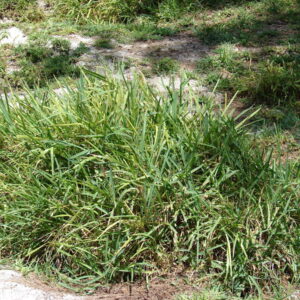
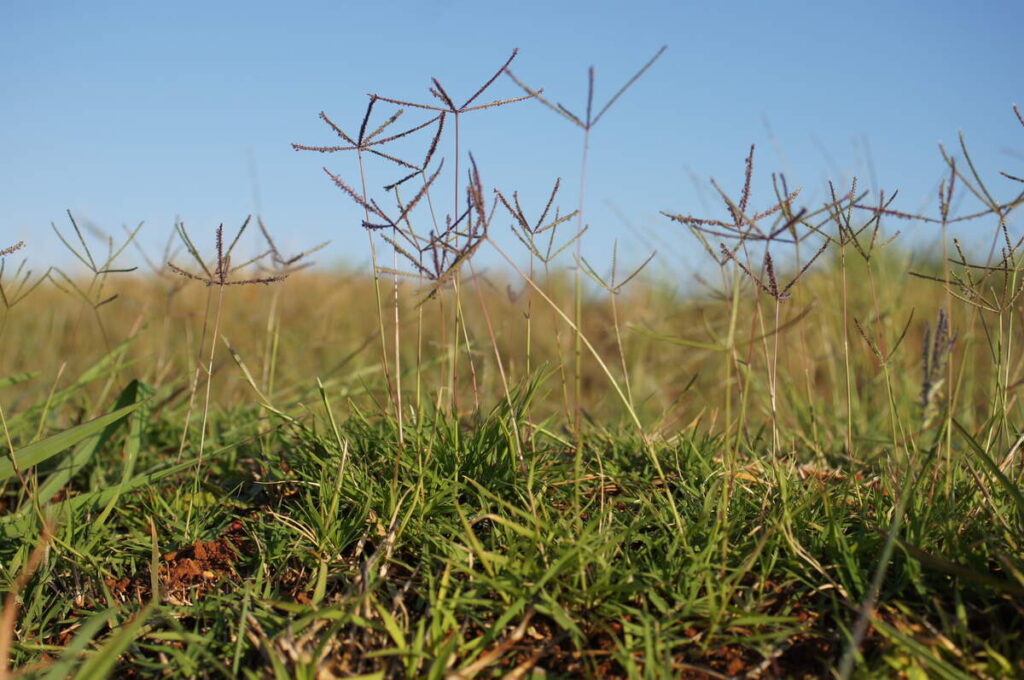
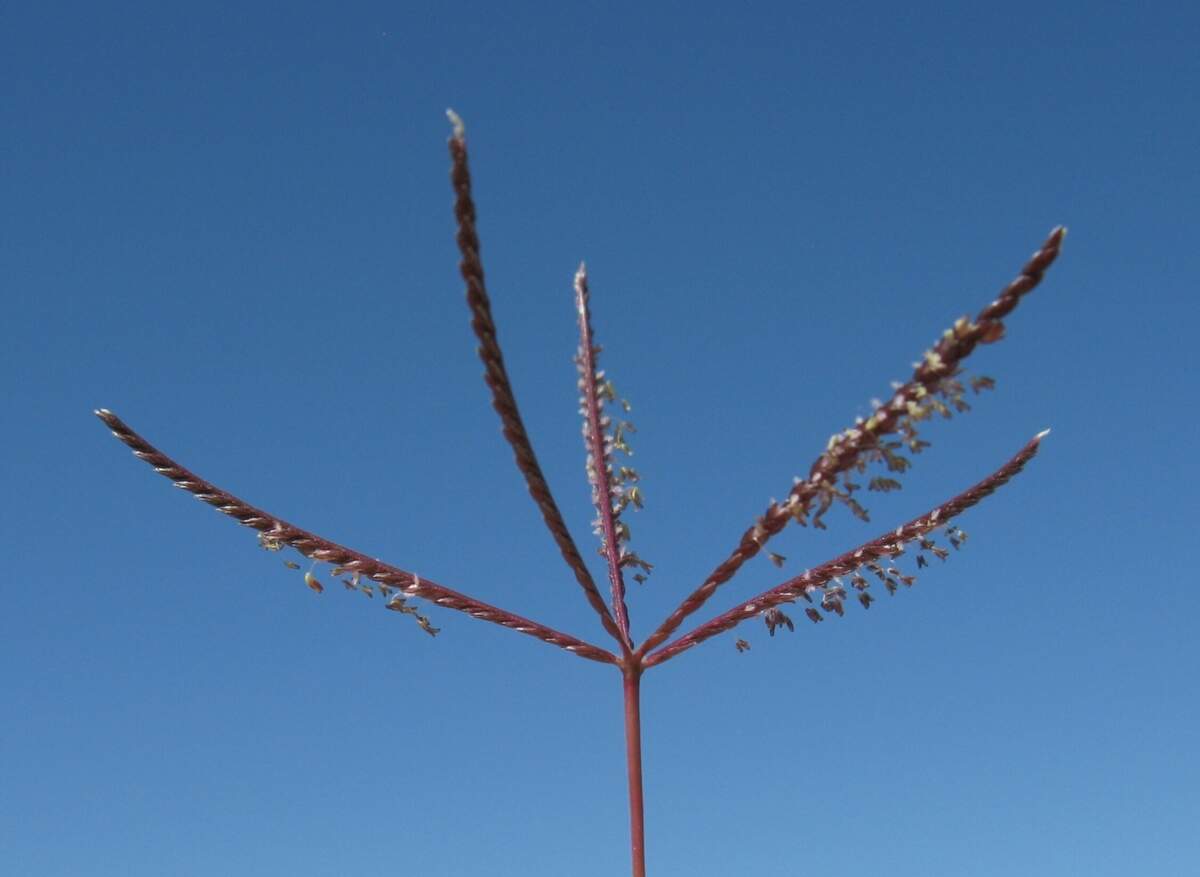
Despite the name, Bermuda is not the species’ place of origin: ESALQ-USP describes an African and equatorial Asian origin. In Brazil it is also called grama-seda. Its creeping stems can root at the nodes, helping it spread beyond the intended lawn.
Where it works best
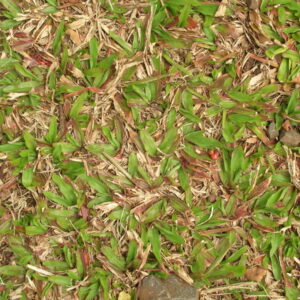
This is a warm-season grass for sunny sites. It tolerates wear, heat and drought well, but shade is a weakness. Good salt tolerance does not make every coastal site suitable: drainage and cultivar still matter. Keep it away from beds where its runners would become a persistent weed. Cold weather can turn it brown as growth becomes dormant.
Establishing the lawn
Prepare a clean, level, well-drained surface before buying turf. Seed is an option for suitable common bermudagrass varieties; hybrids are normally established from sod, plugs or stem pieces. Keep newly planted material moist while roots develop, then reduce watering frequency gradually. Do not mow loose sod before it has anchored.
Mowing without scalping
Do not copy a golf green’s millimetre-high cut at home. NC State notes that cuts below 2.5 cm require a reel mower and very level ground. Its residential guidance commonly uses about 2.5–6.4 cm; the appropriate setting depends on the cultivar and site. Treat those regional figures as a reference, not a universal prescription. Keep blades sharp and adjust frequency to growth.
Water and nutrients
Drought tolerance is not a promise of a permanently green lawn without irrigation. Clemson recommends judging watering by soil and weather rather than a rigid calendar; folded leaves, a bluish cast and persistent footprints can indicate moisture stress. Once established, favour deeper, less frequent watering over repeated surface wetting. Avoid runoff.
Base fertilization on local guidance and soil assessment, not an automatic twice-yearly dose. Growth, soil and climate change the requirement. If patches persist, investigate drainage, mowing and pests before adding products indiscriminately.
Comparing options? Read about bahiagrass and broadleaf carpetgrass before choosing.
References and photo credit
UF/IFAS: bermudagrass cultivars and establishment; ESALQ-USP: grama-seda; NC State: characteristics; NC State: lawn maintenance; Clemson: watering and nutrition; UC IPM: planting and management. US calendars require adaptation to local seasons and conditions.
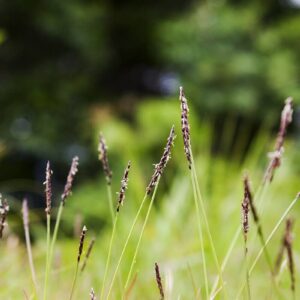
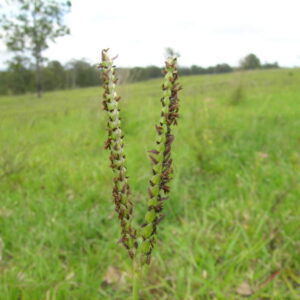
Cover: flowering Cynodon dactylon, not a sports cultivar demonstration. Harry Rose / Wikimedia Commons, CC BY 2.0; resized and compressed.