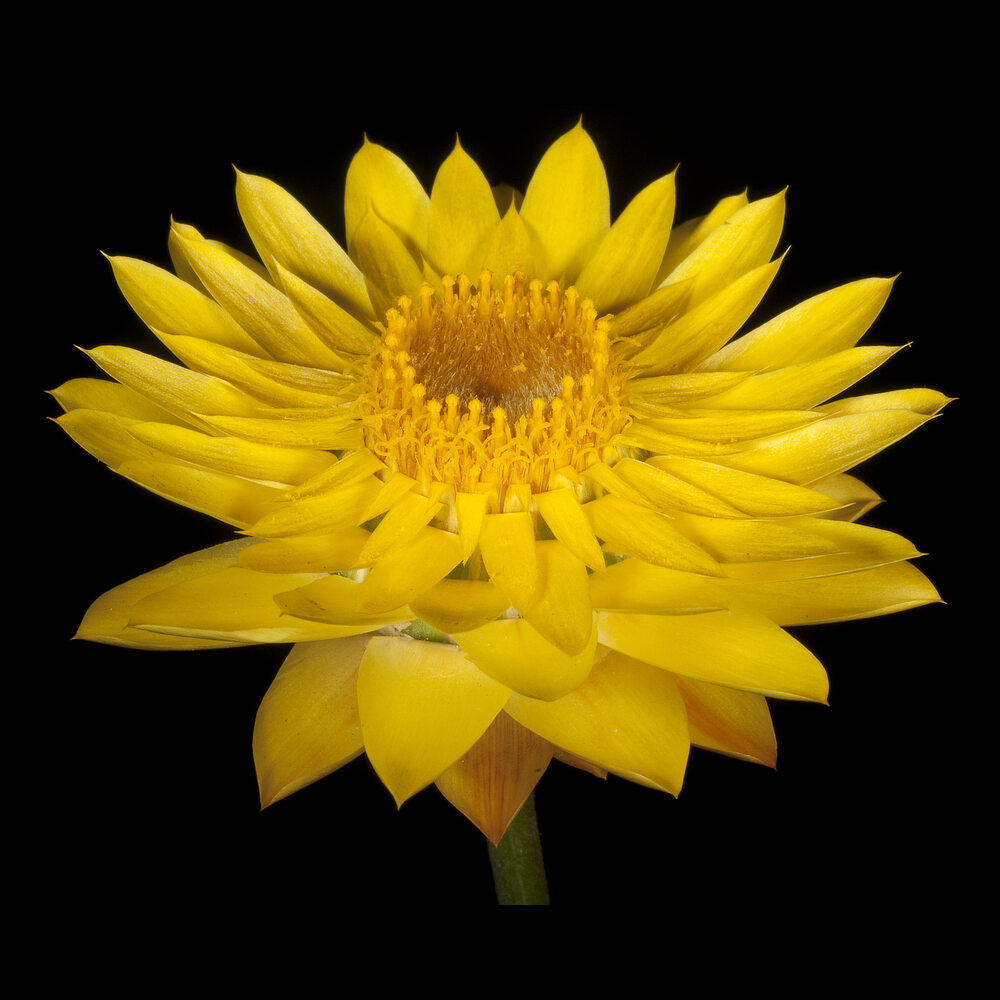
Strawflower, or golden everlasting (Xerochrysum bracteatum), is an Australian ornamental in the daisy family. Its colorful, papery structures keep their decorative appearance after drying, which explains both its common names and its popularity in dried arrangements.
Plant profile
Scientific name:Xerochrysum bracteatum. Older names:Helichrysum bracteatum and Bracteantha bracteata. Common names: strawflower, golden everlasting, paper daisy. Family: Asteraceae. Origin: Australia. Life cycle: annual and short-lived perennial forms are grown. Size: varies substantially by cultivar. Light: sun. Flower heads: clusters of small flowers surrounded by colorful papery bracts.
Identifying the plant
Xerochrysum bracteatum is the name accepted by Kew’s Plants of the World Online. Older publications and nursery labels may use Helichrysum bracteatum or Bracteantha bracteata. Common names such as “everlasting” can refer to other plants, so the advice here applies specifically to this species.
What looks like one large flower is a head made up of many small flowers. Around them are the showy bracts, which resemble firm, papery petals. Cultivated forms include yellow, white, pink, orange and red shades. Compact selections suit pots and border edges; taller ones may need support.
Where to plant strawflowers
Choose a sunny position and well-drained soil. In a container, make sure excess water can leave freely and match the pot to the mature size stated by the supplier. A compact selection and a tall cut-flower variety may have quite different dimensions and life spans.
Some forms are grown as annuals, while others are short-lived perennials. Cold tolerance also varies. Do not apply one cultivar’s height or growing calendar to every other form. “Diamond Head”, for example, is a very low-growing selection described by the Australian National Botanic Gardens for rock gardens and ground cover.
Watering, feeding and routine care
After planting, watch moisture levels while roots establish. Established plants can tolerate moderate dry periods, but still need water during growth and flower formation. Adjust watering to drying of the growing medium, rainfall and heat rather than keeping the roots permanently wet.
Base fertilizer use on the product instructions and soil conditions. There is no single dose that suits every pot, bed and cultivar. Removing faded heads and lightly pruning perennial forms can encourage branching. Leave some flower heads to mature if you want to collect seed.
Fruits, seed and cuttings
Strawflowers produce small dry fruits associated with feathery structures that aid wind dispersal. When mature heads develop a fluffy appearance, suitable material can be collected, labeled and kept for sowing. This is not a plant that produces no fruit.
Growing from seed is common, but seedlings can differ from the parent plant. The cultivation sources recommend cuttings when the aim is to preserve the characteristics of a named cultivar. Start with healthy material and a suitable rooting medium.
Choose the cultivar for the job
For pots and low edges, look for a named compact selection. For cut stems, check the cultivar’s height and stem length: a dwarf plant will not produce the same material as a tall cutting variety. NC State lists cultivars ranging from about 30 cm to roughly 1.5 m. Allow for mature width too, and install supports before tall stems start leaning over.
Decide which heads you will remove to keep the display going and which you will leave for seed. If every faded flower is removed, no mature heads remain to collect. Reserve a few on part of the planting rather than abandoning maintenance across the whole bed.
Sowing without unnecessary treatments
The Australian Native Plants Society states that seed germinates without pretreatment. For a first attempt, use correctly identified seed and follow the supplier’s directions for the particular cultivar’s sowing depth and season. Use a clean, freely draining container and seed-sowing medium. Water gently so the seed is not washed out of place, and monitor moisture while seedlings establish.
Record the name, sowing date and seed source. Once seedlings are sturdy, introduce them gradually to conditions in their final position. Do not expect seed-grown plants to reproduce every detail of the parent’s color or size. To maintain a particular selection, choose cutting-propagated stock and keep its label.
Arrangements and sensible precautions
Strawflowers can be used fresh or dried. The lasting texture of the bracts is their main attraction, while the range of heights makes them useful in pots, borders and cutting beds. For help arranging different heights and planting areas, see our garden planning guide.
Keep an eye on leaves and new growth. Downy mildew is a possible problem, and persistent symptoms should be identified before choosing a treatment.
This is an ornamental growing guide. The absence of a warning in a plant profile does not establish that a plant is edible or safe for animals. Do not use florist plants in teas, food or home remedies simply because they are sold under a name such as “everlasting”.
Usamos cookies em nosso site para fornecer a melhor experiência de uso, lembrando suas preferências e visitas repetidas. Ao clicar em “Aceitar”, concorda com a utilização de TODOS os cookies.
Este site usa cookies para melhorar sua experiência enquanto você navega pelo site. Destes cookies, os cookies que são categorizados como necessários são armazenados no seu navegador, pois são essenciais para o

funcionamento das funcionalidades básicas do site. Também usamos cookies de terceiros que nos ajudam a analisar e entender como você usa este site. Esses cookies serão armazenados em seu navegador apenas com

o seu consentimento. Você também tem a opção de bloquear esses cookies. Porém, a desativação de alguns desses cookies pode afetar sua experiência de navegação.
Os cookies necessários são absolutamente essenciais para o funcionamento adequado do site. Esta categoria inclui apenas cookies que garantem funcionalidades básicas e recursos de segurança do site. Esses cookies não armazenam nenhuma informação pessoal.
Quaisquer cookies que possam não ser particularmente necessários para o funcionamento do site e sejam usados especificamente para coletar dados pessoais do usuário por meio de análises, anúncios e outros conteúdos incorporados são denominados cookies não necessários. É obrigatório obter o consentimento do usuário antes de executar esses cookies no seu site.