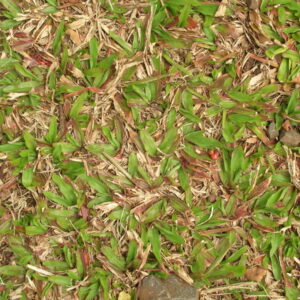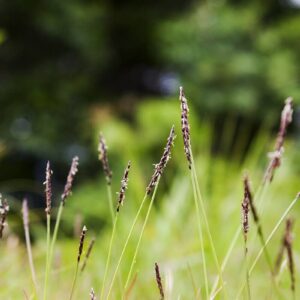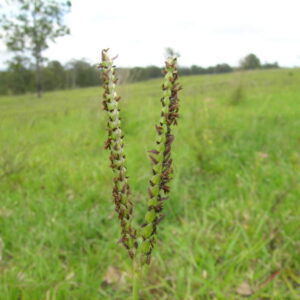
St. Augustinegrass (Stenotaphrum secundatum) makes a broad-leaved lawn with a substantial, leafy texture rather than a fine golf-green finish. It can suit warm gardens, including coastal locations, but choosing the right cultivar matters as much as choosing the species.
Is it right for your garden?
The grass spreads through stolons: horizontal stems running over the soil and producing new shoots at their nodes. It grows actively in warm weather and slows or becomes dormant in cooler seasons. It is useful for residential lawns, not a good replacement for sports turf exposed to repeated heavy traffic.
Some cultivars cope with partial shade better than many other warm-season grasses, but that does not mean dense shade is suitable. Ask about the particular cultivar’s light requirements. Salt tolerance can help near the coast, while drainage and winter conditions still determine whether a planting will succeed.
Plant sod or plugs, not a seed mix
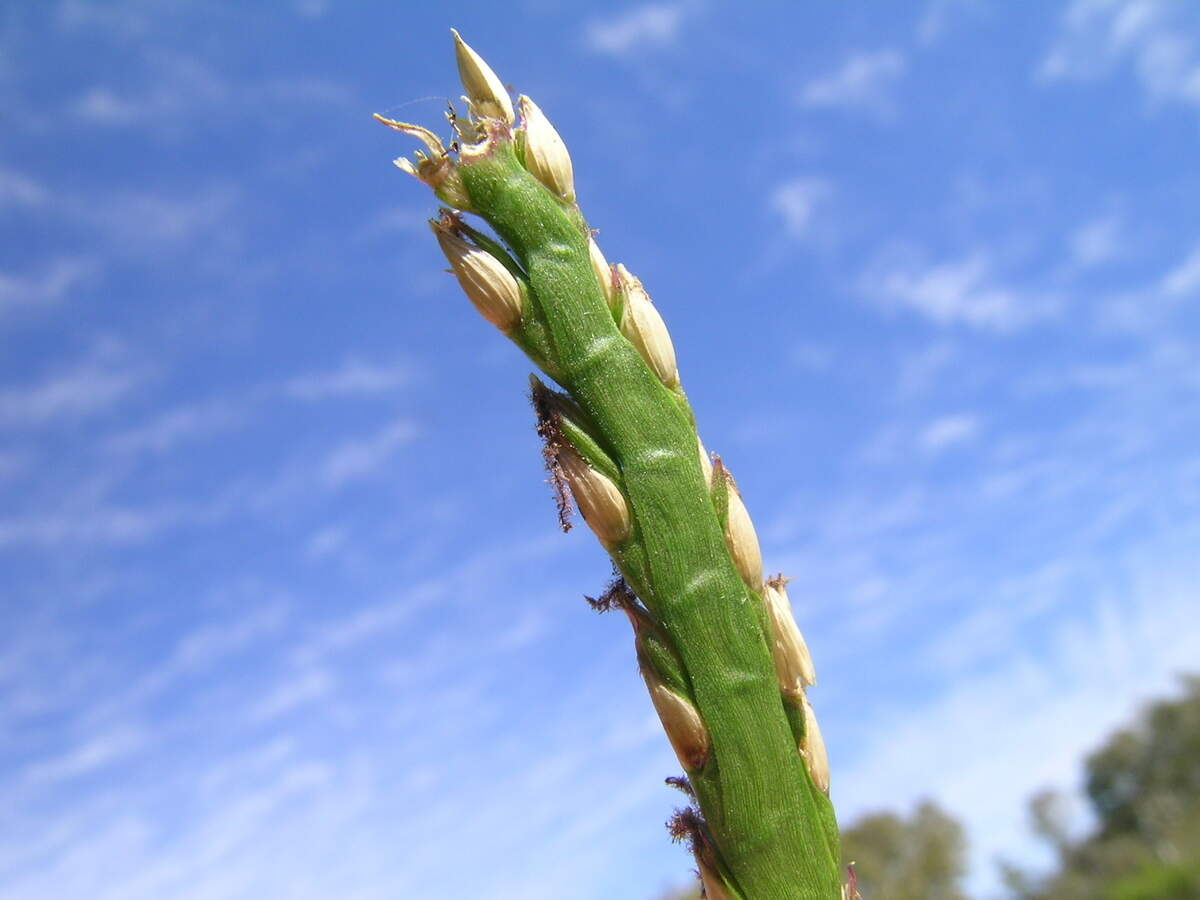
For a home lawn, buy identified sod or rooted plugs from a reliable supplier. UF/IFAS explains that commercial St. Augustinegrass lawns are not normally established from seed: seed production is insufficient for that practical route. An offer of a generic lawn seed mix is not equivalent to the named grass you want.
Prepare bare, level soil, correcting drainage problems first. Fit sod pieces together over moist soil and keep them from drying while roots develop. A newly green surface is not yet ready for play. Wait until the sod has rooted firmly before mowing or using it heavily.
Leave enough leaf when mowing
Do not use 3 cm as a universal mowing target. NC State’s residential guidance gives about 6.4–10 cm, with taller settings helping under shade or drought stress. That is a regional reference, not a substitute for cultivar-specific advice. Keep a sharp blade: tearing the leaves leaves an unattractive ragged surface. Adjust mowing frequency to actual growth rather than cutting a dormant lawn on schedule.
Water, fertilizer and a closer look at brown patches
Use soil testing and local guidance to plan nutrition. There is no single twice-yearly fertilizer program for every garden. Climate, soil and growing season change the need; a calendar written for the northern hemisphere should not be copied month for month elsewhere.
Established grass can still need supplemental irrigation during dry spells. Brown patches do not automatically mean a pest attack: winter dormancy and water stress can also alter colour. UF/IFAS highlights chinch bugs as an important possible cause, so identify the problem before treating it. If patches keep expanding, seek a local diagnosis rather than repeatedly adding water or insecticide.
For another warm-season option, compare bermudagrass. The best choice is the one that fits your light, use and maintenance capacity.
References
UC IPM: characteristics and use; UF/IFAS: cultivars and establishment; UF/IFAS: why lawn seed is not the usual option; NC State: mowing and maintenance; Clemson: adapting maintenance to conditions; UF/IFAS Gardening Solutions: brown patches and diagnosis.
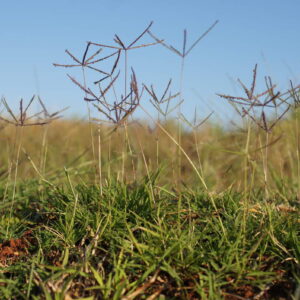
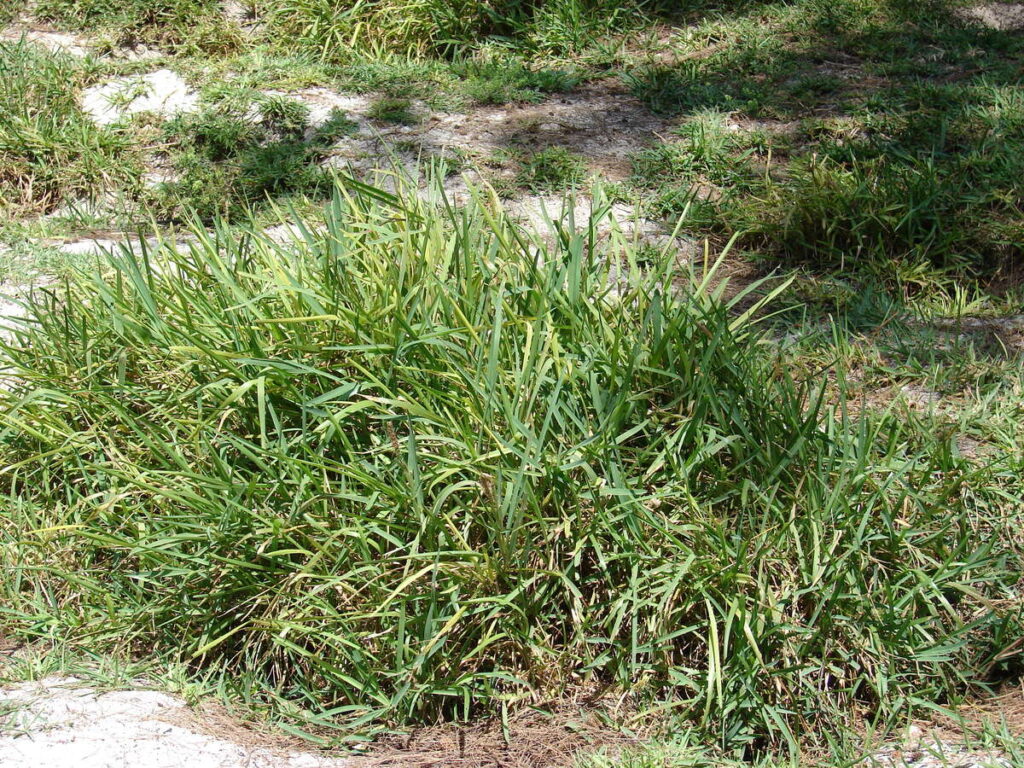
Cover: unmown plants on sandy ground, not a finished ornamental lawn. Forest & Kim Starr / Wikimedia Commons, CC BY 3.0; resized and compressed.