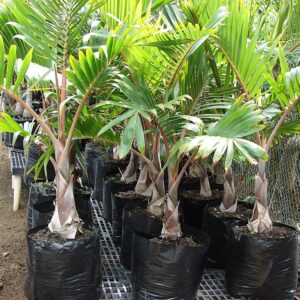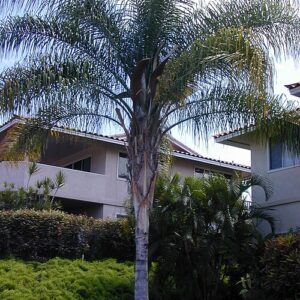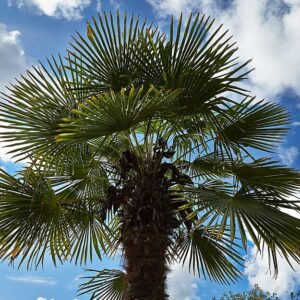
Bismarck palm (Bismarckia nobilis) is memorable for its enormous fan-shaped leaves, often silver-blue. It can become the focal point of a garden, but its size is also the main reason to think carefully before planting. A young palm in a nursery pot gives little sense of the space its crown will eventually occupy.
A palm for generous spaces
This single-trunked species is native to northern and western Madagascar. Both silver-toned and greener forms exist. UF/IFAS describes cultivated palms roughly 9–18 m tall with crowns around 3.5–5 m wide; dimensions vary with age and conditions. Allow generous clearance from buildings, paths and overhead lines rather than relying on a small juvenile size.
Choose a sunny, open location with well-drained soil. In a small courtyard, its broad leaves may overwhelm the available space. A container can slow growth, but it does not turn the species into a naturally miniature palm. Think through the long-term location before buying.
Plant carefully, especially around the roots
Bismarck palms are difficult to move once established. Preserve the root ball when handling a nursery plant, and use experienced professionals for large specimens. Do not treat cutting roots as routine preparation for a container-grown palm.
Prepare a planting hole wide enough to backfill evenly. Correct planting depth matters: the zone where roots emerge from the stem must not be left exposed or buried excessively. Ask the nursery or installer to identify that point rather than judging only from loose potting mix.
Watering and growth
Water regularly during establishment, checking the original root ball as well as the surrounding soil. Their moisture levels can differ. Reduce watering as roots establish, according to rainfall, heat and drainage. Drought tolerance is not a promise that every plant, especially one in a pot, will never need irrigation again.
Growth is often slow while young and becomes more noticeable after a trunk develops. Avoid trying to force it with extra fertilizer. Yellowing, distorted new leaves or dying tips deserve diagnosis; nutrient deficiencies and root problems can look similar. Local soil conditions should guide a feeding plan.
Pruning without spoiling the crown
For routine care, remove completely dead leaves rather than stripping healthy ones to create a narrow “feather duster.” Partly discolored leaves may still supply nutrients. Do not cut into the trunk or use climbing spikes; wounds remain potential entry points for pests and disease. Have high, heavy fronds handled by a qualified professional.
Seeds and container growing
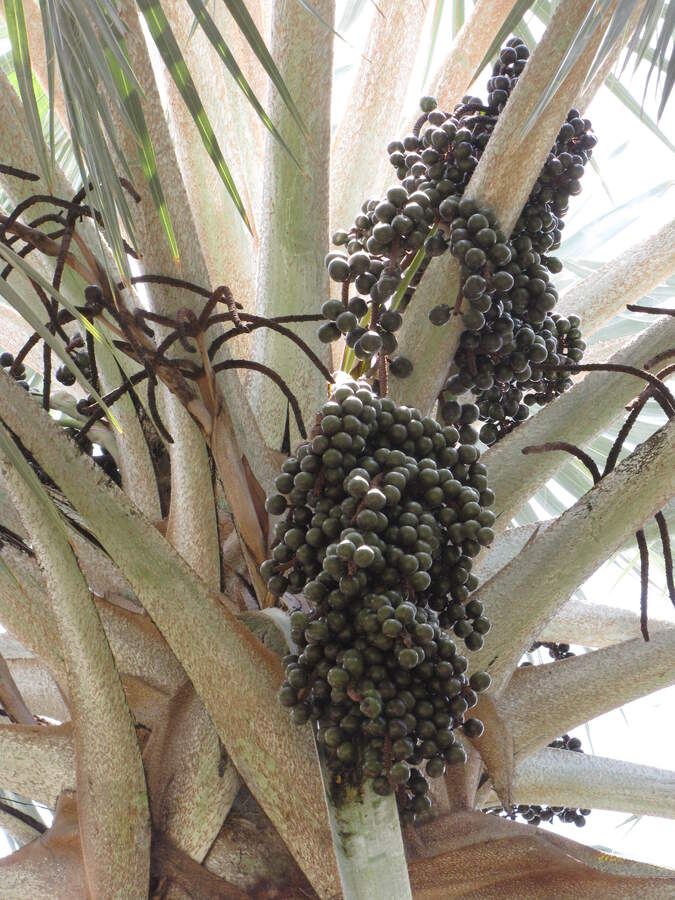
Male and female flowers occur on separate palms. Propagation is by seed, and germination can take months. This is a patience project, not a quick way to obtain a large specimen.
A large, draining container in full sun is possible, with closer attention to watering and space. Plan for its increasing weight and eventual handling. If your garden cannot accommodate it safely, choosing a smaller species is better than assuming permanent root restriction will solve everything.
Sources
Kew: Bismarckia nobilis; NParks: species profile; UF/IFAS: Bismarck palm; UF/IFAS: transplanting palms; UF/IFAS: pruning palms; Chicago Botanic Garden: container growing.
Cover: the large silver palms in the background are Bismarckia nobilis; the smaller foreground palms are other species. Forest & Kim Starr / Wikimedia Commons, CC BY 3.0 US. Resized and compressed.