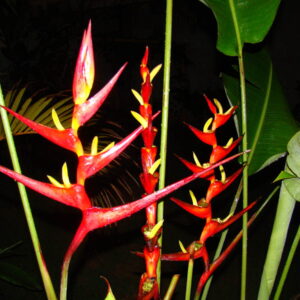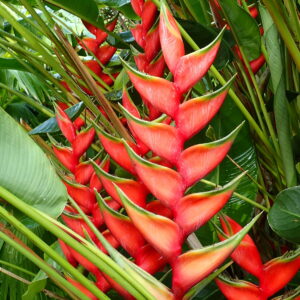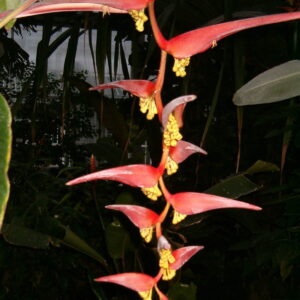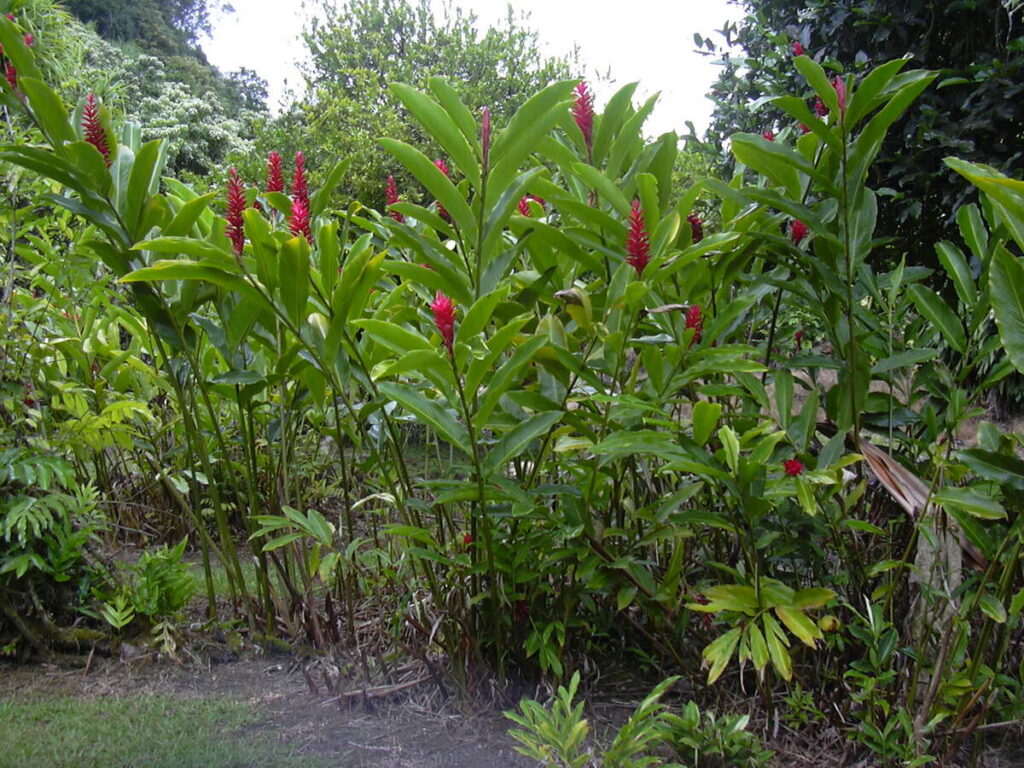
Red ginger (Alpinia purpurata) brings strong color and broad green leaves to a tropical garden. The red part that catches your eye is mostly a cluster of bracts, modified leaves surrounding the small white flowers. It is a substantial clump-forming plant, not a compact bedding flower.
Know the plant before choosing a spot
This perennial belongs to the ginger family, Zingiberaceae. Kew places its native range from Maluku to the southwestern Pacific. The common name “red ginger” does not mean it is the familiar culinary ginger: this guide concerns ornamental cultivation, not food or medicinal use.
Embrapa describes plants reaching about 4 m in suitable conditions, with large clumps and upright stems emerging from underground rhizomes. Height varies with the cultivar and growing conditions. Leave room for the plant to spread rather than treating 1.5 m as an absolute maximum. Red and pink forms occur, with the small tubular flowers appearing between the showy bracts.
Light, warmth and shelter
Give it a warm outdoor position with sun or light shade. Deep shade is not ideal. In a hot garden, some protection from the harshest sun can help; the best exposure depends on the cultivar and local conditions. Cold is a more serious limitation: UF/IFAS places it in the warmer parts of Florida rather than recommending it throughout that state.
Protect the foliage from strong wind and salt spray. A sheltered bed can work as a background planting or informal screen. Keep expanding clumps within the garden, particularly near natural vegetation; do not dump rhizomes or unwanted divisions outside the cultivated area.
Water and soil: moist, not stagnant
Use fertile, well-drained soil enriched with organic matter. Water to keep the root zone moist, checking drainage rather than following a rigid daily schedule. A large container needs drainage holes and room for the rhizomes; it also needs closer moisture checks than an established bed.
Research by Embrapa scientists in Paraipaba, Ceará, found that water demand varied with climate and growth stage under protected cultivation. That is why a commercial irrigation figure should not become a fixed dose for every home garden. Adjust watering to rainfall, heat, soil and the plant’s development.
Cleaning up and making new plants
Remove yellowing leaves and spent flowering shoots. The useful distinction is between an old stem that has finished flowering and a healthy new shoot that will contribute to the next display. Flowering can continue through much of the year in favorable tropical conditions, but is not guaranteed in cold weather.
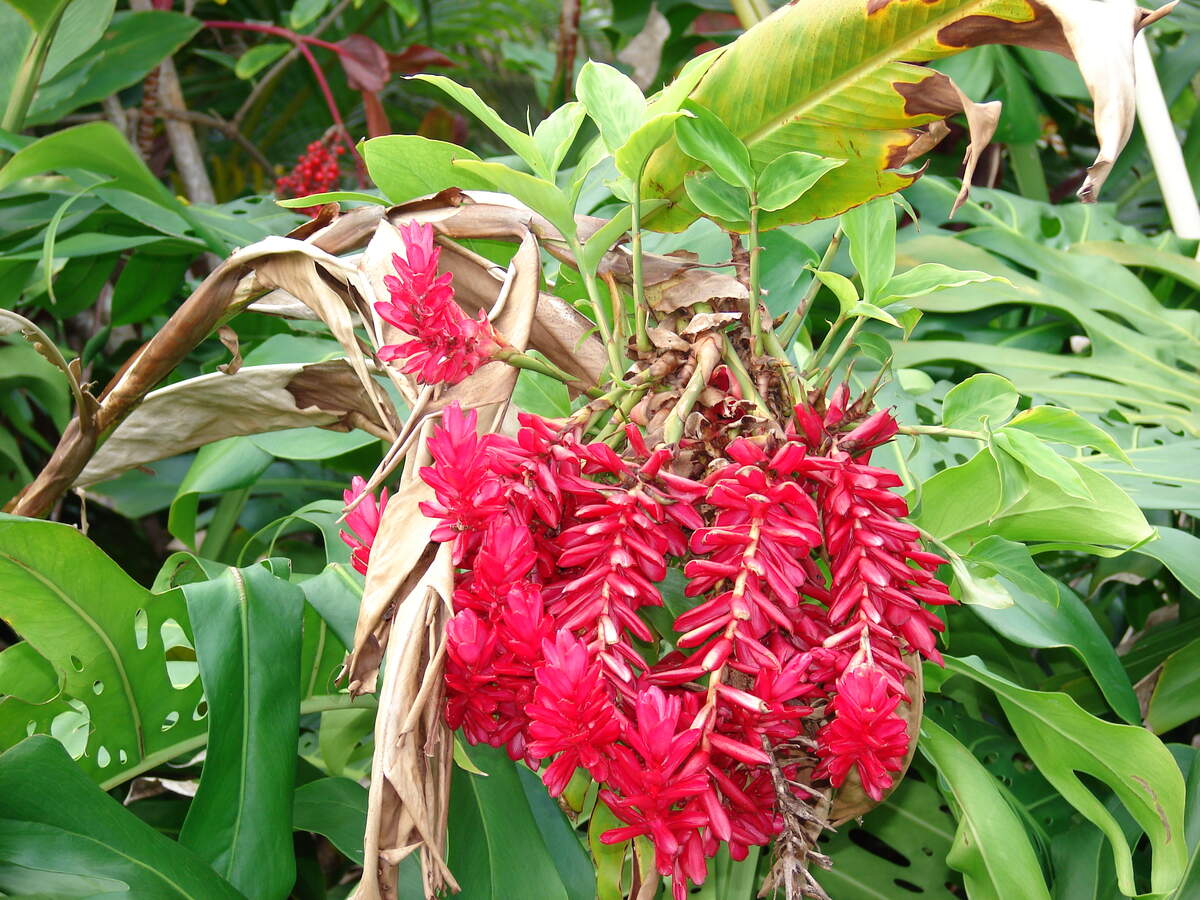
Propagation is usually by dividing a healthy clump into rooted sections. Some forms also produce little plantlets among the bracts. One method described by the University of Hawai‘i is to bend the flower head into a pot and let those plantlets root before separating them. Not every cultivar produces these offshoots. Avoid promises of instant flowering: young plants need time to establish.
For a tropical bed with contrasting foliage, compare the space and light requirements in our ground-cover guide. Plan the layers around mature plant size, not the size of the nursery pot.
Sources
Kew: Alpinia purpurata; Embrapa: ornamental cultivation in the Cerrado; NParks: plant profile; University of Hawai‘i: Ornamental Ginger, Red and Pink; UF/IFAS: red Hawaiian ginger; Embrapa researchers: water demand study in Ceará.
Cover: Forest & Kim Starr / Wikimedia Commons, CC BY 3.0. Resized and compressed.