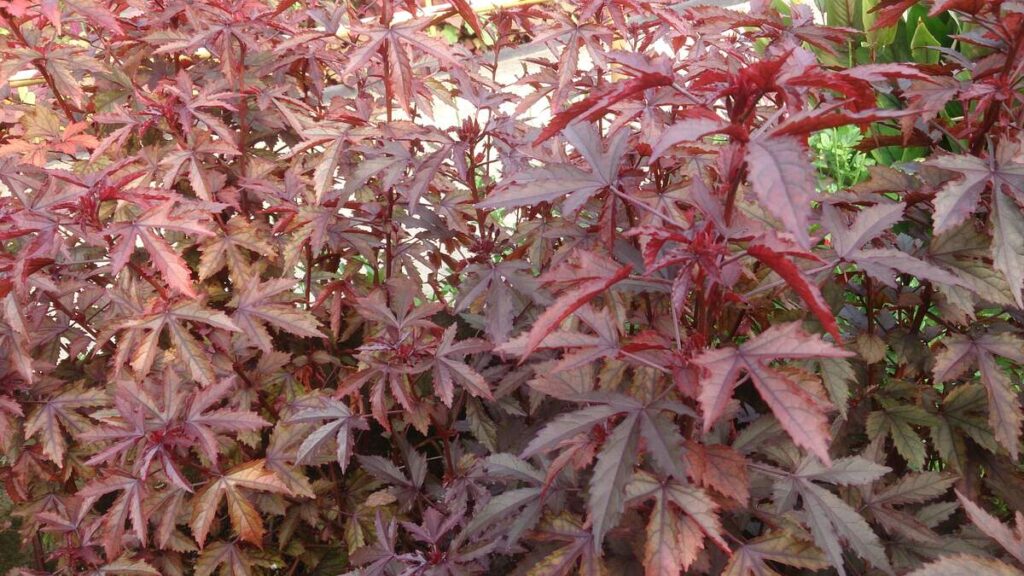
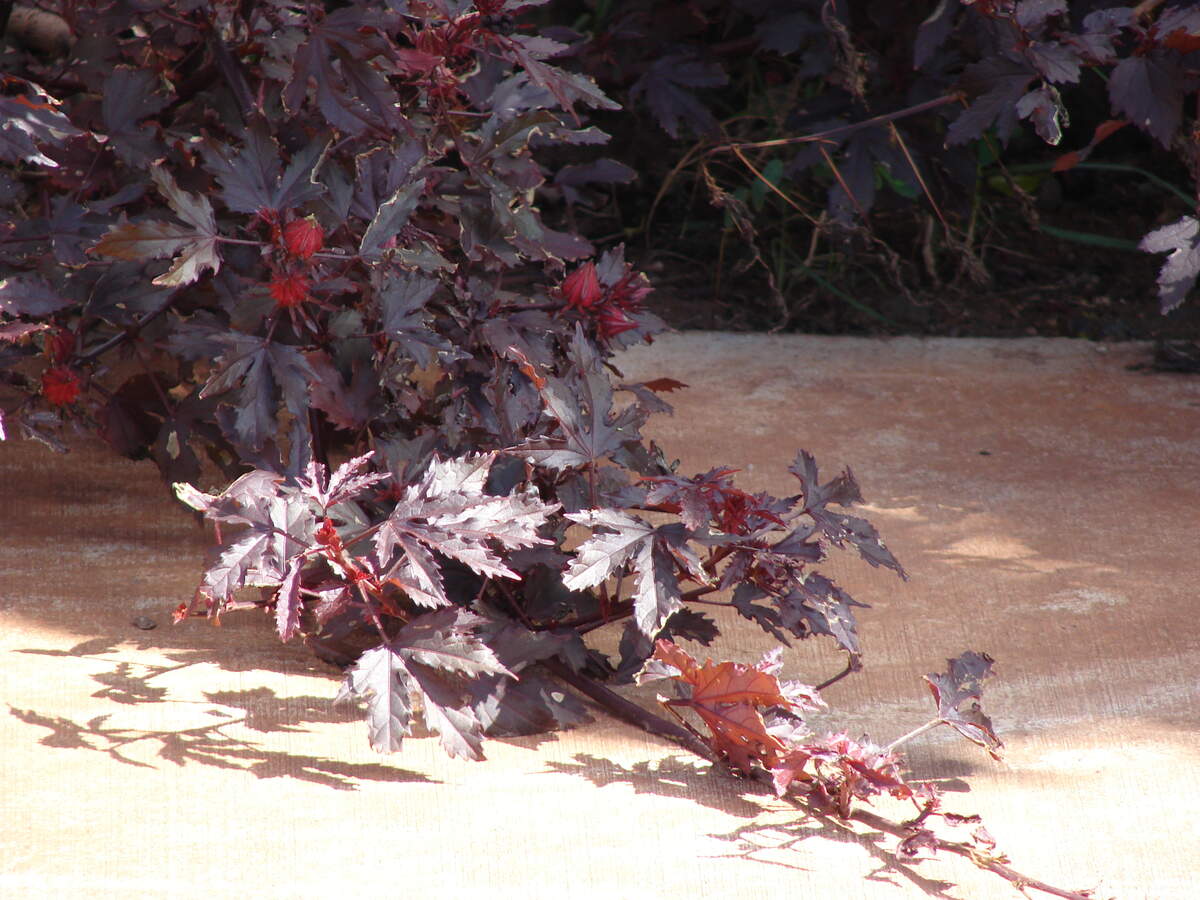
A patch of burgundy foliage can change the look of an otherwise green border. Cranberry hibiscus (Hibiscus acetosella), known in Brazil as vinagreira-roxa, offers that contrast without needing to be in bloom. Its edible leaves are another attraction, but identifying the species matters: it is not the same plant as roselle.
Getting to know the plant
This African member of the mallow family grows into an upright shrub, often around 1–2 metres tall, although size varies with conditions and pruning. The red-leaved forms have lobed foliage that may recall a small maple. Pink to wine-coloured flowers appear between the leaves; each bloom lasts about a day. The fruit is a seed capsule, not a fleshy berry.
Sun, soil and watering
Choose a sunny position with well-drained soil. Light shade is tolerated, but a darker spot may reduce growth and the intensity of the leaf colour. Do not interpret its tropical origin as a need to keep the roots permanently wet.
Water newly planted specimens while they establish, then adjust to rainfall and the moisture in the soil. A plant in a pot usually needs closer attention than one rooted in a garden bed. Use a container with drainage holes and a suitable potting mix, rather than dense soil that stays saturated. In climates with frost, this tender plant may be grown as a seasonal ornamental rather than a permanent shrub.
Keeping its shape and making new plants
Place it behind lower green plants, in small groups or as a temporary screen. Pinching or shortening overly long shoots helps produce a fuller outline. Leave enough room to reach the plant for pruning and harvesting instead of squeezing it into a narrow passage.
Propagation is possible from seeds or stem cuttings. UNIFAL recommends taking cuttings during vegetative growth, before flowering. Start them in a suitable propagation medium and protect young plants from harsh sun and heavy rain. Rooting is a process to monitor, not a guarantee attached to a particular cutting length.
UF/IFAS and Brazilian university guides describe the leaves and flowers as food. The tart young leaves can be added to salads or cooked dishes; their flavour is an accent rather than something every recipe needs in large amounts.
Hibiscus sabdariffa, the roselle used for familiar red drinks and preserves, is a different species. Its fleshy calyces are the structures surrounding the developing seed capsule. Do not transfer every recipe or claim about roselle to H. acetosella.
Only harvest a correctly identified plant grown for food, and wash the edible parts appropriately. An ornamental plant of unknown treatment history is not automatically a food crop. Culinary use also does not establish that this plant treats high blood pressure or replaces prescribed medication.
Usamos cookies em nosso site para fornecer a melhor experiência de uso, lembrando suas preferências e visitas repetidas. Ao clicar em “Aceitar”, concorda com a utilização de TODOS os cookies.
Este site usa cookies para melhorar sua experiência enquanto você navega pelo site. Destes cookies, os cookies que são categorizados como necessários são armazenados no seu navegador, pois são essenciais para o

funcionamento das funcionalidades básicas do site. Também usamos cookies de terceiros que nos ajudam a analisar e entender como você usa este site. Esses cookies serão armazenados em seu navegador apenas com

o seu consentimento. Você também tem a opção de bloquear esses cookies. Porém, a desativação de alguns desses cookies pode afetar sua experiência de navegação.
Os cookies necessários são absolutamente essenciais para o funcionamento adequado do site. Esta categoria inclui apenas cookies que garantem funcionalidades básicas e recursos de segurança do site. Esses cookies não armazenam nenhuma informação pessoal.
Quaisquer cookies que possam não ser particularmente necessários para o funcionamento do site e sejam usados especificamente para coletar dados pessoais do usuário por meio de análises, anúncios e outros conteúdos incorporados são denominados cookies não necessários. É obrigatório obter o consentimento do usuário antes de executar esses cookies no seu site.