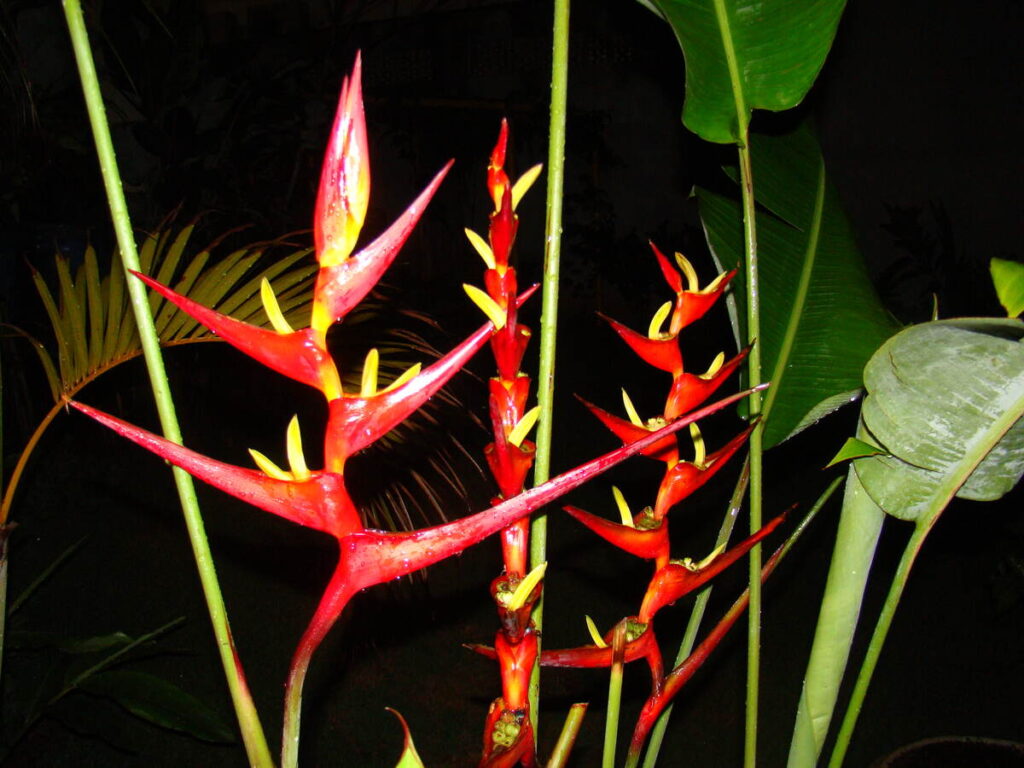
The red-orange structures of caeté look like flowers from a distance. Look closer and you will see the smaller flowers nestled inside them. This Brazilian garden favourite, often sold as Heliconia velloziana, brings a striking upright shape to a tropical planting. It also needs room: plan for the clump, not just the first stem.
Which heliconia is it?
Kew treats Heliconia velloziana as a synonym of Heliconia farinosa. The accepted species occurs naturally in southern and southeastern Brazil and parts of Argentina. Keeping both names on the nursery label helps avoid confusion with other heliconias also called caeté.
The University of São Paulo describes broad leaves on long stalks, upright inflorescences and red or orange bracts surrounding yellow flowers. Its garden record associates flowering with summer and pollination with hummingbirds. Bracts are modified leaves, not the flowers themselves.
Light, soil and a place to grow
The USP plant profile lists sun or partial shade, rather than an absolute requirement for deep shade. Assess your own planting site before choosing: a bright, sheltered bed is a more useful starting point than assuming every tropical plant needs the same exposure. Ask the nursery how the specimen was grown before changing its conditions.
General heliconia guidance from UF/IFAS emphasises fertile, moist soil, compost in poor sandy beds and feeding during active growth. Allow space to manage spreading rhizomes. A narrow walkway or a small indoor corner is not a good place to discover how large your plant becomes. Compare its habit with Heliconia bihai before designing the bed.
Water according to the soil and weather rather than a fixed daily timetable. Moist soil should not stay waterlogged. Fertiliser is not a substitute for checking drainage; follow the product label and avoid piling several fertilisers onto a struggling plant.
Division is easier than starting from seed
A UNESP study of plants identified as H. velloziana documented blue ripe fruits and seed germination after roughly four months under its experimental conditions. Rhizome propagation was faster. These are study observations, not guaranteed waiting times for a garden.
For home propagation, use healthy cultivated stock and substantial rhizome divisions rather than tiny scraps. Do not remove plants from the wild. Keep the pieces labelled so the scientific name travels with any plant you share.
Check problems before treating them
A 2024 review by Embrapa researchers and collaborators shows that heliconias can suffer fungal, bacterial, nematode and viral problems. Being native does not make a plant immune. Yellowing, wilting or rotting needs investigation; repeatedly adding water or spraying an unidentified problem may make matters worse. Start with healthy stock, clean tools and drainage, and seek a diagnosis for persistent decline.
This is an ornamental growing guide, not a recommendation to eat the plant or use it medicinally. Nor should “natural” be taken to mean that a homemade pesticide is safe. Choose any treatment only after identifying the problem and checking its permitted use and label instructions.
Usamos cookies em nosso site para fornecer a melhor experiência de uso, lembrando suas preferências e visitas repetidas. Ao clicar em “Aceitar”, concorda com a utilização de TODOS os cookies.
Este site usa cookies para melhorar sua experiência enquanto você navega pelo site. Destes cookies, os cookies que são categorizados como necessários são armazenados no seu navegador, pois são essenciais para o

funcionamento das funcionalidades básicas do site. Também usamos cookies de terceiros que nos ajudam a analisar e entender como você usa este site. Esses cookies serão armazenados em seu navegador apenas com

o seu consentimento. Você também tem a opção de bloquear esses cookies. Porém, a desativação de alguns desses cookies pode afetar sua experiência de navegação.
Os cookies necessários são absolutamente essenciais para o funcionamento adequado do site. Esta categoria inclui apenas cookies que garantem funcionalidades básicas e recursos de segurança do site. Esses cookies não armazenam nenhuma informação pessoal.
Quaisquer cookies que possam não ser particularmente necessários para o funcionamento do site e sejam usados especificamente para coletar dados pessoais do usuário por meio de análises, anúncios e outros conteúdos incorporados são denominados cookies não necessários. É obrigatório obter o consentimento do usuário antes de executar esses cookies no seu site.