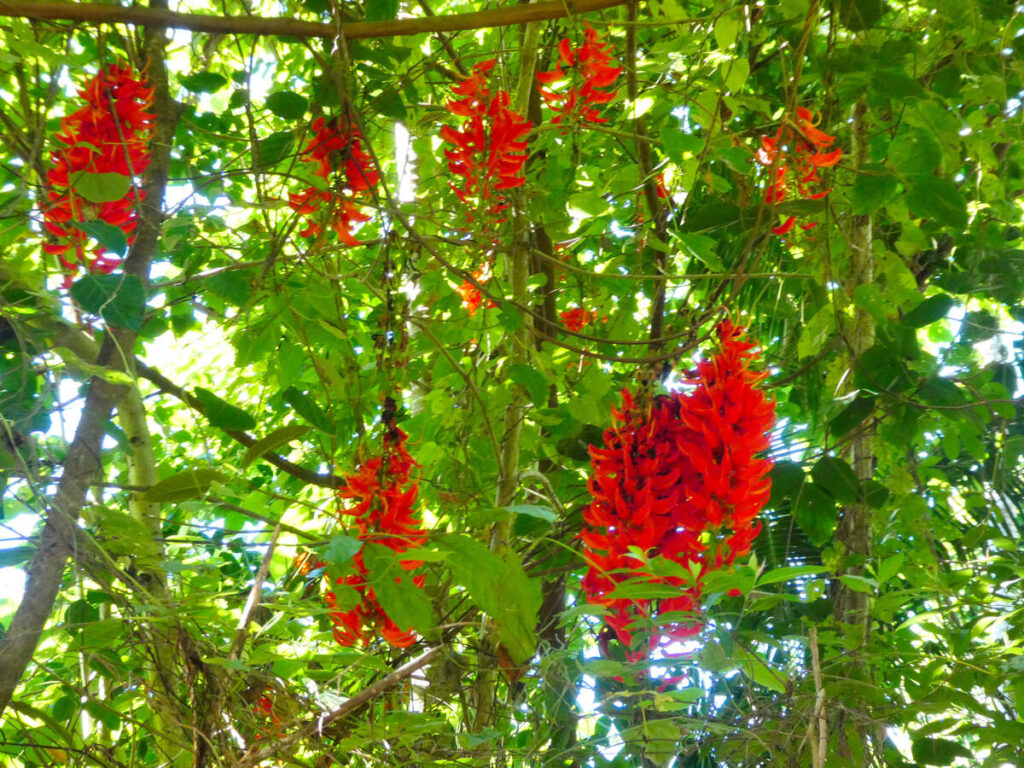
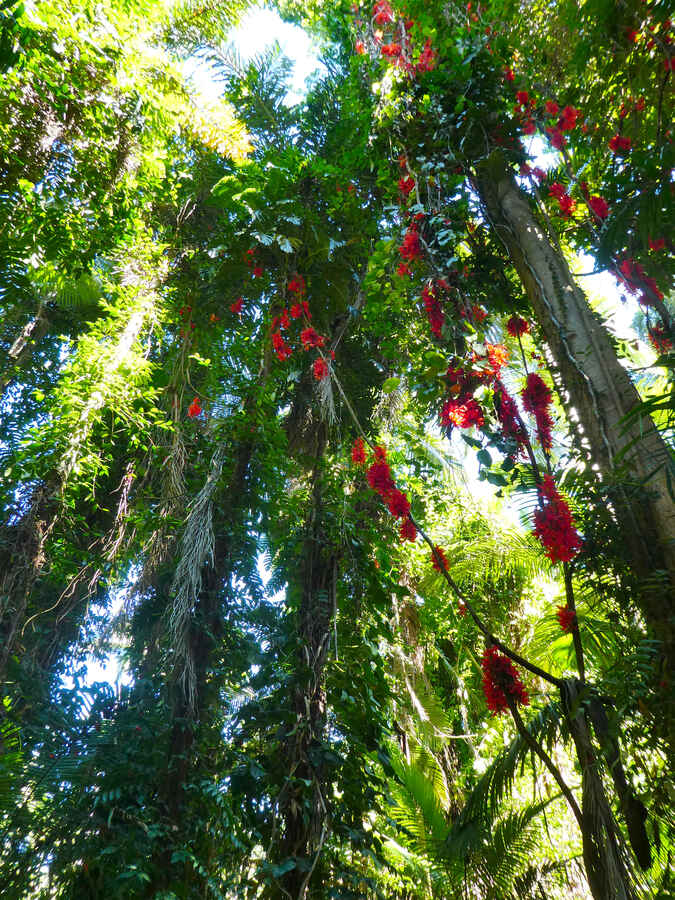
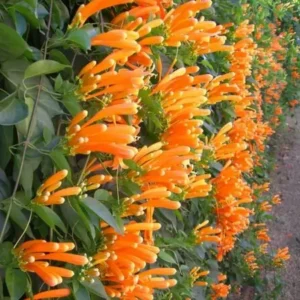
Red jade vine (Mucuna bennettii) is a plant to plan a garden around, rather than squeeze into a spare corner. Its red-orange flower clusters hang below the foliage, making an overhead support a particularly effective way to display them. Also called New Guinea creeper or scarlet jade vine, it develops into a substantial woody climber.
Which jade vine is it?
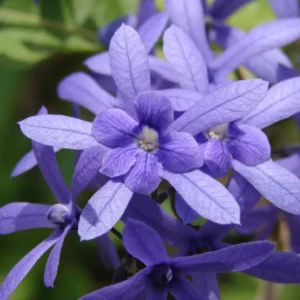
This member of the pea family, Fabaceae, is not a red-flowered variety of the blue-green jade vine, Strongylodon macrobotrys. They are different species in different genera. Kew places the natural range of Mucuna bennettii from Sulawesi to Vanuatu, including New Guinea and the Solomon Islands, in wet tropical environments.
Give it space and a lasting support
Choose a substantial pergola or arbour with room for the stems to spread and the flowers to hang freely. The Philippine forestry guide describes vines reaching about 30 metres under suitable conditions: this is not a compact balcony climber. Check that the structure is appropriate for a mature woody plant before planting, and keep access available for maintenance.
A container is possible, but it needs generous root space and drainage. A small pot is not a reliable way to accommodate a plant with this growth habit. Think about its eventual size, not just the size of the plant at purchase.
NParks lists full sun or partial shade, with the roots kept shaded. Moist, well-drained soil suits this tropical climber. The useful distinction is between moisture and waterlogging: the soil should hold water for the roots without remaining saturated.
Adjust irrigation to rainfall, drainage and the growing conditions rather than following a fixed weekly schedule. Check pots particularly carefully. Fertilizer cannot compensate for poor drainage or an unsuitable location; choose a product appropriate to the planting and follow its label instead of applying a universal monthly formula.
When will it flower?
The claw-shaped flowers gather in long hanging clusters. Gardens by the Bay reports clusters up to a metre long, sometimes holding around 80 flowers. Its established plants in Singapore progressed from one flowering period a year to two or three. That observation shows why a single flowering calendar cannot be promised for every garden: climate and establishment matter.
Propagation and identification
NParks lists propagation by stem cuttings. Buy correctly identified nursery plants rather than assuming that every plant sold as “jade vine” is this species. It can form fruits: the botanical revision of Mucuna describes fruiting specimens of M. bennettii. That is not a recommendation to eat its pods or seeds, or to substitute it for other plants called mucuna.
Usamos cookies em nosso site para fornecer a melhor experiência de uso, lembrando suas preferências e visitas repetidas. Ao clicar em “Aceitar”, concorda com a utilização de TODOS os cookies.
Este site usa cookies para melhorar sua experiência enquanto você navega pelo site. Destes cookies, os cookies que são categorizados como necessários são armazenados no seu navegador, pois são essenciais para o

funcionamento das funcionalidades básicas do site. Também usamos cookies de terceiros que nos ajudam a analisar e entender como você usa este site. Esses cookies serão armazenados em seu navegador apenas com

o seu consentimento. Você também tem a opção de bloquear esses cookies. Porém, a desativação de alguns desses cookies pode afetar sua experiência de navegação.
Os cookies necessários são absolutamente essenciais para o funcionamento adequado do site. Esta categoria inclui apenas cookies que garantem funcionalidades básicas e recursos de segurança do site. Esses cookies não armazenam nenhuma informação pessoal.
Quaisquer cookies que possam não ser particularmente necessários para o funcionamento do site e sejam usados especificamente para coletar dados pessoais do usuário por meio de análises, anúncios e outros conteúdos incorporados são denominados cookies não necessários. É obrigatório obter o consentimento do usuário antes de executar esses cookies no seu site.