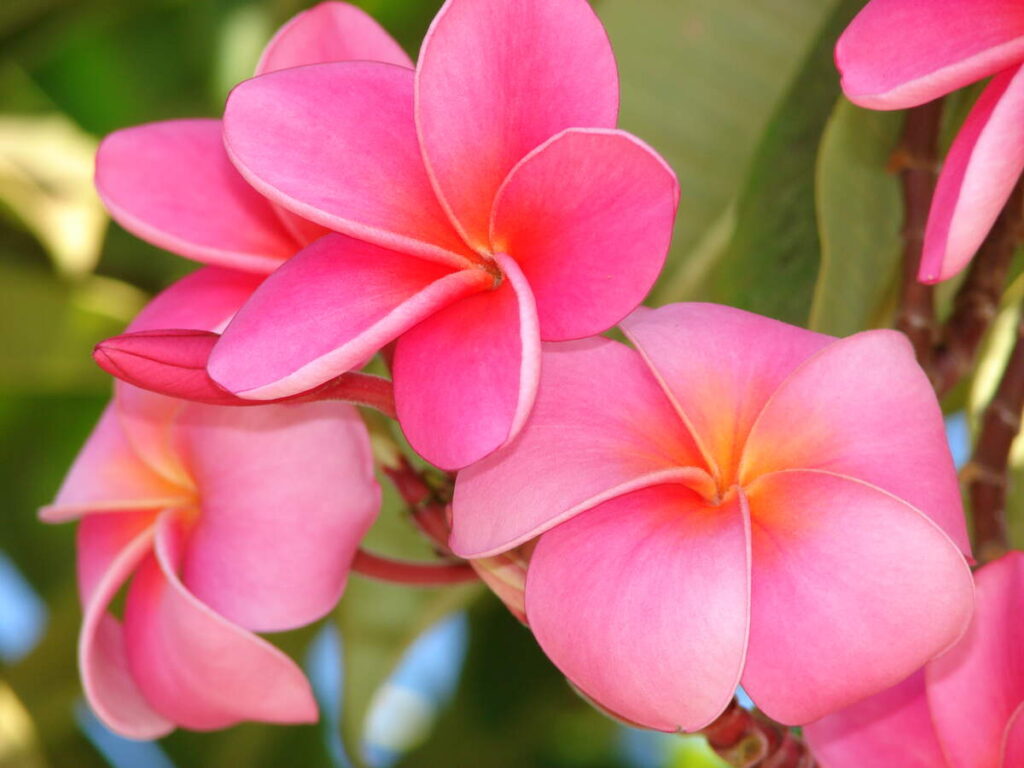
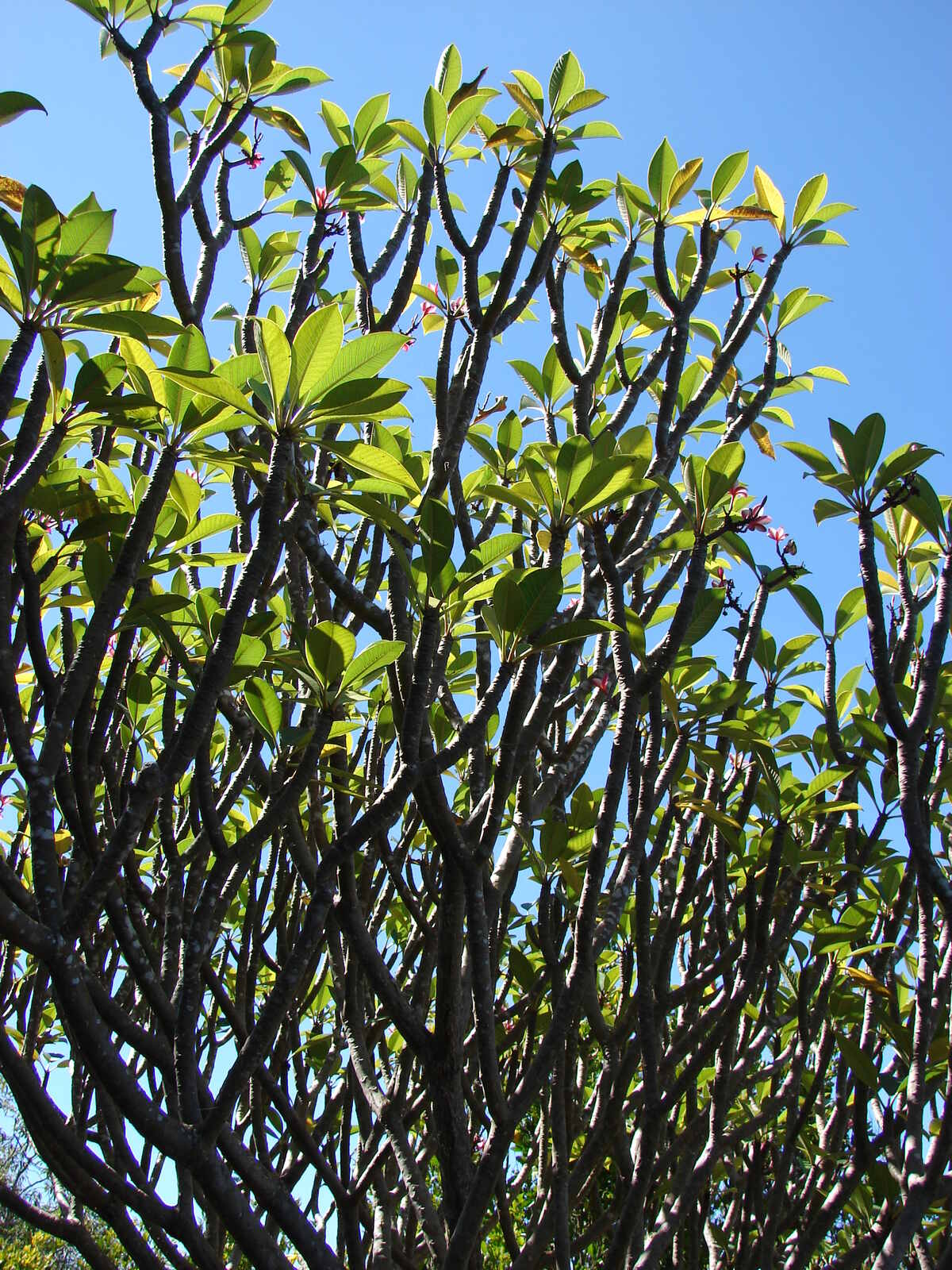
Frangipani (Plumeria rubra) is grown for scented flower clusters and a sculptural outline. It can be a striking garden focal point, but choosing a sunny position and managing water carefully matter more than frequent feeding.
A tropical tree with seasonal changes
Kew gives its native range as Mexico to Venezuela. It belongs to the Apocynaceae family, not the true jasmines. Flower colour varies with the cultivar, including pink, red, white and yellow. NParks records trees up to about 8 metres tall and crowns 8–10 metres wide in Singapore: a nursery plant can need much more space than its small pot suggests.
Plumeria rubra is deciduous, so seasonal leaf loss can be normal. However, sudden leaf drop with spots, damaged stems or waterlogged soil deserves investigation. It also produces dry fruits that split to release seeds; lack of visible fruit on one garden tree does not mean the species has none.
Sun, drainage and room to grow
Choose full sun and freely draining soil. A large container can work, but it must let surplus water escape. Avoid planting where water collects. Plan for the mature canopy, access for maintenance and the cultivar’s habit rather than assuming every frangipani stays compact.
Water during dry periods to support growth and flowering, adjusting to rain, the soil and whether the plant is in a pot. A fixed schedule of two or three waterings each week will not fit every garden. Drought tolerance is not a promise that an established tree never needs water.
Pruning and propagation
Keep pruning purposeful: remove damaged growth and address branches that interfere with the available space. Heavy pruning can reduce the next flower display. Wear gloves and eye protection because cut stems release milky sap.
Cuttings retain the chosen cultivar; seedlings can differ. For hardwood cuttings, allow the cut surface to dry before planting in a well-drained rooting medium. Do not keep the rooting medium saturated. Timing and preparation differ with cutting type, so use a suitable propagation guide rather than treating every green shoot like a hardened branch.
The conspicuous caterpillars of Pseudosphinx tetrio feed on frangipani and can strip its leaves quickly. UF/IFAS reports that trees commonly survive this defoliation, but that is not evidence that it improves flowering. Larvae can also feed on stems when leaves run out. Identify the insect and assess the tree’s condition before deciding whether intervention is needed. Avoid handling unidentified caterpillars.
Rust: inspect the underside of leaves
Yellow-orange powdery patches beneath leaves can indicate frangipani rust, caused by Coleosporium plumeriae. Severe infection can cause early leaf loss. Collect fallen infected foliage and improve airflow rather than crowding trees together. These measures reduce sources of infection; they do not guarantee a cure. Seek a diagnosis if damage persists, and do not apply a fungicide merely because a leaf turns yellow.
Handle the sap carefully
The sap can irritate skin and eyes, causing a rash or blisters in sensitive people. Swallowing sap or bark can cause vomiting and diarrhoea. Do not eat plant parts or leave prunings where children or pets may chew them. Queensland’s poisons service advises medical attention if symptoms occur. Frangipani is an ornamental to enjoy, not a plant to test for edibility.
Usamos cookies em nosso site para fornecer a melhor experiência de uso, lembrando suas preferências e visitas repetidas. Ao clicar em “Aceitar”, concorda com a utilização de TODOS os cookies.
Este site usa cookies para melhorar sua experiência enquanto você navega pelo site. Destes cookies, os cookies que são categorizados como necessários são armazenados no seu navegador, pois são essenciais para o

funcionamento das funcionalidades básicas do site. Também usamos cookies de terceiros que nos ajudam a analisar e entender como você usa este site. Esses cookies serão armazenados em seu navegador apenas com

o seu consentimento. Você também tem a opção de bloquear esses cookies. Porém, a desativação de alguns desses cookies pode afetar sua experiência de navegação.
Os cookies necessários são absolutamente essenciais para o funcionamento adequado do site. Esta categoria inclui apenas cookies que garantem funcionalidades básicas e recursos de segurança do site. Esses cookies não armazenam nenhuma informação pessoal.
Quaisquer cookies que possam não ser particularmente necessários para o funcionamento do site e sejam usados especificamente para coletar dados pessoais do usuário por meio de análises, anúncios e outros conteúdos incorporados são denominados cookies não necessários. É obrigatório obter o consentimento do usuário antes de executar esses cookies no seu site.