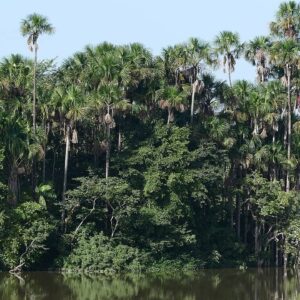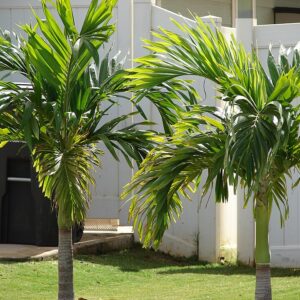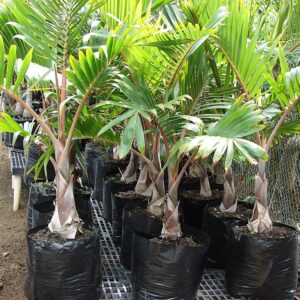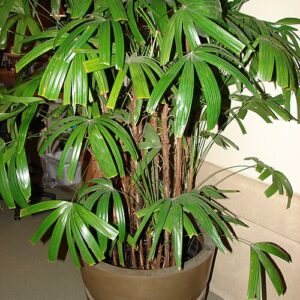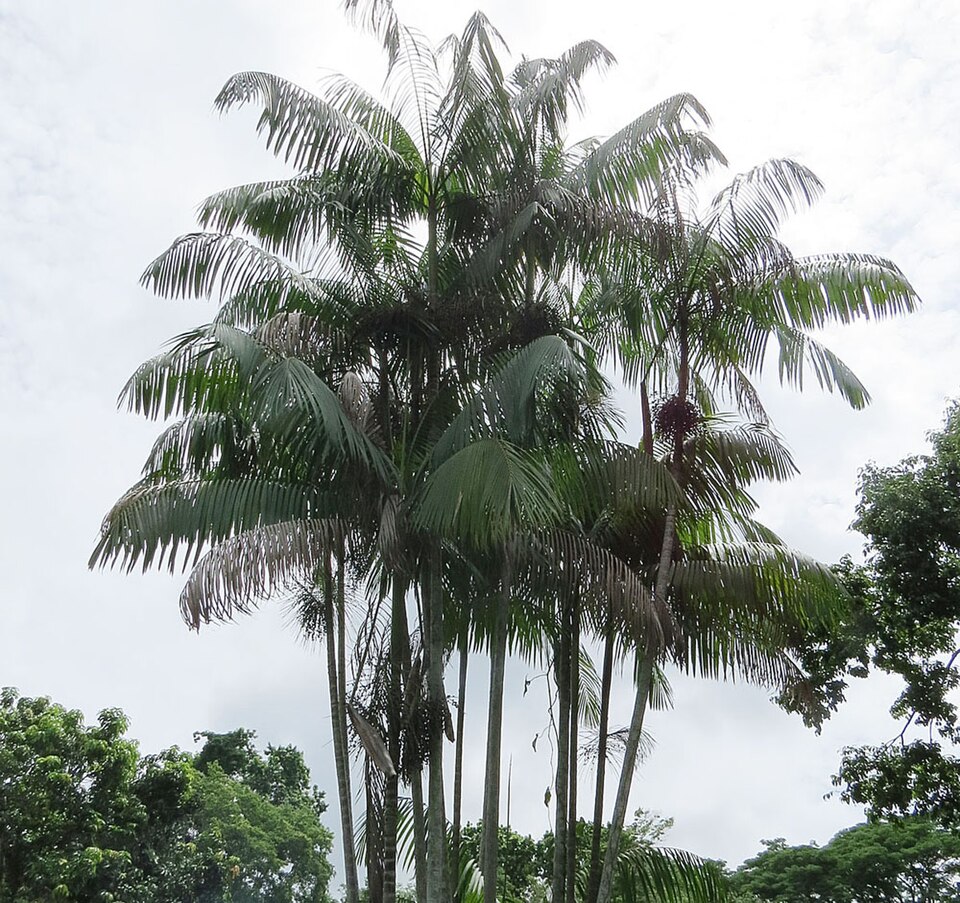
Açaí starts with a palm, not a smoothie bowl. This guide concerns Euterpe oleracea, a large Amazonian palm cultivated for its fruit. Before planting, the important questions are whether your site provides suitable moisture and space, and how you would manage a mature clump.
Which açaí palm is it?
Embrapa distinguishes the clump-forming Euterpe oleracea from the generally single-stemmed Euterpe precatoria. Both are known as açaí, but they are not interchangeable names for the same plant. The shoots emerging around the base are an important feature of E. oleracea.
Embrapa describes slender stems commonly reaching about 15–20 metres. A seedling in a pot does not show the space an adult planting will require. Confirm the scientific name when buying and plan for the mature plant rather than treating it as a small indoor ornamental.
Water, soil and planting
The species is strongly associated with moist Amazonian environments, especially floodplains. Embrapa’s guidance for upland planting highlights the importance of suitable planting material and irrigation during water shortages. Being able to keep a seedling alive is not the same as having conditions for reliable fruit production.
Plan a dependable water supply before planting. A planting date should reflect the local rainy season and irrigation capacity, not a calendar copied from another climate. Ask local agricultural extension staff whether your site is appropriate.
Nutrition and plant health
Base fertilisation on soil analysis and local technical guidance. Manure, lime and mineral fertilisers have different functions: they are not simple substitutes. Do not copy a commercial plantation dose into a small pot or apply a fertiliser recipe without considering the soil.
Use healthy nursery plants, inspect new leaves and avoid damaging the stems and roots. Yellowing, holes, spots or wilting are clues, not diagnoses. Check water stress and identify the cause before treating. If damage persists, consult a qualified agronomist; do not apply insecticides or fungicides indiscriminately. Any product must be authorised for the crop and target and used according to its label and local requirements.
Fruit production takes planning
The time to first harvest varies with planting material, site and management. Older Embrapa guidance reports production beginning around three to four years in the described cultivated conditions; this is not a guarantee for a backyard plant. Avoid promising a harvest simply because a seedling has reached a certain age.
Harvest is not the last food-safety step
Açaí can become contaminated during handling and processing. The health concern is contamination with Trypanosoma cruzi, not a property of the fruit itself. Official guidance emphasises hygienic production and appropriate processing, including heat treatment. For consumption, choose a reliable supplier following sanitary controls; do not assume that freshly picked fruit is ready to blend safely. Seek local food-safety guidance before processing your own harvest.
References and photograph
Embrapa: açaí species; Embrapa: planting açaí palms; Embrapa: crop health; PAHO/WHO: foodborne Chagas prevention.
Cover: Dick Culbert/Wikimedia Commons, CC BY 2.0. Resized photograph of Euterpe oleracea at Summit Park, Panama.