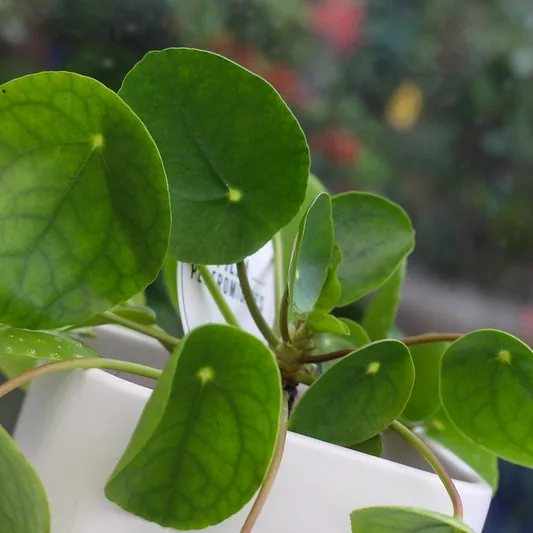
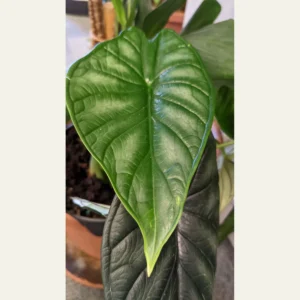
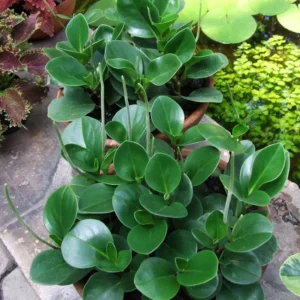
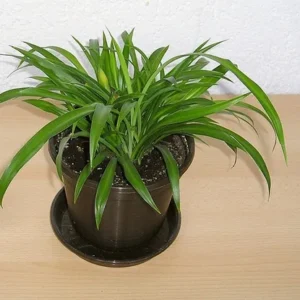
The Chinese money plant catches the eye with round leaves held on long stalks. Compact and perennial, Pilea peperomioides suits small containers in bright indoor spaces protected from intense sun. Its offsets also make it a rewarding plant to share.
Plant profile
Scientific name:Pilea peperomioides. Family: Urticaceae. Despite its species name, it is not a member of the genus Peperomia. Common names: Chinese money plant, pancake plant, coin plant. Origin: China. Typical indoor height: approximately 20–30 cm.
Basic care
Provide abundant indirect light and a well-drained potting mix. Water according to moisture in the container, avoiding waterlogged roots. Keep the plant away from cold drafts and direct sources of heat. New shoots beside the parent can become separate plants.
Watch for mealybugs and scale insects, as well as spider mites. Very stretched growth may indicate insufficient light. Check the actual conditions rather than treating every change as a need for more fertilizer.
Watering, pot size and maintenance
The RHS advises allowing the upper few centimeters of the growing medium to begin drying before watering pileas again. After watering, empty any water left in the saucer or decorative outer pot. This check is more useful than watering simply because a particular day of the week has arrived.
When repotting, choose a container only slightly larger than the previous one. Too much extra potting mix can remain wet for too long. Check the roots periodically and repot when they are crowded, rather than automatically replacing the pot as soon as the plant comes home.
Giving the pot a quarter turn at watering helps distribute light around the plant. During active growth, the RHS allows occasional balanced liquid feeding, following the manufacturer’s dilution instructions. Do not increase the dose in an attempt to fix a problem quickly.
Separating offsets to make new plants
Look for small shoots beside the parent. For an easy start, choose offsets that already have their own roots: you will be moving a small plant with leaves, a stem and roots. There is no need to use a fixed height as the deciding rule. Check its development, separate it while preserving the roots, then pot it into a draining container and watch how it settles in.
Do not confuse an offset with a detached leaf. The petiole is the stalk holding one leaf; an offset develops a new stem with leaves. For the method described here, start with a rooted plantlet rather than assuming any removed leaf will become a complete new plant.
Yellowing or falling leaves: what to check
One lower leaf turning yellow may simply be aging. Changes across several leaves call for a closer look at the growing conditions. The New York Botanical Garden associates yellowing with excessive moisture, especially when stems also soften. Too much light can make leaves pale, while cold or very wet potting mix may contribute to leaf drop.
Before changing the care routine, note where the problem began, how moist the mix is and the plant’s exposure. A symptom alone does not confirm its cause. Gently wipe dust from leaves with a damp cloth and avoid oils or leaf-shine products. Watching changes over time helps distinguish normal leaf replacement from a wider growing problem.
Common questions
Does it need direct sun? No. A bright position without strong direct sunshine is a safer starting point.
Is it toxic? NC State describes the species as safe for children and pets. That does not mean it should be offered as food or encouraged to be chewed.
Usamos cookies em nosso site para fornecer a melhor experiência de uso, lembrando suas preferências e visitas repetidas. Ao clicar em “Aceitar”, concorda com a utilização de TODOS os cookies.
Este site usa cookies para melhorar sua experiência enquanto você navega pelo site. Destes cookies, os cookies que são categorizados como necessários são armazenados no seu navegador, pois são essenciais para o

funcionamento das funcionalidades básicas do site. Também usamos cookies de terceiros que nos ajudam a analisar e entender como você usa este site. Esses cookies serão armazenados em seu navegador apenas com

o seu consentimento. Você também tem a opção de bloquear esses cookies. Porém, a desativação de alguns desses cookies pode afetar sua experiência de navegação.
Os cookies necessários são absolutamente essenciais para o funcionamento adequado do site. Esta categoria inclui apenas cookies que garantem funcionalidades básicas e recursos de segurança do site. Esses cookies não armazenam nenhuma informação pessoal.
Quaisquer cookies que possam não ser particularmente necessários para o funcionamento do site e sejam usados especificamente para coletar dados pessoais do usuário por meio de análises, anúncios e outros conteúdos incorporados são denominados cookies não necessários. É obrigatório obter o consentimento do usuário antes de executar esses cookies no seu site.