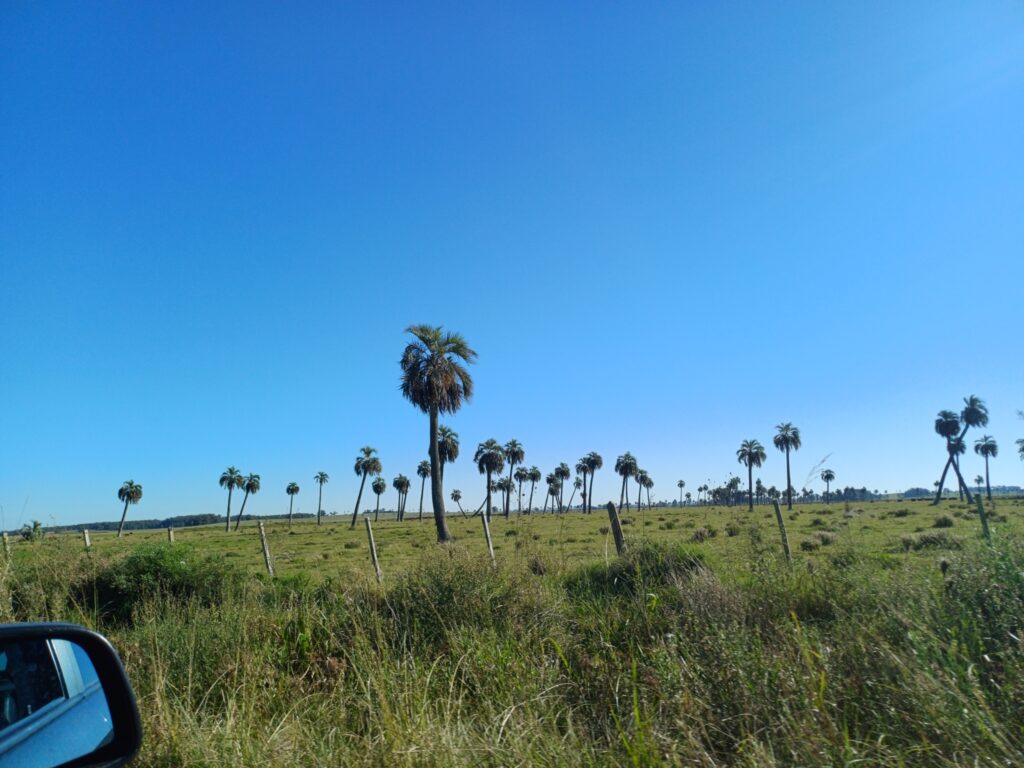
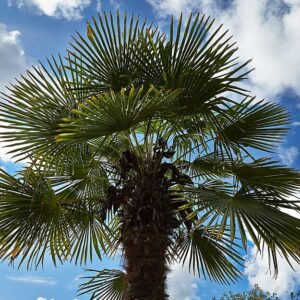
Butia odorata brings arching leaves and edible fruit to a sunny garden. Known as butiá in Brazil, it belongs to the palm family, Arecaceae. Its native range runs from Rio Grande do Sul, in southern Brazil, into Uruguay. Other palms called butiá belong to different species, so the scientific name matters when choosing a plant.
Choosing a place in the garden
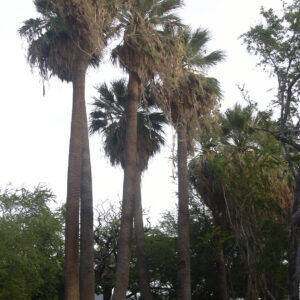
This is a palm to plan around, not a temporary decoration. Give it an open, sunny position and enough room for the mature crown. In a small garden, consider the eventual spread of the leaves and keep access routes clear. Good drainage matters: do not choose a spot where water remains standing after rain.
Water according to soil moisture, weather and the age of the plant rather than a fixed weekly timetable. A recently planted palm needs closer observation than an established specimen. Fertilizer should follow the product label and the needs of the soil. Avoid heavy pruning of healthy green leaves.
Starting from seed takes patience
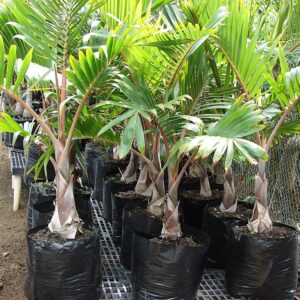
Embrapa’s Technical Communication 359 presents a specific method for B. odorata: remove the pulp from ripe fruits, freeze the cleaned stones for one to three weeks, then sow them about 2 cm deep in equal parts fertile soil and sand. Keep the containers warm, around 25°C, with sunlight and careful watering. The publication describes emergence from roughly the fourth month, not an immediate result. Consult the illustrated guide before starting; it also explains when to move seedlings into individual containers and when they are ready for their final position.
Fruit and the landscape it belongs to
The fruit can be enjoyed fresh or used in juices, jams and ice cream. Its colour and flavour vary between plants. Seed-grown offspring are not guaranteed to produce fruit identical to that of the parent.
Natural butiá groves are more than collections of palms: they support other plants and wildlife. Growing a nursery-propagated specimen can celebrate this landscape without removing mature palms from it. For a home garden, the best starting point is a correctly identified plant, suitable space and realistic expectations about its gradual development.
Usamos cookies em nosso site para fornecer a melhor experiência de uso, lembrando suas preferências e visitas repetidas. Ao clicar em “Aceitar”, concorda com a utilização de TODOS os cookies.
Este site usa cookies para melhorar sua experiência enquanto você navega pelo site. Destes cookies, os cookies que são categorizados como necessários são armazenados no seu navegador, pois são essenciais para o

funcionamento das funcionalidades básicas do site. Também usamos cookies de terceiros que nos ajudam a analisar e entender como você usa este site. Esses cookies serão armazenados em seu navegador apenas com

o seu consentimento. Você também tem a opção de bloquear esses cookies. Porém, a desativação de alguns desses cookies pode afetar sua experiência de navegação.
Os cookies necessários são absolutamente essenciais para o funcionamento adequado do site. Esta categoria inclui apenas cookies que garantem funcionalidades básicas e recursos de segurança do site. Esses cookies não armazenam nenhuma informação pessoal.
Quaisquer cookies que possam não ser particularmente necessários para o funcionamento do site e sejam usados especificamente para coletar dados pessoais do usuário por meio de análises, anúncios e outros conteúdos incorporados são denominados cookies não necessários. É obrigatório obter o consentimento do usuário antes de executar esses cookies no seu site.