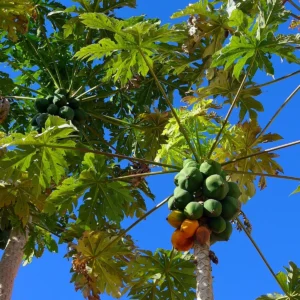
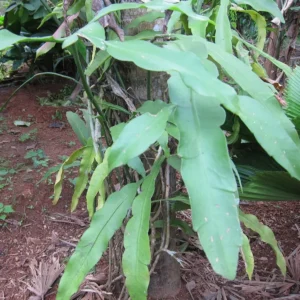
Dragon fruit, also known as pitaya or pitahaya, stands out for its colorful skin and large night-opening flowers. Growing it successfully is not simply a matter of maximum sun and minimal water. Plant identity, strong support and pollination can make the difference between an attractive cactus and one that also produces fruit.
This guide follows the revised Brazilian article, based on Embrapa material. Species, cultivars and climates differ, so adapt the advice to local conditions rather than treating Brazil’s growing conditions as universal.
Dragon fruit at a glance
Family: Cactaceae. Dragon fruit is a cactus. Scientific name: the common name covers several species. Red-skinned, white-fleshed fruit is often Selenicereus undatus, also known by the older name Hylocereus undatus. Growth: long fleshy stems, called cladodes, trained on supports. Flowers: open at night; fruit formation depends on fertilization. Climate: tropical and subtropical, with sensitivity to frost and extreme heat. Soil: well-drained, aerated and containing organic matter. Propagation: mainly stem cuttings; seeds are also possible. Size: depends on species, vigor and training. The height of a support is not the plant’s natural limit.
A cactus, but not a desert-plant recipe
The green, succulent stems store water and carry out photosynthesis. These climbing or supported stems are not an underground horizontal rhizome. Their care should not be reduced to the idea that every cactus thrives with extreme heat and almost no water.
Nor is there only one kind of dragon fruit. Brazil has native species such as Selenicereus setaceus, known locally as pitaya-do-cerrado or minipitaya. Other species and hybrids are grown commercially. Three familiar fruit colors do not represent the full diversity of these plants.
White, red and yellow dragon fruit
Color helps describe a fruit group, but it does not by itself establish flavor, productivity or the need for cross-pollination. Three familiar forms are:
White-fleshed dragon fruit: pink or red skin with white flesh. Selenicereus undatus is one species in this group.
Yellow dragon fruit: yellow skin and white flesh, as in Selenicereus megalanthus. The fruit may carry spines.
Red-fleshed dragon fruit: red skin with reddish flesh, as in Selenicereus costaricensis. Color intensity varies between plants and cultivars.
Embrapa also highlights the smaller fruit of Selenicereus setaceus. Even within a species, important differences remain. Ask the nursery for the cultivar name, origin, regional suitability and pollination behavior.
Sun or partial shade? Match exposure to the climate
Dragon fruit needs good light to grow and flower, but extreme exposure is not always better. Embrapa describes generally favorable development between 18°C and 30°C. Frost and prolonged temperatures above 40°C can cause damage.
Adjust light to the cultivar and climate. Partial protection from the most intense sun may be needed in very hot regions. The technical publication Pitaya: uma alternativa frutífera, available through Embrapa, records sun damage in Mato Grosso and emphasizes soil cover to reduce plant stress.
Choose a bright outdoor position and observe the stems. Do not abruptly move a shade-grown plant into strong sun. Neither deep shade nor extreme heat is a universal answer. Marks and lesions need assessment, since not every damaged patch is sunburn.
Start with a healthy, identified plant
Stem cuttings are the main commercial propagation method: a stem segment produces a plant with the parent’s genetic characteristics. Embrapa notes that this supports uniformity and earlier production. Seeds can germinate, but they are not the best route when the aim is to reproduce a known cultivar faithfully.
Choose a reliable supplier and avoid plants with suspicious wounds, rotting tissue or pest signs. Knowing which dragon fruit you have is particularly important if there is room for only one plant.
Prepare the soil and support before planting
Dragon fruit can grow in different soil types, with better performance in light to medium, well-drained, aerated soils. You do not need to exclude every trace of clay or turn the bed into sand. Compaction and water collecting around the roots are the main concerns.
Use soil analysis to guide acidity correction and fertilization. Mature compost or well-rotted manure can improve structure and fertility, but quantities depend on the soil and plant stage. A fixed fertilizer recipe cannot solve every growth problem.
Install a strong post or trellis with an upper support for hanging stems. It must carry the mature plant and its fruit. Plant in moist soil near the support and tie stems without constricting them. Aerial roots help the plant attach.
Water according to conditions, not a rigid calendar
Being a cactus does not remove the need for water. Regular moisture supports growth and fruiting, while prolonged saturation harms roots. Check the soil and adjust watering to rainfall, heat, plant size and container conditions. “Two or three times a week” cannot suit every garden.
Organic mulch helps protect shallow roots and retain moisture, but it cannot repair poor drainage. Deal with standing water first. If growth or leaf-like stem color changes, investigate the conditions before adding water or fertilizer automatically.
Train stems and prune with a purpose
While establishing the plant, guide selected stems upward to the support. Later growth forms a hanging crown. Pruning can prevent tangles, remove weak or diseased parts and improve light distribution. It does not require indiscriminately cutting off every long stem.
Watch for pests in stem joints and hidden areas. Our guide to mealybugs and scale insects explains identification and careful monitoring. Product suitability must be checked for the actual crop: an ornamental-plant spray is not automatically permitted on edible dragon fruit.
Can dragon fruit grow in a pot?
Yes, if the container provides root space, open drainage holes and stability. The support must be firm, and the mix should balance aeration, drainage and moderate moisture retention. A small pot of sand with a weak stake may hold a young plant temporarily, but it is not a good plan for a mature cactus carrying fruit.
Why does it flower but fail to set fruit?
Pollen incompatibility is one important reason. Although the flowers contain male and female structures, many cultivars cannot set fruit using their own pollen. They need pollen from a genetically compatible plant. Two cuttings cloned from the same parent do not necessarily solve the problem.
Cross-pollination may occur through flower visitors or by hand during the night-opening period. Self-compatible cultivars also exist, including material developed by Embrapa, which can fruit without requiring this cross. Confirm your cultivar’s behavior before buying a second plant or attempting hand pollination.
Plant age, weather and growing conditions can also affect fruiting. A flower is not a guarantee of a harvest. Assess the whole situation rather than increasing fertilizer or water by trial and error.
Harvesting and eating dragon fruit
Follow the skin-color change characteristic of the cultivar. Embrapa recommends harvesting at the appropriate maturity stage, with strong, even characteristic color, while avoiding damage. Do not use one fixed number of days for all types.
The flesh can be eaten fresh or used in recipes. Sweetness and composition vary, so it is inaccurate to claim that all dragon fruit is low in sugar or nutritionally identical. It provides water, fiber and other food components, but it is not a treatment.
Research into nutrients and bioactive compounds does not justify promises that eating the fruit will prevent diabetes, ulcers or respiratory disease, slow aging or control cholesterol or blood glucose. Enjoy it as part of a varied diet, not as a substitute for health care.
Usamos cookies em nosso site para fornecer a melhor experiência de uso, lembrando suas preferências e visitas repetidas. Ao clicar em “Aceitar”, concorda com a utilização de TODOS os cookies.
Este site usa cookies para melhorar sua experiência enquanto você navega pelo site. Destes cookies, os cookies que são categorizados como necessários são armazenados no seu navegador, pois são essenciais para o

funcionamento das funcionalidades básicas do site. Também usamos cookies de terceiros que nos ajudam a analisar e entender como você usa este site. Esses cookies serão armazenados em seu navegador apenas com

o seu consentimento. Você também tem a opção de bloquear esses cookies. Porém, a desativação de alguns desses cookies pode afetar sua experiência de navegação.
Os cookies necessários são absolutamente essenciais para o funcionamento adequado do site. Esta categoria inclui apenas cookies que garantem funcionalidades básicas e recursos de segurança do site. Esses cookies não armazenam nenhuma informação pessoal.
Quaisquer cookies que possam não ser particularmente necessários para o funcionamento do site e sejam usados especificamente para coletar dados pessoais do usuário por meio de análises, anúncios e outros conteúdos incorporados são denominados cookies não necessários. É obrigatório obter o consentimento do usuário antes de executar esses cookies no seu site.