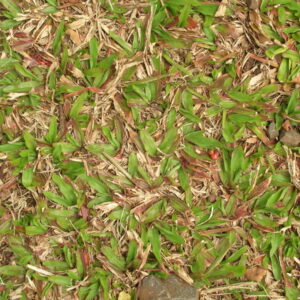
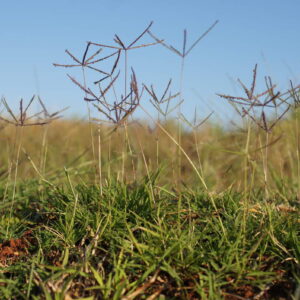
A dense lawn starts with choosing the right grass, not simply buying a green carpet. Zoysia japonica, or Japanese lawngrass, is a warm-season grass used in gardens. In Brazil, it is closely associated with the name grama-esmeralda. Before buying, check the cultivar and its suitability for your climate.
Esmeralda is not automatically Emerald
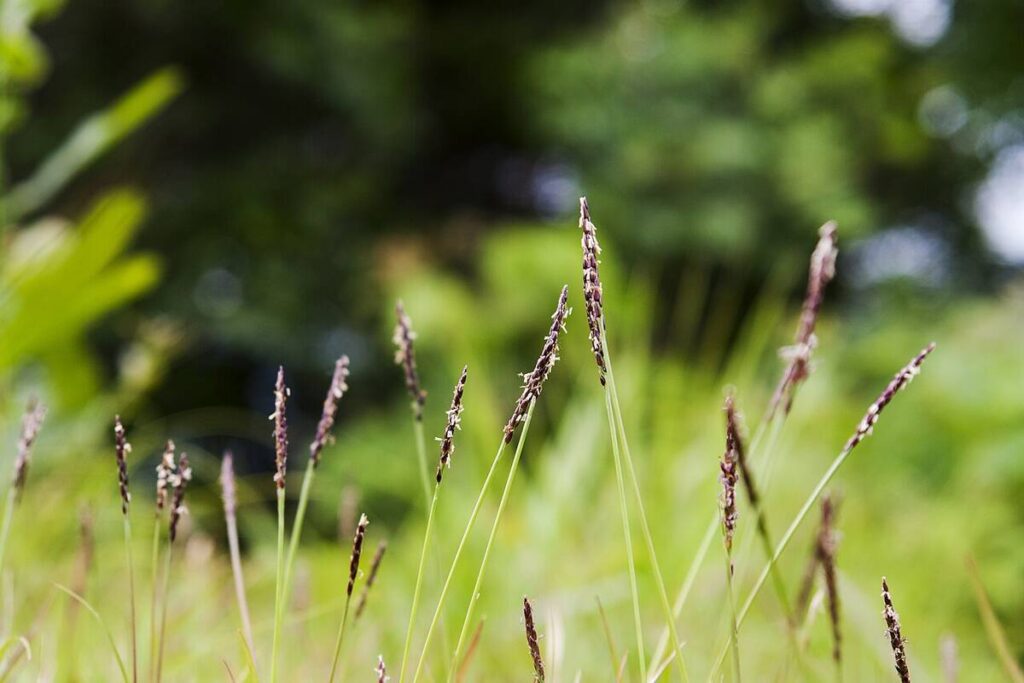
Brazil’s official cultivar register lists Esmeralda as Zoysia japonica. That does not make every grass sold under a similar common name identical. A Brazilian study explicitly distinguishes local grama-esmeralda from the US cultivar Emerald, a hybrid. Do not translate the product name and assume the care requirements are interchangeable. The cover photograph illustrates the species, not a verified Esmeralda cultivar.
Where does it work best?
Choose a sunny position with drainage. Zoysiagrass spreads through surface runners and underground stems, gradually knitting into a dense turf. Some cultivars tolerate light shade, but deep shade can leave a thin lawn. It withstands wear once established; that is different from recovering quickly after repeated damage. A heavily used play area needs a cultivar and maintenance plan suited to that pressure.
Growth slows in cool weather and the lawn can turn brown during winter dormancy. This does not automatically mean it has died. Cold tolerance varies, so a universal claim that all plants fail below 10°C is not a useful buying guide.
Sod, plugs or seed?
Sod gives immediate coverage, but the roots still need time to enter the soil. Plugs cost less plant material yet leave gaps while they spread. Some Zoysia japonica cultivars are available as seed; a seed packet does not necessarily reproduce the named turf cultivar you saw at a nursery.
Before laying sod, test the soil, remove debris and weeds, and resolve drainage problems. Prepare an even surface and ensure contact between turf and soil. Keep newly laid turf moist while roots establish, adjusting irrigation to rainfall and drying rather than following a fixed number of daily waterings.
Care after establishment
Once rooted, avoid frequent superficial watering: moisten the root zone when needed instead. Drought tolerance does not mean a permanently green lawn without irrigation. Watch for a thick layer of accumulated stems, called thatch, which can complicate mowing and require maintenance.
Match cutting height to the cultivar and mower, keep blades sharp, and avoid scalping. Fertilizer should follow soil results and local advice, not a universal twice-yearly prescription. Before treating bare or discolored patches, check shade, water and compaction: not every patch is a pest problem.
Usamos cookies em nosso site para fornecer a melhor experiência de uso, lembrando suas preferências e visitas repetidas. Ao clicar em “Aceitar”, concorda com a utilização de TODOS os cookies.
Este site usa cookies para melhorar sua experiência enquanto você navega pelo site. Destes cookies, os cookies que são categorizados como necessários são armazenados no seu navegador, pois são essenciais para o

funcionamento das funcionalidades básicas do site. Também usamos cookies de terceiros que nos ajudam a analisar e entender como você usa este site. Esses cookies serão armazenados em seu navegador apenas com

o seu consentimento. Você também tem a opção de bloquear esses cookies. Porém, a desativação de alguns desses cookies pode afetar sua experiência de navegação.
Os cookies necessários são absolutamente essenciais para o funcionamento adequado do site. Esta categoria inclui apenas cookies que garantem funcionalidades básicas e recursos de segurança do site. Esses cookies não armazenam nenhuma informação pessoal.
Quaisquer cookies que possam não ser particularmente necessários para o funcionamento do site e sejam usados especificamente para coletar dados pessoais do usuário por meio de análises, anúncios e outros conteúdos incorporados são denominados cookies não necessários. É obrigatório obter o consentimento do usuário antes de executar esses cookies no seu site.