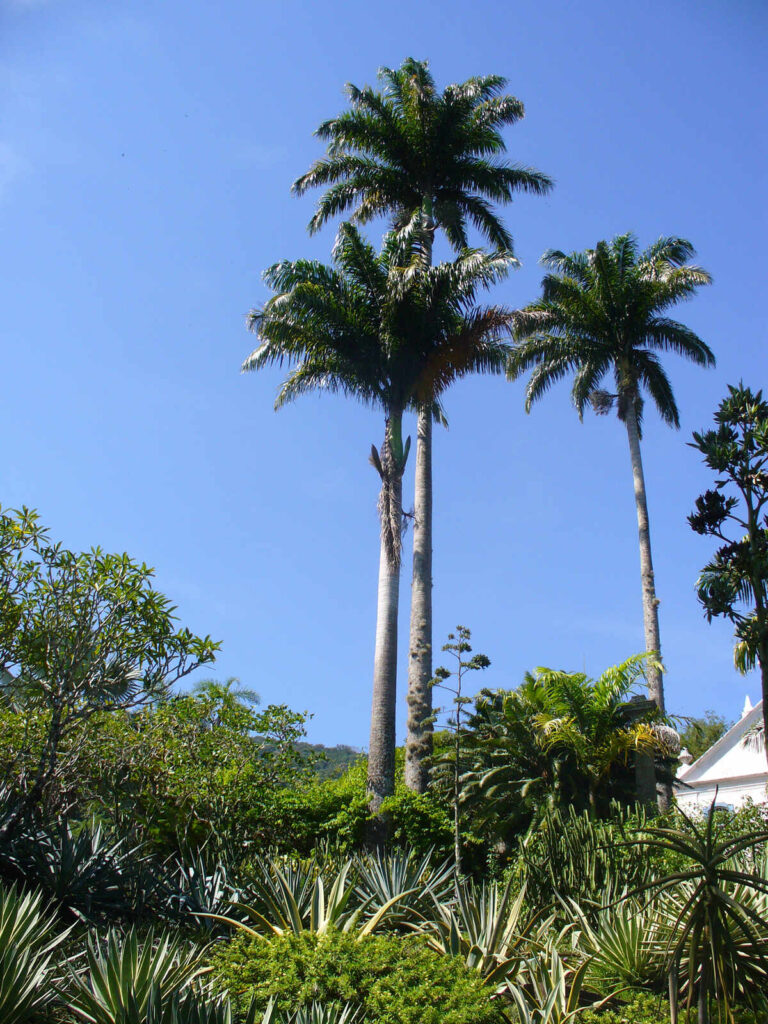
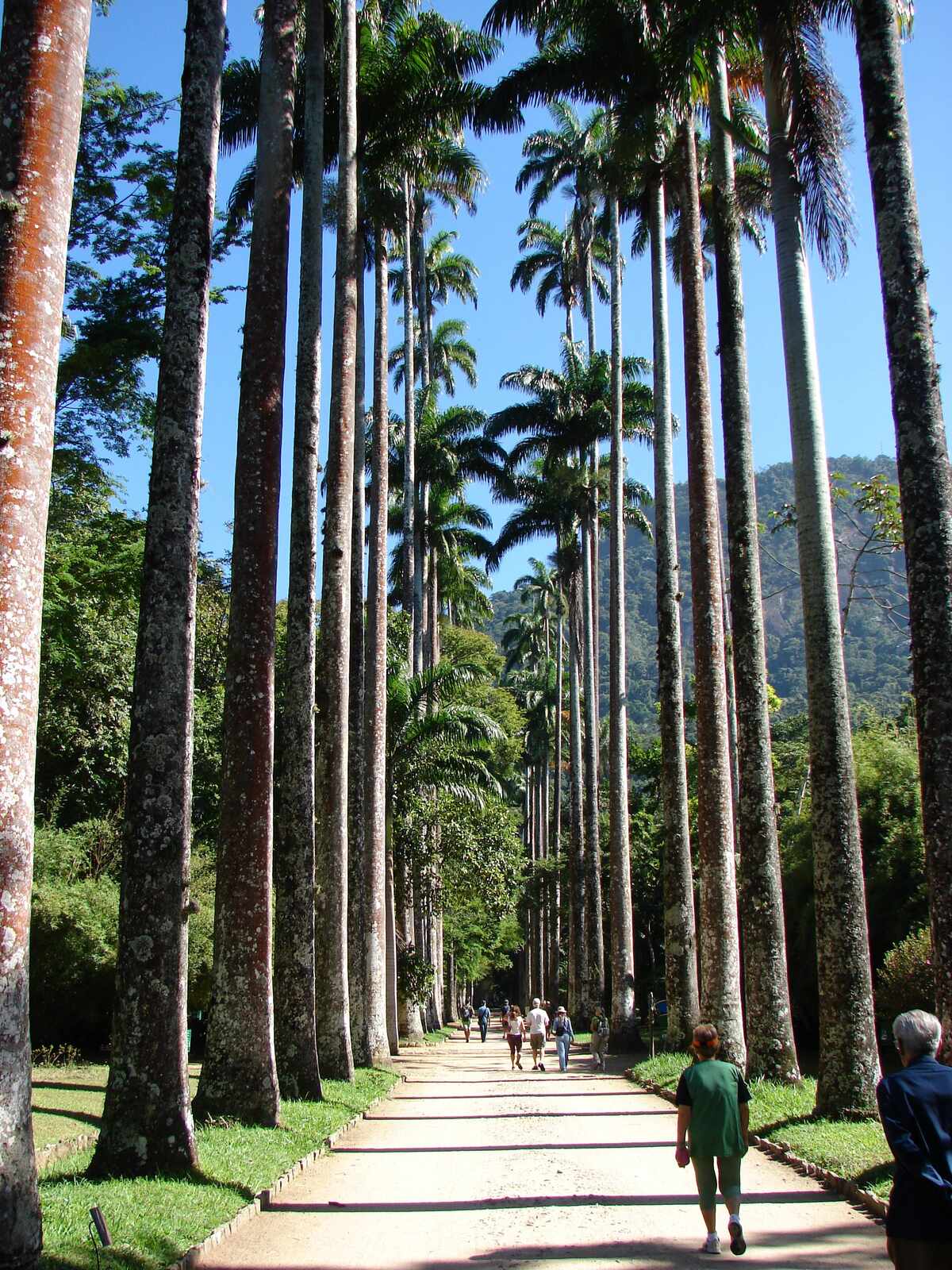
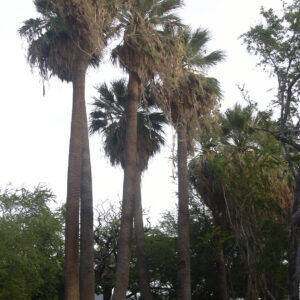
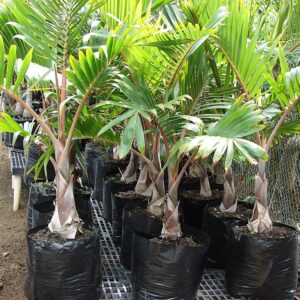
A row of imperial palms can make a landscape feel monumental. In Brazil, that image is closely associated with historic gardens and the monarchy. Yet Roystonea oleracea is also a living tree of exceptional scale, with maintenance needs and ecological consequences that deserve as much attention as its silhouette.
Which royal palm is it?
Kew accepts Roystonea oleracea as a species native from the Lesser Antilles to northeastern Colombia. Its recorded native range includes Trinidad and Tobago and Venezuela. It is not a Brazilian native simply because it became a familiar part of Brazilian landscapes.
Common names such as royal palm can refer to other species, including Roystonea regia. Use the scientific name when checking a nursery label or a management recommendation. A photograph of a tall smooth-trunked palm alone is not enough to assume that all information about royal palms applies to this one.
A large palm is a long-term commitment
NParks describes a solitary palm with feather-like fronds that may reach six metres long. It prefers a warm, sunny position and moist, well-drained soil. The scale of the leaves is a useful reminder that the crown occupies more than a point on a planting plan.
A small seedling can conceal the future demands of a large tree. Before considering a site, assess overhead services, neighbouring buildings, access for professional maintenance and the areas beneath the crown. Keep the decision separate from a photograph of an attractive avenue: a historic garden has a different management context from a small residential yard.
Why its Brazilian history needs careful wording
The Rio de Janeiro Botanical Garden’s published chronology dates the planting of imperial palms along its principal avenue to 1842, under director Serpa Brandão. The familiar story of the earlier palma mater links it to Dom João and 1809.
That personal planting story is not uncontested. In a 2022 study in Rodriguésia, researcher Marcos Gonzalez examined the narrative promoted by João Barbosa Rodrigues and argued that it was historically unlikely, interpreting it as a politically charged invented tradition. It is more accurate to distinguish the famous institutional story from what historical research can demonstrate than to repeat it as an eyewitness fact.
Ecological value and ornamental value are different
Research published in 2014 examined R. oleracea in a wet area on Ilha Grande, Rio de Janeiro. It found natural establishment and lower seedling richness and diversity beneath palm crowns. The authors did not directly test every stage of invasion there, but identified a conservation concern. This is evidence from a particular site, not a claim that every planted specimen has the same effect.
That distinction still matters before planting near natural vegetation or wetlands. Ask for a local ecological assessment and consider native species appropriate to the site rather than assuming that a long ornamental history guarantees environmental suitability. This article does not establish a nationwide legal ban, and it is not an instruction to remove existing trees without assessment.
Care is not finished when the palm becomes tall
NParks recommends watering during dry periods and occasional fertilization for healthy growth. A fixed rule that established palms never need water is therefore unhelpful. Irrigation should reflect rainfall, the soil and establishment conditions; nutritional treatment should follow a qualified assessment rather than an automatic stack of fertilizers.
Falling leaves also need to be considered in a maintenance plan. The ecological study describes large, heavy leaves reaching the ground. In a designed landscape, avoid treating the space beneath the crown as risk-free simply because the trunk looks sound. Have a qualified tree-care professional assess concerns, especially where people, vehicles or structures are exposed. Do not climb a tall palm or improvise high-level cutting.
Before buying or changing an existing planting
Ask three questions: is this the correct species, is this location environmentally suitable, and who will maintain it as it grows? Include transport, establishment and future access in the budget, not just the nursery price. For an existing historic planting, conservation and public safety need to be considered together. For a new home garden, another species may meet the design goal at a more manageable scale.
Usamos cookies em nosso site para fornecer a melhor experiência de uso, lembrando suas preferências e visitas repetidas. Ao clicar em “Aceitar”, concorda com a utilização de TODOS os cookies.
Este site usa cookies para melhorar sua experiência enquanto você navega pelo site. Destes cookies, os cookies que são categorizados como necessários são armazenados no seu navegador, pois são essenciais para o

funcionamento das funcionalidades básicas do site. Também usamos cookies de terceiros que nos ajudam a analisar e entender como você usa este site. Esses cookies serão armazenados em seu navegador apenas com

o seu consentimento. Você também tem a opção de bloquear esses cookies. Porém, a desativação de alguns desses cookies pode afetar sua experiência de navegação.
Os cookies necessários são absolutamente essenciais para o funcionamento adequado do site. Esta categoria inclui apenas cookies que garantem funcionalidades básicas e recursos de segurança do site. Esses cookies não armazenam nenhuma informação pessoal.
Quaisquer cookies que possam não ser particularmente necessários para o funcionamento do site e sejam usados especificamente para coletar dados pessoais do usuário por meio de análises, anúncios e outros conteúdos incorporados são denominados cookies não necessários. É obrigatório obter o consentimento do usuário antes de executar esses cookies no seu site.