An areca palm can soften a bare wall with arching foliage or form a screen in a warm garden. The same plant behaves very differently in a living-room pot and in open ground, however. Success starts with choosing enough light and space, then adjusting care to the conditions rather than following a fixed weekly schedule.
Areca, golden cane palm or Dypsis?
These familiar names refer here to Chrysalidocarpus lutescens, the name accepted by Kew, with Dypsis lutescens listed as a synonym. It is native to eastern Madagascar. Both scientific names still appear in useful gardening literature, so keep them together when checking a nursery label or looking up care advice.
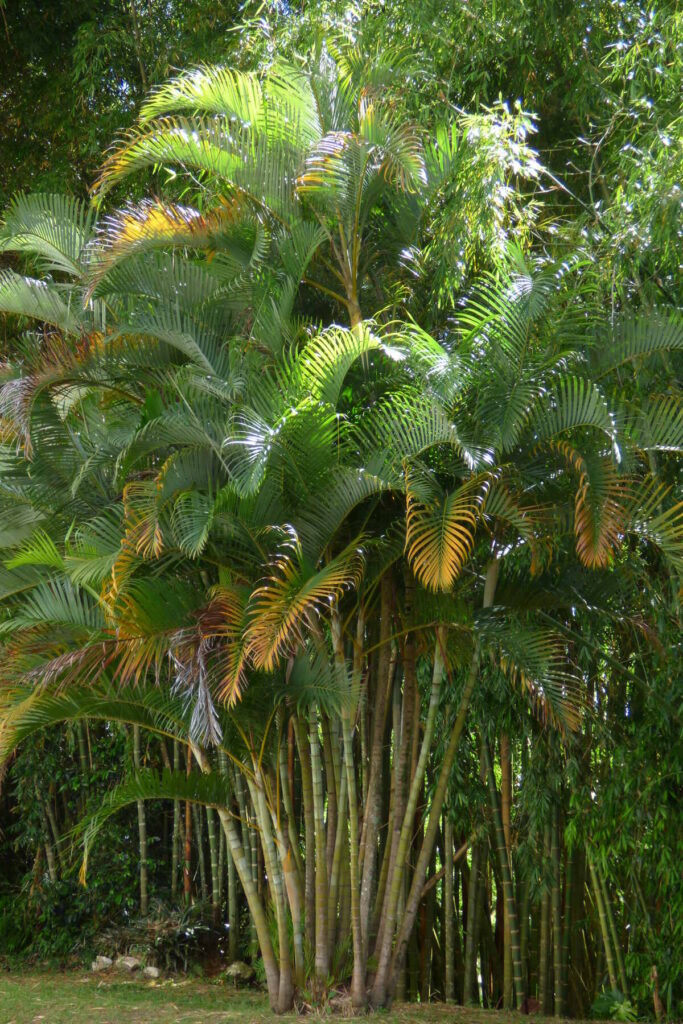
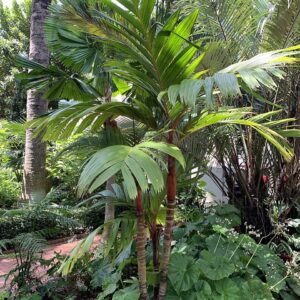
Its cane-like stems grow in a clump beneath arching, feather-shaped fronds. NParks describes yellow-green crownshafts and many narrow leaflets. Plan space for the whole clump.
Think beyond the size of the nursery pot
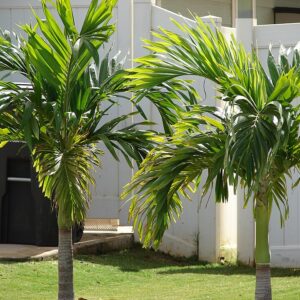
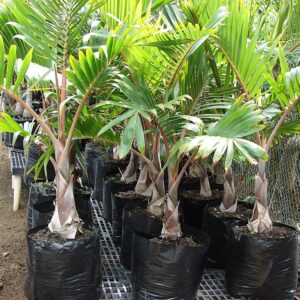
UF/IFAS describes mature landscape plants around 6–9 metres tall and roughly 2.4–3 metres across. Indoor plants remain smaller, but a small pot is not a reliable permanent height-control system. Before buying, imagine the leaves spreading over furniture or paths and consider access for watering and repotting.
For a garden screen, decide whether you want a dense clump or a more open view of the stems. Removing growth changes the appearance, not the plant into a different species with a guaranteed final height. The RHS lists no special pruning requirement. Avoid treating healthy palms like clipped hedges or removing foliage simply to force a particular silhouette.
The RHS recommends bright indirect light for plants grown under cover. Outdoors, UF/IFAS accepts sun or partial shade but notes that small plants benefit from some shade. A palm raised in protected nursery conditions should not be treated as already adapted to an exposed garden.
Choose the position by the conditions around the plant, not just a compass direction or a decorative photograph. A bright room may still have a dark corner. Check how sunlight moves across the leaves and allow enough clearance for them. Our indoor garden planning guide helps with that assessment.
Water and drainage: check first
NParks recommends moist, well-drained soil, allowing it to become moderately dry between waterings. In a pot, check the mix and drainage rather than watering automatically three times a week. Do not leave water trapped in a decorative outer container. A change of season, position or container can change how quickly the mix dries.
An established garden palm is not necessarily independent of irrigation. UF/IFAS specifically recommends water during drought. That is different from promising that a mature plant never needs watering. Watch local conditions and the root zone rather than using a universal fortnightly interval.
Feeding and signs of trouble
For container plants, use fertilizer appropriate to the plant and follow the product label. The RHS recommends feeding during active growth rather than continuously through the year. Do not translate a British seasonal calendar directly into a tropical routine, or assume that adding both organic and mineral products always improves results.
Check leaves and stems regularly. The RHS lists mites, mealybugs, thrips and scale insects as possible pests. Golden tones in the stems are part of this palm’s appearance, but widespread yellowing or declining new growth deserves investigation. Record changes in light and watering before buying a treatment; a photograph of the whole plant and root-zone details will help a nursery or horticultural professional assess it.
Propagation and pets
NParks lists seeds and rooted divisions for propagation. A cut cane without roots is not equivalent to a rooted division.
The ASPCA lists Dypsis lutescens as non-toxic to dogs and cats. That identification matters because plants sharing palm-like common names can be unrelated. The listing is not a recommendation to feed the plant to animals; if a pet becomes unwell after chewing a plant, seek veterinary advice.
Usamos cookies em nosso site para fornecer a melhor experiência de uso, lembrando suas preferências e visitas repetidas. Ao clicar em “Aceitar”, concorda com a utilização de TODOS os cookies.
Este site usa cookies para melhorar sua experiência enquanto você navega pelo site. Destes cookies, os cookies que são categorizados como necessários são armazenados no seu navegador, pois são essenciais para o

funcionamento das funcionalidades básicas do site. Também usamos cookies de terceiros que nos ajudam a analisar e entender como você usa este site. Esses cookies serão armazenados em seu navegador apenas com

o seu consentimento. Você também tem a opção de bloquear esses cookies. Porém, a desativação de alguns desses cookies pode afetar sua experiência de navegação.
Os cookies necessários são absolutamente essenciais para o funcionamento adequado do site. Esta categoria inclui apenas cookies que garantem funcionalidades básicas e recursos de segurança do site. Esses cookies não armazenam nenhuma informação pessoal.
Quaisquer cookies que possam não ser particularmente necessários para o funcionamento do site e sejam usados especificamente para coletar dados pessoais do usuário por meio de análises, anúncios e outros conteúdos incorporados são denominados cookies não necessários. É obrigatório obter o consentimento do usuário antes de executar esses cookies no seu site.