The raspberry (Rubus idaeus) is valued for its fragrance, delicate texture and balance of sweetness and acidity. It can be eaten fresh or used in sauces, jams and desserts. Growing it well starts with choosing a suitable cultivar and understanding which canes to prune, not simply providing water and fertilizer.
Raspberry at a glance
Scientific name: Rubus idaeus.
Family: Rosaceae.
Habit: a shrub with canes that need management and often support.
Life cycle: perennial roots and crown, with individual canes having a limited lifespan.
Light: sun.
Fruit: clusters of small drupelets, usually red; yellow-fruited cultivars also exist.
Climate: chilling requirements and heat tolerance vary by cultivar.
Raspberries, blackberries and mulberries
Rubus idaeus is an accepted name in Kew’s Plants of the World Online. In addition to red raspberries, there are yellow-fruited cultivars. Other raspberries belong to different species, so their growing requirements should not all be treated as identical.
Raspberries and blackberries both belong to Rubus, but a useful difference appears at harvest: a ripe raspberry separates from its receptacle and has a hollow center. In a blackberry, the receptacle remains with the picked fruit. Mulberries, produced by trees in the genus Morus, belong to a different group.
Choose the cultivar before choosing the planting date
Before buying, confirm the cultivar’s identity and fruiting habit. Its need for winter chill, ability to cope with heat and cropping season affect whether it will suit your garden. Choose healthy plants from a reliable source and seek advice that matches your region.
A northern-winter calendar is not a universal planting guide, particularly in Brazil or other Southern Hemisphere locations. Follow local climate and plant development rather than copying months from another country.
Choose a sunny, well-ventilated position with fertile, well-drained soil containing organic matter. Water collecting around the roots increases the risk of losses. Raised beds may be useful where drainage is poor. Containers are possible, but root space, moisture and cane support need attention.
Planting, watering and support
Prepare the growing area before planting and avoid burying the plant too deeply. Install a support where needed, leaving room to reach the canes for pruning and picking. Raspberries can send up shoots from their roots beyond the original planting spot, so monitor their spread to keep the bed accessible.
Water according to soil and weather conditions, paying particular attention as fruit develops. Organic mulch can conserve moisture and reduce competition from weeds. Direct water toward the soil where practical.
Base fertilizer and soil-acidity adjustments on a soil test and local recommendations. A dose used successfully on another plantation is not automatically right for your garden. If foliage turns yellow, work through possible causes before feeding; our guide to yellow leaves on plants offers a useful starting point.
Pruning without losing the next crop
The roots and crown are perennial, but each cane normally has a two-year cycle. A first-year cane is called a primocane; in its second year, it is a floricane. Summer-bearing cultivars grow new canes in the first year and fruit on them in the second. Primocane-fruiting cultivars can crop at the tips in their first year, with the lower portion potentially cropping in the second. This distinction determines the cuts.
Summer-bearing raspberries: once cropping has finished, remove the spent fruiting canes at ground level. Keep healthy new canes and arrange them on the support for the next crop. Cutting everything down because the planting looks untidy can remove next year’s production.
Primocane-fruiting raspberries managed for two crops: during the appropriate dormant period, remove the upper portion that fruited in its first year, retaining the living lower part. That part can crop in the second year. Remove the whole cane after that crop. Meanwhile, new canes will emerge from the crown and roots.
Primocane-fruiting raspberries managed for one crop: an alternative is to cut all canes to ground level during dormancy and harvest from the new canes in the following growing cycle. This sacrifices the crop that would have come from second-year canes. Do not apply this system to summer-bearing cultivars, or you may lose the next harvest.
Loosely mark canes that have fruited and note whether berries formed only near the tip or on side branches. These observations are safer than identifying cane age from color alone. If you do not know the cultivar, confirm its fruiting habit before cutting everything back. Adapt timing to local conditions rather than using an overseas calendar unchanged.
Picking, storing and using raspberries
Pick ripe berries when they release easily, without pulling hard. Handle gently, use shallow containers and refrigerate promptly. Discard moldy or spoiled fruit. Wash fruit intended for eating using good food-hygiene practices, and avoid leaving it wet for long periods.
Raspberries work well with yogurt, desserts and sauces, and freezing is a useful way to save a surplus. Jams and preserves intended for storage outside the refrigerator require validated recipes and processing methods, not simply sugar added to taste.
Common problems to watch for
Inspect leaves, canes and fruit regularly. Poor growth may reflect drainage problems, disease or a cultivar unsuited to the climate. Good airflow, healthy planting material and removal of spent canes all matter.
Do not apply pesticides before identifying the problem and confirming that the product is authorized for raspberries and that use in your region. This guide discusses the fruit as food; it does not attribute therapeutic effects to leaves or homemade preparations.
Sources and photograph
Kew: Rubus idaeus; Oregon State University: Growing Raspberries in Your Home Garden; University of Minnesota Extension: growing raspberries; NC State Extension: Rubus idaeus; Embrapa: technical aspects of raspberry cultivation.
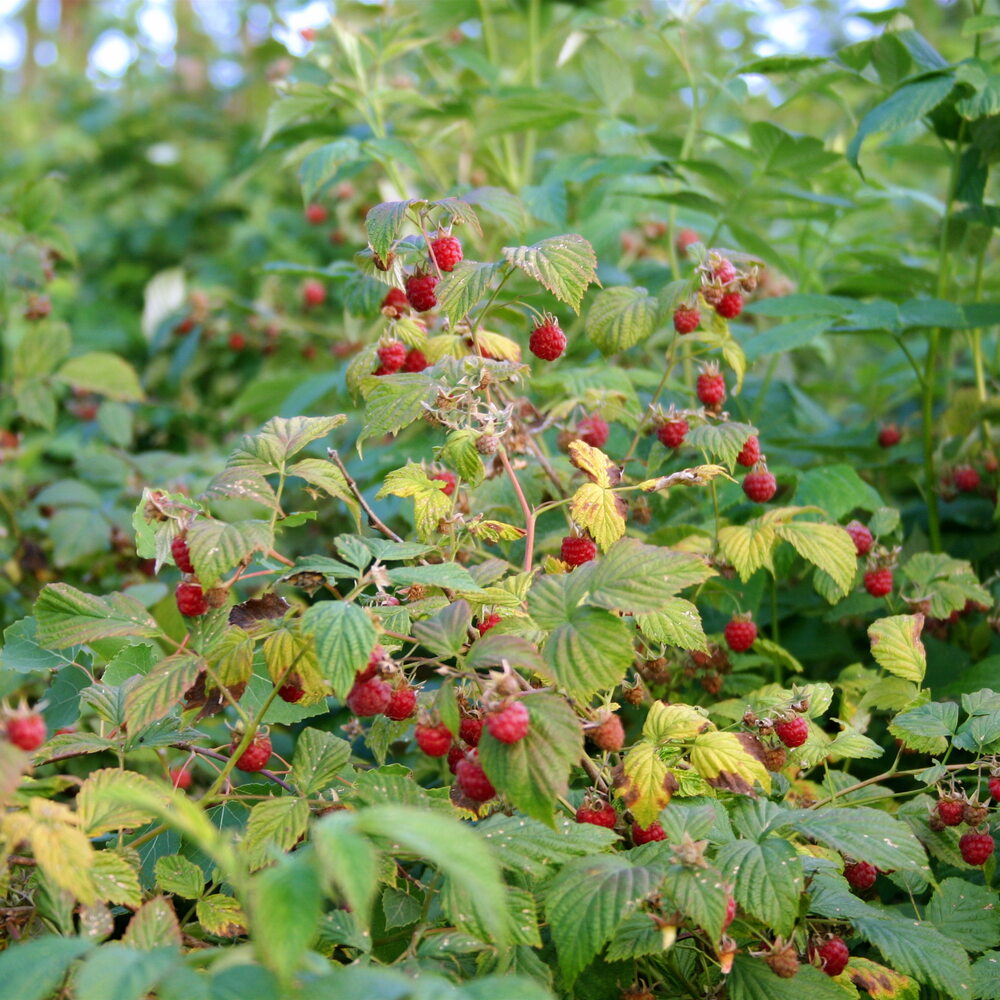
Featured photograph: mako, via Flickr, licensed under CC BY 2.0. Square crop, resizing and compression.