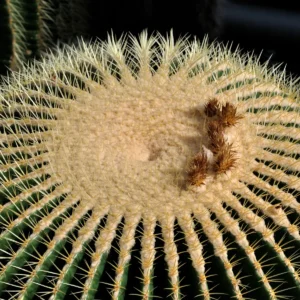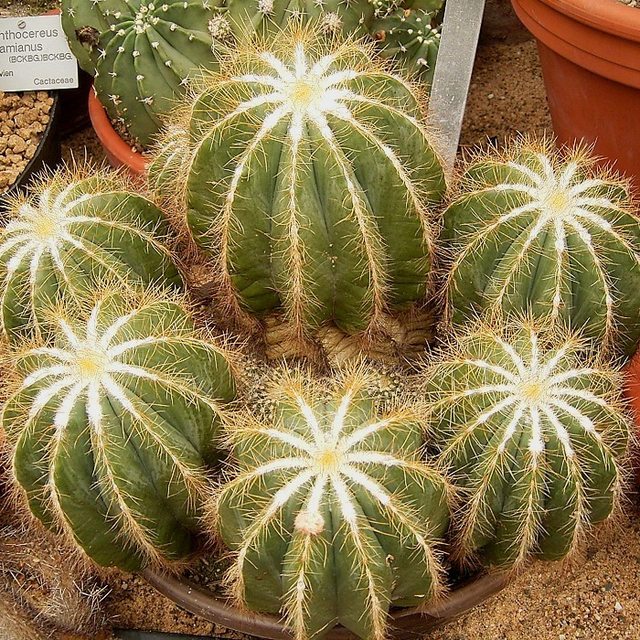
Parodia magnifica is a cactus with a rounded to cylindrical stem, yellow spines and yellow flowers. In a pot, the essentials are bright light, good drainage and watering that follows the plant’s growth. This guide separates species-specific advice from general cactus-care methods, including sowing seeds, repotting and assessing marks on the stem.
Plant profile
Scientific name: Parodia magnifica.
Synonym: Notocactus magnificus.
Family: Cactaceae.
Origin: Rio Grande do Sul, Brazil.
Growth habit: Succulent subshrub.
Stem: Rounded to cylindrical.
Spines: Yellow and bristle-like.
Flowers: Yellow and funnel-shaped.
Light: Sun or bright, filtered light.
How to grow Parodia magnifica
The Royal Horticultural Society (RHS) specifically recommends a cactus growing mix in sun or bright, filtered light. During active growth, water moderately and apply a low-nitrogen liquid fertiliser every six to eight weeks. Outside that period, keep moisture to a minimum. Routine pruning is not needed. Scale insects may occur, and aphids are worth watching for during flowering.
For containers, the University of Minnesota stresses the importance of drainage holes and removing leftover water after irrigation. It also warns that plants grouped in one arrangement should have compatible watering requirements. These are general cactus-care principles: useful when planning a container, but not a reason to give different species identical care.
Adjusting light and water in a pot
When moving a plant from indoors to an outdoor position, increase sun exposure gradually. This acclimatisation, recommended by the University of Minnesota for cacti, avoids suddenly exposing a shade-acclimatised plant to much stronger light. Choose a suitable position first; do not try to compensate for too little light with more water or fertiliser.
Before watering again, check how the mix is drying and whether water has collected in the outer pot. Moderate watering during growth does not mean keeping the root ball constantly saturated. In cold conditions or during slower growth, reduce watering rather than importing fixed months from another climate’s calendar. A pot exposed to rain has already received water, so take that into account before irrigating.
If you also grow rosette-forming succulents, our guide to Echeveria elegans care and propagation offers a separate reference. Similar-looking displays do not make different species’ water requirements interchangeable.
Growing Parodia magnifica from seed
The RHS recommends sowing Parodia magnifica seeds at 19–24°C. The procedure below is general guidance for cacti, not a method exclusive to this species.
The University of Arizona’s general method uses a shallow, wide container with drainage, filled with equal parts perlite and well-decomposed organic compost, without manure. Scatter fresh seeds and cover them very lightly with coarse sand. Moisten from below, allow the container to drain and cover it with plastic. Keep it in bright light out of direct sun.
After germination, open the cover gradually and remove it after a few days. Maintain moisture without letting the mix dry completely or become waterlogged. The source allows transplanting once seedlings are about 1.3 cm in diameter; it does not promise how long reaching that size will take.
Flowering: what to observe
The flowers are yellow and funnel-shaped. Note when buds appear, without assuming one flowering calendar applies to every region or growing environment.
Marks on the stem: when to investigate
A brown mark alone does not confirm rot. The Connecticut Agricultural Experiment Station describes superficial cork-like marks separately from wet lesions that darken and spread. This is a general cactus reference, not a diagnosis of Parodia magnifica. Photograph changes over time and seek an assessment if the tissue softens or a lesion spreads. Do not cut the stem solely because of its colour.
Repotting and handling the spines
The University of Florida’s general cactus guidance suggests assessing the need to repot when roots emerge through drainage holes. Choose a slightly larger pot. Thick gloves may not stop strong spines; barbecue tongs can help lift the plant gently. Loosen the roots and inspect their condition. Fill around the root ball with a free-draining mix, maintaining the previous planting depth. Wait a few days before the first watering. If you suspect disease, seek advice before making cuts.
Common questions
Is it the same plant as Notocactus magnificus? Yes. Kew lists that name as a synonym of Parodia magnifica. Keeping both names in your records helps when comparing labels or checking sources.
Does it need pruning to retain its shape? The RHS does not recommend routine pruning. Observe its growth before deciding on any intervention.
Can I water it like all my other pots? Avoid that shortcut. A shared arrangement should contain plants with compatible needs, and the species guidance distinguishes active growth from less active periods.
How can I keep track of its care? Record changes of position, watering and the appearance of flowers. Photographs taken from the same angle help you compare its condition without relying on memory alone.
Sources
Royal Horticultural Society (RHS).
Connecticut Agricultural Experiment Station: cactus problems.
University of Arizona: sowing cactus seeds, page 3.
University of Florida: repotting cacti.
Photo: Frank Vincentz, CC BY-SA 3.0. Square crop, resized to 640 × 640 px and compressed as JPEG. Adapted image distributed under CC BY-SA 3.0.