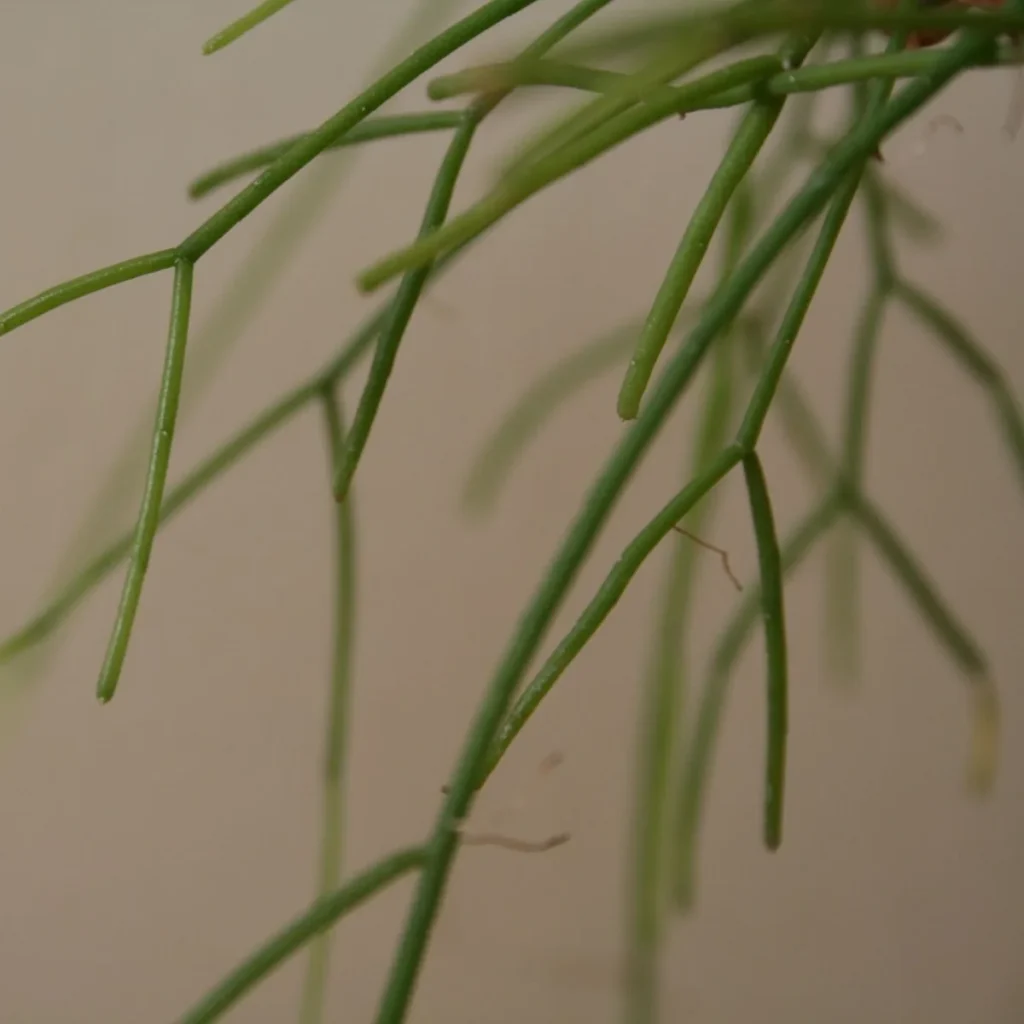
Mistletoe cactus forms a light cascade of slender stems, quite unlike the classic image of a spiny desert cactus. In a hanging pot, its branching adds volume without completely hiding the background. When choosing a position, consider both the light and the space the stems will occupy over time.
Plant profile
Scientific name: Rhipsalis baccifera.
Family: Cactaceae.
Frequently used synonym: Rhipsalis cassytha.
Native distribution: tropical and subtropical regions of the Americas, Africa and Sri Lanka.
Habit: a perennial cactus that grows on trees or rocks, usually with trailing stems.
Size: the stems may reach several meters; size depends on conditions.
Light: plentiful indirect light.
Potting mix: porous and well drained, suitable for epiphytic cacti.
Propagation: seeds or stem cuttings.
Light and surroundings
Mistletoe cactus appreciates growing conditions that reflect its forest habitat. Provide filtered light, without a sudden move into strong sun. A bright spot near a window may work better than a dark corner chosen purely for decoration. Protect it from severe cold and chilly drafts.
The plant appreciates humidity in the air, but that does not mean its roots should stay waterlogged. Assess air conditions and potting-mix moisture separately. On a balcony, take account of rainfall before adding water by hand.
Watering and containers
Water moderately during growth and reduce the frequency when the plant is less active. The mix should stay slightly moist, without standing water. Choose a container with drainage and empty the outer pot after watering.
Because it trails, mistletoe cactus is often hung above eye level. Make sure you have a safe way to check the mix and inspect the plant without pulling on its stems. Check the support periodically and remember that pot, plant and water together weigh more than the dry arrangement.
Routine maintenance
Frequent pruning is unnecessary, although long stems can be shortened. Inspect the branches for mealybugs and scale insects, and keep tools clean. Record changes in light, watering and position to help interpret any problems.
A mix that holds moisture without suffocating roots
For Rhipsalis, drainage and moisture retention must work together. A mix made only of very fine material can stay too wet; an excessively mineral mix may need frequent attention. Horticultural pine bark helps maintain air spaces, while perlite contributes a light structure. Combine these with a growing mix that retains some moisture. When refreshing compacted mix, do not automatically increase the container size: a small root system may still suit the same-sized pot. Observe how water drains and how the mix dries over the following weeks.
Yellowing or dropping stems: what to check first
If yellowing occurs with falling segments, check drainage before adding water. Where the mix remains waterlogged, inspect the roots: dark, soft or slimy areas are concerning signs of deterioration. Color alone does not establish the cause. If the damage is localized, remove only the affected tissue with a sanitized tool and repot in fresh, airy mix. If most of the root system has deteriorated, recovery is uncertain. Do not respond simply by watering more because the stems look dehydrated.
Growing a new plant from a stem
Choose a healthy segment, make a clean cut and let the cut surface dry before planting. Place the base in a porous mix and maintain light moisture during rooting, without saturating the pot. Avoid repeatedly lifting the cutting to look for roots. Label the container with the species and date: that record helps compare attempts without mistaking environmental differences for a fixed rooting deadline.
Common questions
Is it really a cactus? Yes. It belongs to Cactaceae, although its appearance and needs differ from those of desert species.
Are the small pale balls flowers? Small flowers may be followed by rounded, whitish or pinkish fruits. Their appearance varies within the species.
Sources
North Carolina State University
Royal Horticultural Society: Rhipsalis baccifera
New York Botanical Garden: growing mistletoe cactus
New York Botanical Garden: deteriorating roots and checking the pot
RHS: growing and propagating cacti and succulents
Photo: Sadambio, CC BY-SA 2.5, via Wikimedia Commons and NC State Extension. Square crop and WebP compression, without upscaling.