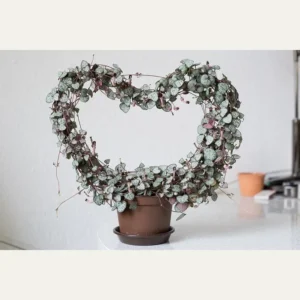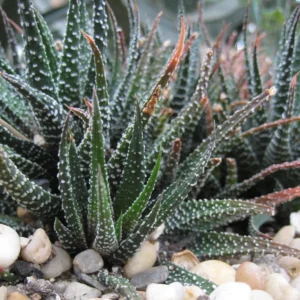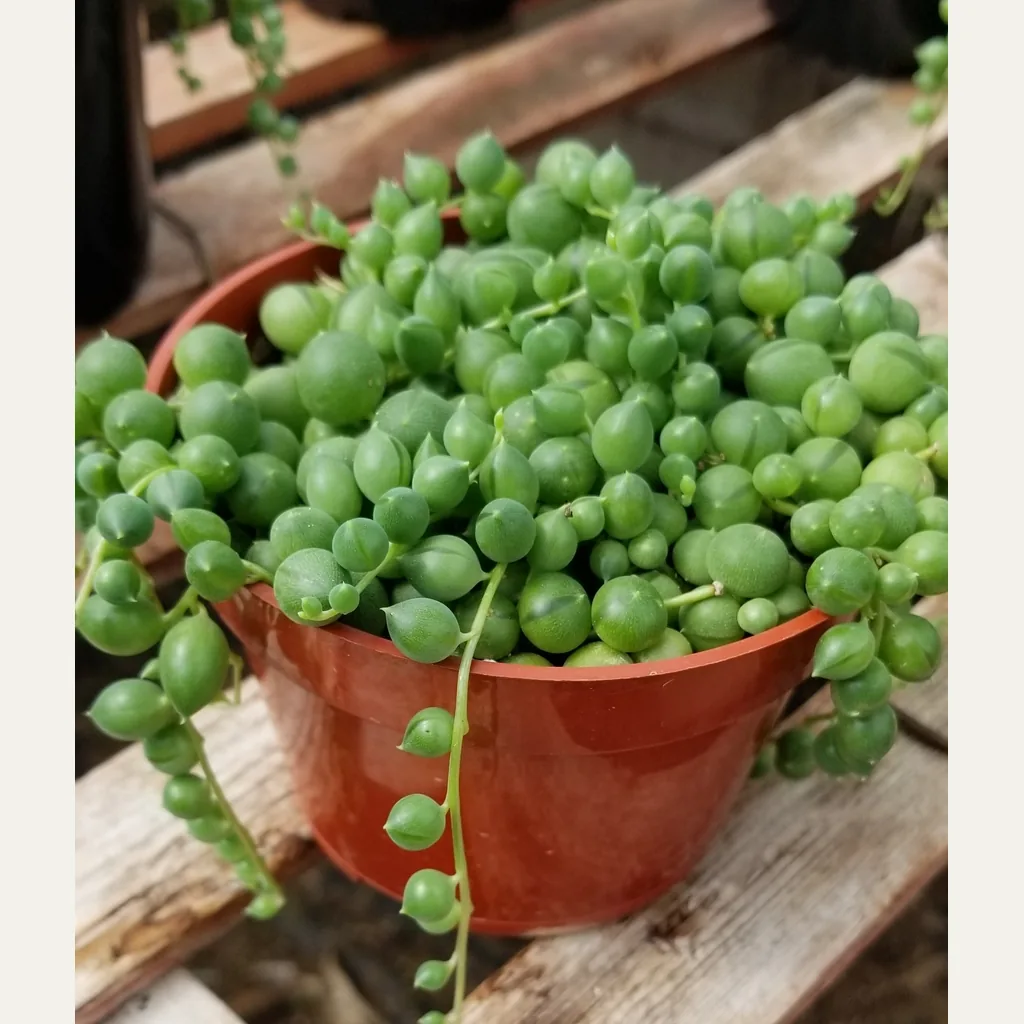
The round leaves of string of pearls look like small beads threaded along green stems. In hanging pots, the stems spill over the edges to form a delicate curtain. It is an appealing choice where there is plenty of light and watering can be controlled, but it must stay out of the reach of children and animals.
Plant profile
Scientific name: Curio rowleyanus.
Frequently used former name: Senecio rowleyanus.
Family: Asteraceae.
Origin: dry areas of southern Africa.
Life cycle and habit: a perennial succulent that creeps or trails.
Size: stems may reach approximately 90 cm.
Light: bright, filtered light; partial shade outdoors.
Potting mix: light, porous and fast draining.
Propagation: mainly by stem sections.
Safety: toxic if eaten; the sap may irritate skin.
Light and position
Choose a position near a bright window. Protect the plant from strong midday sunshine and avoid abrupt changes in exposure. The stems need free space: do not squeeze them behind furniture or let them get pulled in busy walkways. Check hanging supports and account for the weight of the wet pot.
Pot, mix and watering
The roots are shallow, so a shallow container proportionate to the plant is usually more suitable than a very large pot. Use a succulent mix and unobstructed drainage holes. Water when the mix is dry, without treating drought tolerance as permission for prolonged neglect. Empty the saucer or outer pot after drainage.
Do not follow a rigid schedule: heat, ventilation, pot size and the time of year affect drying. Before watering again, check moisture and the condition of the stems. Accumulated water increases the risk of rot.
Maintenance and propagation
Choose a healthy stem tip about 8–10 cm long. Remove three or four leaves from the base and lay the stem on the growing mix, lightly covering some nodes, the points where leaves join the stem. During rooting, keep the mix lightly moist rather than saturated. Do not mechanically apply the drying routine of an established plant to a cutting that has no roots yet. Avoid repeatedly pulling the stem to check; watch for new growth instead.
Use clean tools and gloves when pruning. Look for mealybugs and scale insects and other insects in less visible parts of the plant.
Shriveled pearls: check before watering
Wrinkled pearls do not reveal the cause on their own. If the mix is dry and the stems are firm, insufficient water is one possibility. If it remains wet while the plant worsens, do not water by reflex: check drainage and roots. Dark, soft roots, unlike firm healthy tissue, justify investigating deterioration. Keep only healthy material for propagation. These signs guide an assessment, but do not identify a particular pathogen.
A sparse crown and an oversized pot
Before placing new cuttings in bare areas at the top, check whether that part of the pot receives enough light too. Weak growth, small leaves and widely spaced beads are reasons to reassess the position. Adjust exposure gradually; renewing stems without correcting the environment may repeat the problem. When repotting, increase container size only slightly: excess mix stays wet longer even when there is a drainage hole.
Common questions
Is it the variegated form? Curio rowleyanus ‘Variegatus’ has green and cream areas. Oval, striped or elongated leaves may belong to other Curio species, such as C. herreianus and C. radicans. Check the label before comparing your plant with a photograph. A pale area characteristic of a cultivar should not automatically be mistaken for a recent loss of color.
Why have the beads shriveled? Shriveling can accompany both insufficient water and root problems caused by excess moisture. Examine the mix before deciding to water more.
Does string of pearls flower? Yes. It produces small, pale flowers, although flowering is less common indoors. The foliage remains its main ornamental feature.
Can it be kept in a home with cats? Only where it cannot be reached. The leaves and sap pose a risk; a high pot is not necessarily inaccessible to a cat.
Sources
North Carolina State University
University of Maryland: assessing roots and houseplant symptoms
Photo: Cindy Christian, CC BY 4.0. Neutral borders added for a square format, without cropping or upscaling; converted to WebP.