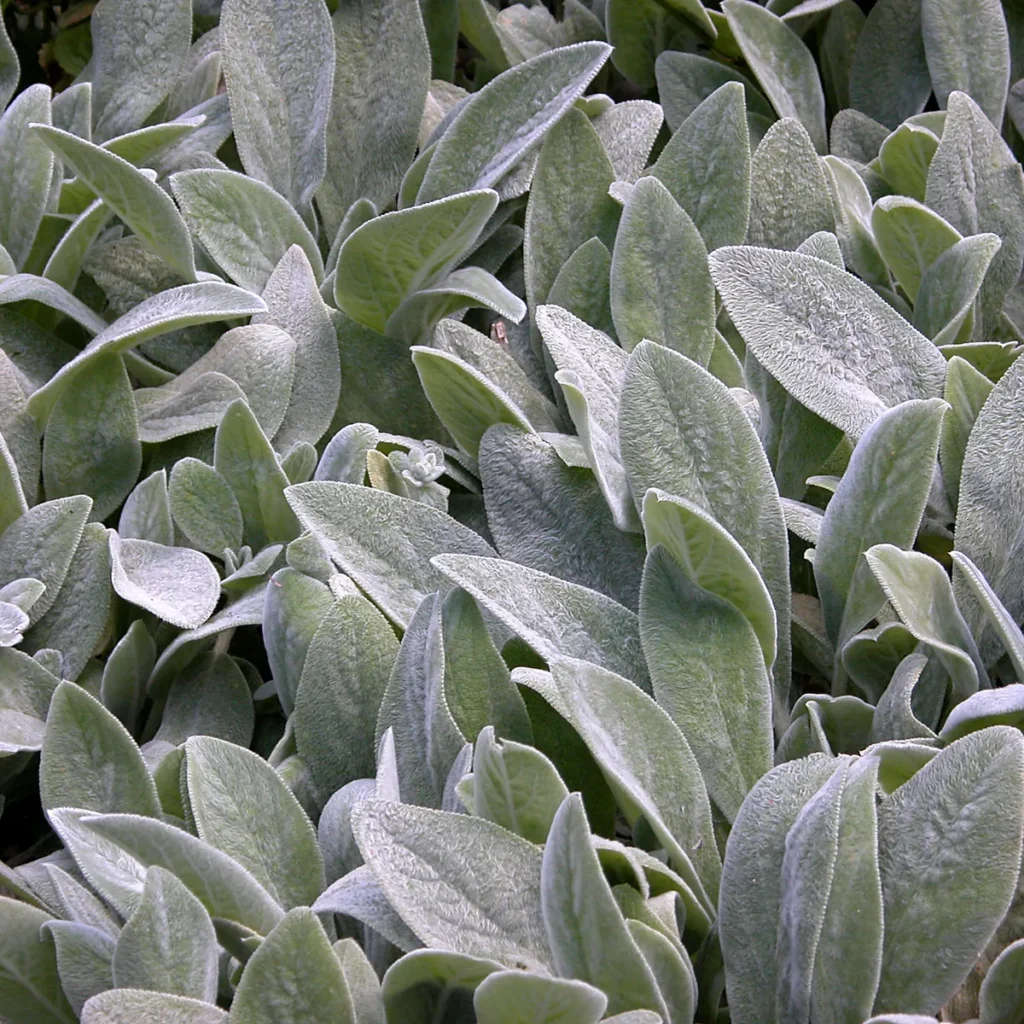
Lamb’s ear stands out in beds and pots for its silvery, velvety leaves. In Brazil, where it is known as peixinho-da-horta, it also features among traditional leafy vegetables that are less commonly grown commercially. Whether the aim is ornamental foliage or a food garden, drainage and correct identification come first.
Plant profile
Scientific name: Stachys byzantina K.Koch.
Family: Lamiaceae.
Life cycle: clump-forming herbaceous perennial.
Origin: Turkey, the Caucasus and Iran.
Light: sun to partial shade, with excellent drainage.
Choosing a site and preparing the bed
Sun or partial shade can work, but protection from strong afternoon sun may help the foliage in very hot conditions. Drainage is crucial. NC State Extension warns that excessive rain and high humidity can lead to rot. If water collects in part of the garden, choose a raised position rather than the lowest spot.
For leaf production, Brazil’s agricultural research organization Embrapa recommends a light, well-drained soil containing organic matter. Its technical guide gives a spacing of 20–25 cm (8–10 in) between plants in a vegetable bed. This close spacing assumes frequent harvesting and renewal. Watch how the clumps fill the space so they do not become overcrowded.
For ornamental borders, allow for sideways growth: the RHS lists a mature spread of about 50 cm to 1 m (20–40 in). Spacing used in a frequently harvested vegetable bed is therefore not a universal rule for a decorative garden. Leave room for mature foliage and divide the plants when the planting becomes too dense.
Propagating lamb’s ear by division
Separate sections of a clump that have both shoots and roots, and replant them in a prepared bed. In the hottest, rainiest period, Embrapa recommends establishing the divisions in containers in shade first. This gives young plants time to settle before they move into their permanent position.
Division uses a living section of the plant, not simply a detached leaf. Choose healthy sections, separate them carefully and replant. Label the containers and check which divisions have established before rebuilding an entire border.
Watering and caring for the foliage
Avoid keeping the leaves constantly wet. Direct water onto the growing mix without leaving the plant waterlogged. Established lamb’s ear tolerates some drought, but too much moisture encourages disease. If several leaves darken after rain, first check drainage and whether old foliage is collecting in the center of the clump.
A mulch, such as grass clippings, can reduce soil splashing onto the leaves. Water and remove competing plants as needed. Periodically renewing the planting helps manage crowded clumps and the buildup of nematodes in the growing area. Some of these tiny organisms attack roots. Repeated loss of vigor despite suitable watering and drainage calls for expert assessment; those symptoms alone do not identify nematodes.
The RHS recommends moderately fertile conditions for ornamental growing. Heavy feeding is not an automatic answer to damaged foliage. Remove deteriorating parts and, if foliage is the priority, cut off flower stalks. Lamb’s ear does not need frequent shaping like a shrub. If yellowing is the main symptom, our guide to finding the cause of yellow leaves can help organize your observations.
Harvesting: the Brazilian food-garden context
Embrapa’s technical guidance for peixinho gives the start of harvesting from about 60 days, taking leaves longer than 10 cm (4 in). The leaf hairs can hold dirt, so careful washing and food-safe cleaning are important. Before considering the leaves as food, confirm both the species and the origin of the plant. A nursery plant sold as ornamental ground cover should not automatically be treated as an edible crop.
Frequently asked questions
Can lamb’s ear grow in a pot? Yes. Use a container that drains freely and keep the same care around leaf moisture. A pot does not remove the risk of rot.
What might be eating the leaves? Slugs and caterpillars are among the problems listed by the RHS. Inspect the foliage and the surrounding area before choosing a control measure.
Are fuzzy leaves enough to identify the plant? No. Ask for the botanical identification, Stachys byzantina. Common names such as lamb’s ear, rabbit’s ear and the Brazilian peixinho may be used loosely. Keep the label and never decide whether to eat a plant based only on its texture or a photograph.
Sources
NC State Extension: growing conditions and care for Stachys byzantina
Embrapa: peixinho, planting and harvesting (Portuguese PDF)
RHS: Stachys byzantina profile
Photo: Carl Lewis, CC BY 2.0, via Flickr and NC State Extension. Cropped square and compressed as WebP, without upscaling.