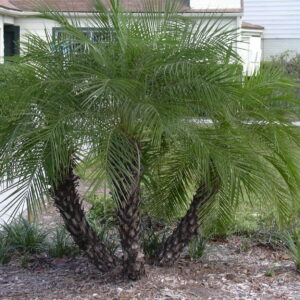
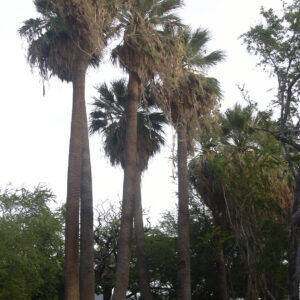
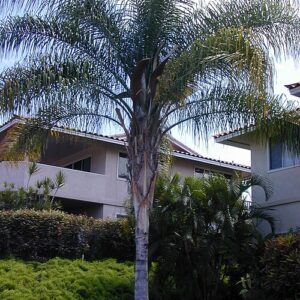
The date palm, Phoenix dactylifera, is grown for both its striking outline and its edible dates. Those are two different goals: a palm may survive as an ornamental where the climate does not reliably ripen good fruit. Decide which result you want before buying a plant.
A large palm, not a permanent balcony plant
UF/IFAS describes a palm that can reach about 24 metres, with long, feather-shaped leaves and sharp spines near their bases. Plan for the adult crown, maintenance access and falling fruit. Slow growth does not make a large species suitable for a cramped balcony. Keep the spiny foliage away from places where people brush past.
Warm summers matter more than a magic temperature
FAO describes successful date-growing climates as having long, hot summers and low humidity during ripening. Rain at flowering or harvest can damage the crop. A sunny location alone does not guarantee dates: variety and the seasonal pattern of rain and heat matter.
Some established palms endure temperatures below freezing, but frost can damage leaves and flower clusters. Cold tolerance varies with conditions; it should not be interpreted as frost-proof fruit production. Nor is 35°C a switch that triggers pollination: FAO cites that figure as a laboratory optimum for pollen germination, not an absolute requirement for every palm.
Why one palm may not give you dates
Male and female flowers occur on separate palms. Female palms need suitable pollen for normal fruit set, and commercial plantations often manage pollination rather than leaving it to chance. A lone ornamental specimen can therefore be attractive without providing the harvest its owner expects.
Choosing a plant: seed or known variety?
A seed from a date will not reliably reproduce the quality of the fruit you ate. Seedlings vary and their sex may remain unknown until flowering. Offshoots and tissue-cultured plants are used to reproduce selected varieties; buy accurately labelled material from a reliable nursery if fruit quality is the objective.
Removing an offshoot is skilled work, not simply sawing a small palm away and planting it immediately. It needs an adequate root system and careful establishment. A rooted nursery plant is a more practical starting point for an inexperienced grower.
Site and ongoing care
Choose full sun and well-drained soil. A dry-climate palm still needs a dependable supply of water during establishment and productive growth; drought survival and fruit production are not equivalent. Plan irrigation and nutrition with local agricultural advice rather than copying one watering interval or fertiliser dose for every soil.
In Brazil, Embrapa has published guidance on date-palm propagation and planting. Its 1989 circular is useful historical technical reading, but old pesticide recommendations should not be treated as current instructions. For crop problems, identify the cause and consult a qualified professional before choosing a treatment.
References and photograph
UF/IFAS: Phoenix dactylifera; FAO: climate; FAO: pollination; FAO: propagation; Embrapa: propagation and planting circular (1989).
Cover: Nepenthes/Wikimedia Commons, CC BY-SA 3.0. Resized photograph of Phoenix dactylifera.