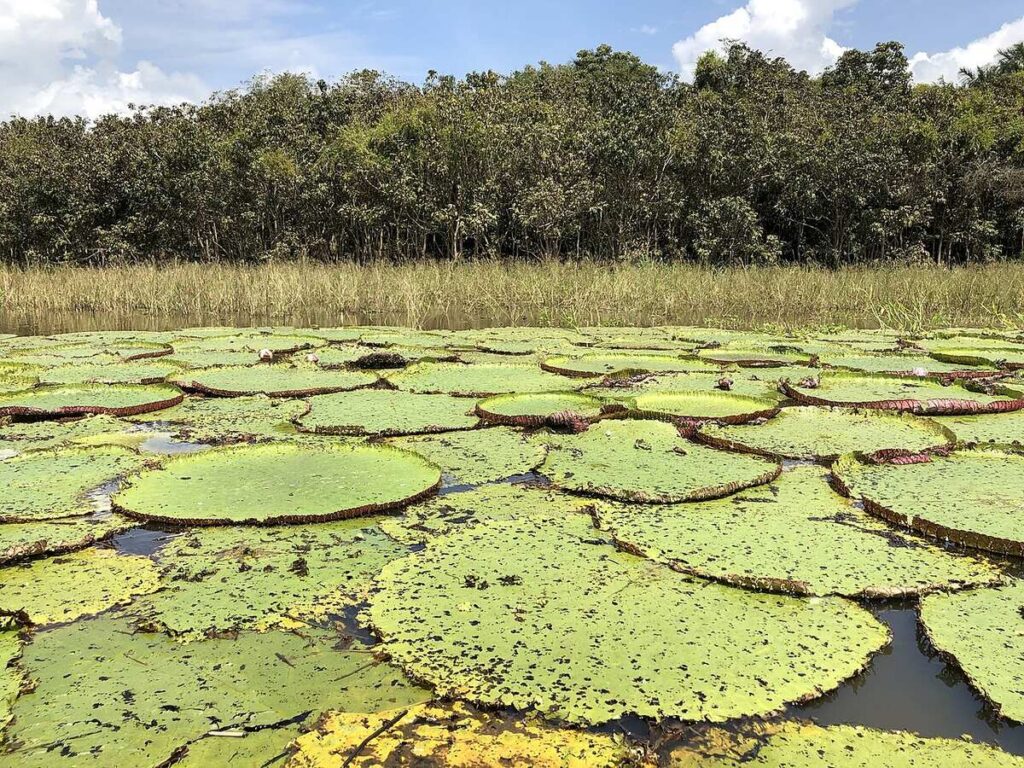
A giant green platter floating on a pond is an unforgettable sight. Victoria amazonica, the Amazon waterlily, belongs to the waterlily family, but its scale makes it quite different from a compact plant for a patio tub.
A giant, but not the largest species
Long described as the world’s largest waterlily, V. amazonica no longer holds that distinction. Kew recognises Victoria boliviana, identified as a separate species in 2022, as the largest. Not every enormous lily pad belongs to the same species, and cultivated hybrids also exist.
In V. amazonica, the round leaves can reach about 2.5 metres across in suitable conditions. Raised veins underneath form a supporting network, while air spaces help with buoyancy. Sharp spines protect the underside and leaf stalks. Admire the structure without testing it: a leaf is not a safe platform for a child or an adult.
Why the flower changes colour
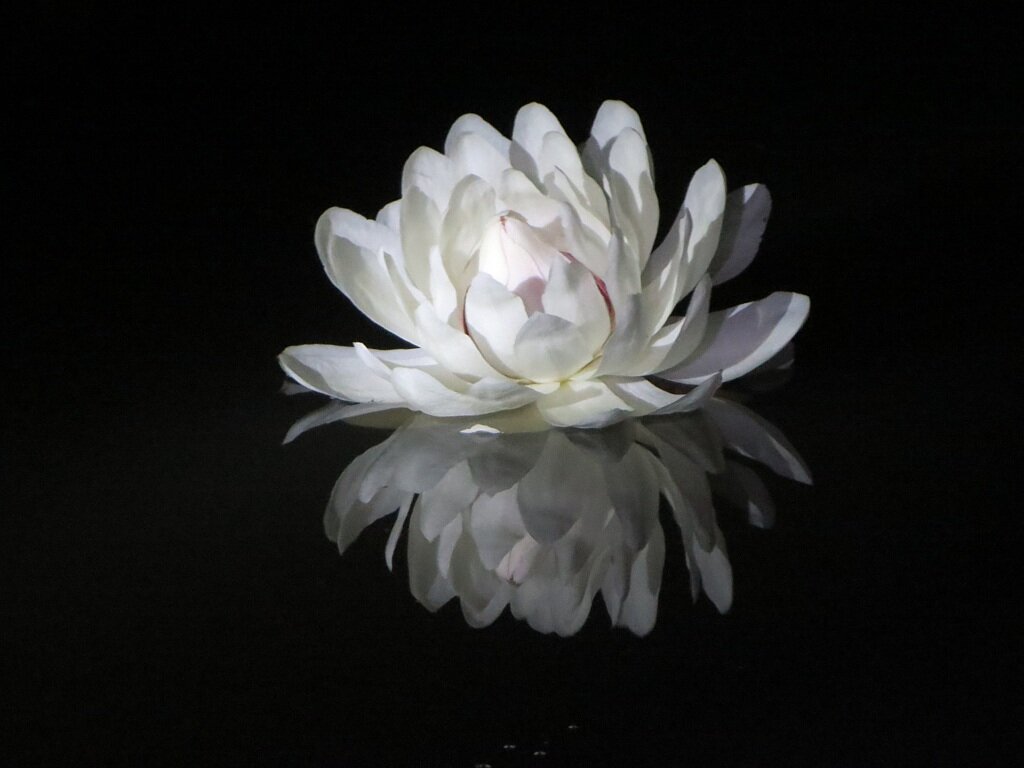
The flower opens white at night, producing fragrance and heat that attract pollinating beetles. It closes around them the following day. As its reproductive phase changes, pollen is released and the petals become pink. When the flower opens again, the beetles can leave carrying pollen to another flower.
This sequence is more than a colour show: it helps transfer pollen between plants. The name Victoria honours Queen Victoria, but the plant’s story begins in South American waterways, not in a European greenhouse.
Only a large, suitably warm water garden is realistic. The plant needs sun, sheltered water and room for its expanding leaves. It is rooted below the surface rather than drifting freely. In cold climates, maintaining the necessary conditions may require specialist facilities; this is not a small, low-maintenance pond plant.
Kew raises its giant waterlilies from seed and renews its display annually. Its horticulturists describe germination in water at 28–30°C and planting into a heated pond. Those figures describe a managed botanical-garden system, not a universal recipe for every home pond.
Ask a specialist nursery about verified identity, pond dimensions and ongoing care before buying. For a smaller project, consider the different sizes discussed in our Nymphaea growing guide.
Observation before experimentation
Kew records food uses for the seeds and stalks. That does not make this article a preparation guide or justify tasting an unidentified ornamental. Keep observation separate from collecting plants for food, and handle the spiny parts cautiously.
Cover: Victoria amazonica near Manaus, Brazil. Richard N Horne, Wikimedia Commons, CC BY-SA 4.0. Resized and compressed; adapted image under the same license.
Usamos cookies em nosso site para fornecer a melhor experiência de uso, lembrando suas preferências e visitas repetidas. Ao clicar em “Aceitar”, concorda com a utilização de TODOS os cookies.
Este site usa cookies para melhorar sua experiência enquanto você navega pelo site. Destes cookies, os cookies que são categorizados como necessários são armazenados no seu navegador, pois são essenciais para o

funcionamento das funcionalidades básicas do site. Também usamos cookies de terceiros que nos ajudam a analisar e entender como você usa este site. Esses cookies serão armazenados em seu navegador apenas com

o seu consentimento. Você também tem a opção de bloquear esses cookies. Porém, a desativação de alguns desses cookies pode afetar sua experiência de navegação.
Os cookies necessários são absolutamente essenciais para o funcionamento adequado do site. Esta categoria inclui apenas cookies que garantem funcionalidades básicas e recursos de segurança do site. Esses cookies não armazenam nenhuma informação pessoal.
Quaisquer cookies que possam não ser particularmente necessários para o funcionamento do site e sejam usados especificamente para coletar dados pessoais do usuário por meio de análises, anúncios e outros conteúdos incorporados são denominados cookies não necessários. É obrigatório obter o consentimento do usuário antes de executar esses cookies no seu site.