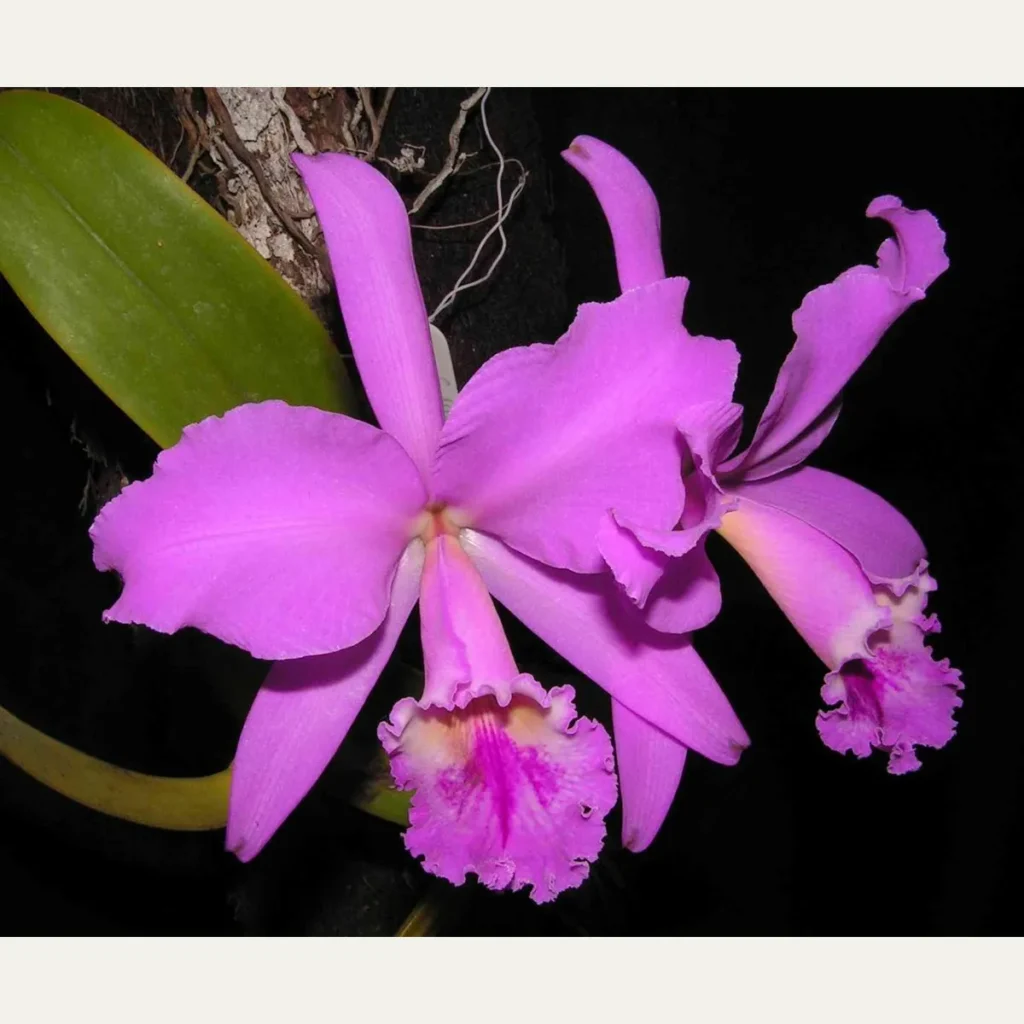
A Cattleya orchid can spend months growing roots, shoots and leaves before it flowers. That time isn’t wasted: the plant is building the structures that will support its next bloom. Understanding the cycle helps more than looking for a “miracle” fertilizer. Start by recognizing two parts: the rhizome is the stem that grows sideways and connects the shoots, while the pseudobulbs are the swollen parts that support leaves and store reserves.
At a glance
Genus: Cattleya.
Family: Orchidaceae.
Scope: General care; individual species and hybrids have their own needs.
Growth habit: Lateral, with pseudobulbs linked by a rhizome.
Pseudobulbs: Store reserves and support one or more leaves.
Size and flowers: Vary by species or hybrid.
Flowering: The cycle and timing depend on the identity of the plant.
Light: Bright, with gradual acclimation and protection from excessive heat.
Watering: Water thoroughly and allow the mix to dry between waterings, without prolonged drought.
Potting mix: An airy, freely draining mix for orchids.
Repotting: As needed, preferably as new roots emerge when appropriate for the species.
One leaf or two? A clue to identification
Unifoliate cattleyas have one leaf per pseudobulb; bifoliate cattleyas generally have two. The distinction helps with identification, but it doesn’t determine watering or flowering time on its own. The species and the hybrid’s ancestry matter.
Older pseudobulbs that are still firm store reserves even without leaves. Keep them: they aren’t the same as dry flower spikes.
Do Cattleya orchids like sun?
They need plenty of light to grow strong new shoots and flower. Too little light can make each new growth smaller and weaker than the last. Watch the new pseudobulbs, not just the leaf color.
Gradually acclimate a plant that has been in a sheltered spot before increasing its exposure. In Brazil, account for the heat, season and anything that blocks light. No single shade-cloth percentage or window orientation recommended for the Northern Hemisphere will suit every situation.
How to water without waterlogging
Soak the potting mix, let the water drain, then wait for the mix to dry before watering again without leaving it dry for too long. The center can stay moist after the surface looks dry.
Compare the pot’s weight just after watering and again as it nears dryness. A mounted plant may need water much sooner than a potted one. Don’t apply the same schedule to different setups or to small plants and established ones.
Potting mix, a container or a mount?
For pots, choose an airy orchid mix. Coarser bark is common for mature plants. The container should drain well and fit the roots without leaving a large volume of unused, moist mix.
Cattleya can also grow mounted, with exposed roots. That means monitoring hydration more closely, especially in hot weather. Having two leaves per pseudobulb doesn’t automatically mean bare roots are necessary. Choose based on how the plant responds in your growing conditions.
When to repot: watch the roots, not just the flowers
Plan to repot when the mix breaks down or the plant runs out of growing room. When there’s no emergency and you can plan the change, watch for the start of new root growth. The end of flowering isn’t enough on its own. Some species produce roots within a short window.
Bifoliate species such as C. amethystoglossa and C. guttata can suffer if repotted outside that window. They aren’t the only sensitive ones: C. dowiana also needs particular care. Hybrids vary according to ancestry.
Look for new root tips at the base of the new growth and handle them carefully to avoid breakage. Keep the rhizome at the surface, with room for the shoots to advance, and secure the plant so it doesn’t rock. Don’t force aerial roots into a cramped pot.
A plant with active rot needs assessment. Don’t automatically wait for the ideal repotting window. If you can’t tell healthy tissue from damaged tissue, ask an orchid nursery for advice before removing anything.
Is it worth dividing the plant?
Dividing means separating portions of the plant connected by the rhizome. Before cutting, ask an orchid nursery to assess which portions have enough growth and reserves to keep growing. This guide does not set a universal minimum division size: species and hybrids differ. Don’t divide a weakened plant just to get more plants. Keep healthy roots, clean your tools and secure each division on its new support.
How should you fertilize?
Choose a fertilizer suited to the plant’s level of growth and follow the manufacturer’s directions. Don’t increase the dose to compensate for low light or damaged roots. Avoid stacking products, and watch for residue buildup.
Why isn’t my Cattleya flowering?
Check in order: Is the plant mature? Is the new growth as strong as the previous growth? Does the plant get enough light, and are its roots functioning? Note any recent changes in growing conditions or repotting.
Photograph the shoots throughout the cycle. Comparing them helps distinguish a plant that is growing steadily from one that is losing vigor. Extra fertilizer can’t replace that assessment.
Flowering and care after the blooms fade
Don’t use one calendar for all cattleyas. Species flower at different times, and hybrids may follow different cycles. Light, water, humidity and temperature all need to suit the plant. A daily temperature swing plays a part in the cycle, but that doesn’t justify exposing the plant to damaging cold.
After flowering, continue routine care and watch for new shoots. You can remove the dry flower spike without cutting the pseudobulb that supported it.
Frequently asked questions
Do I need to repot as soon as the flowers fall?
No. Check whether the plant actually needs repotting and whether its roots are active. Losing flowers isn’t a reason by itself to change the pot, fertilizer and growing spot.
Are all Cattleya orchids fragrant?
No. Fragrance and flower size vary. Ask about the specific plant before buying it.
Do one-leaved and two-leaved cattleyas need different care?
Leaf count is only a clue. Identify the species or hybrid and observe its cycle before deciding how to care for it.
Usamos cookies em nosso site para fornecer a melhor experiência de uso, lembrando suas preferências e visitas repetidas. Ao clicar em “Aceitar”, concorda com a utilização de TODOS os cookies.
Este site usa cookies para melhorar sua experiência enquanto você navega pelo site. Destes cookies, os cookies que são categorizados como necessários são armazenados no seu navegador, pois são essenciais para o

funcionamento das funcionalidades básicas do site. Também usamos cookies de terceiros que nos ajudam a analisar e entender como você usa este site. Esses cookies serão armazenados em seu navegador apenas com

o seu consentimento. Você também tem a opção de bloquear esses cookies. Porém, a desativação de alguns desses cookies pode afetar sua experiência de navegação.
Os cookies necessários são absolutamente essenciais para o funcionamento adequado do site. Esta categoria inclui apenas cookies que garantem funcionalidades básicas e recursos de segurança do site. Esses cookies não armazenam nenhuma informação pessoal.
Quaisquer cookies que possam não ser particularmente necessários para o funcionamento do site e sejam usados especificamente para coletar dados pessoais do usuário por meio de análises, anúncios e outros conteúdos incorporados são denominados cookies não necessários. É obrigatório obter o consentimento do usuário antes de executar esses cookies no seu site.