A bay tree offers more than a handful of aromatic leaves for the kitchen. Its evergreen foliage can frame a doorway, form a clipped shrub or grow into a substantial tree. The first decision is not which fertilizer to buy, but whether you want a container plant or a tree with room to develop.
Which bay are we talking about?
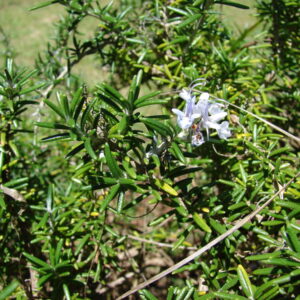
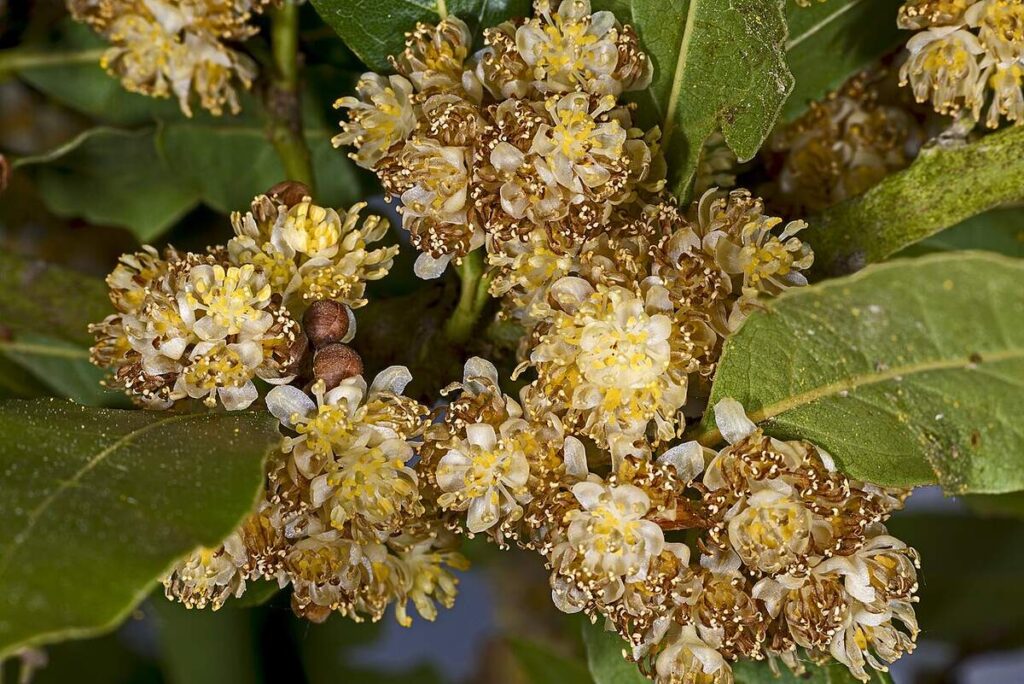
Culinary bay is Laurus nobilis, a Mediterranean member of the laurel family. Its leaves are glossy and leathery. Male and female flowers usually occur on separate plants; pollinated female plants can develop dark fruits. Do not identify a kitchen herb from the name “laurel” alone: other plants share that name.
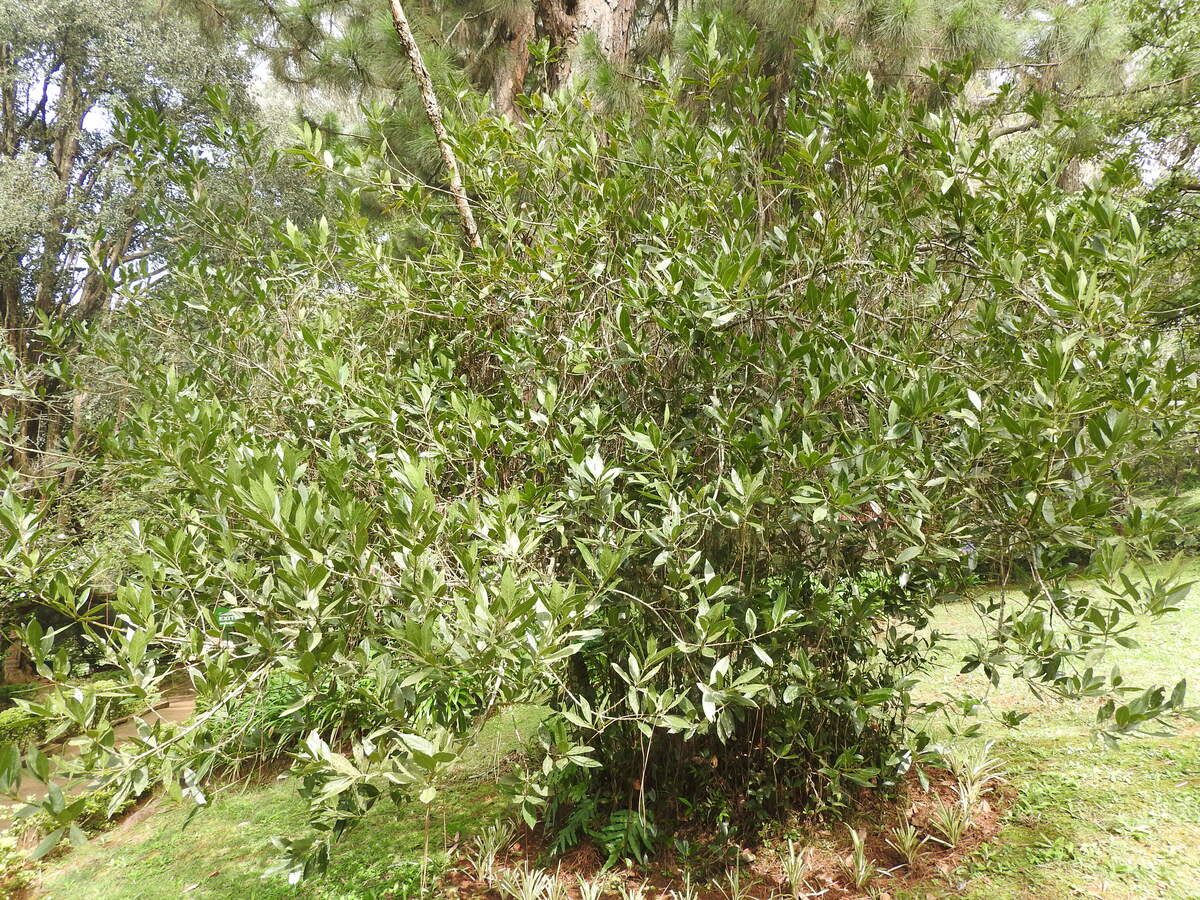
Left unpruned in suitable conditions, bay can exceed 10 metres. It also responds to shaping, which explains its use in pots and topiary. A compact nursery specimen is not a promise that the plant will stay that size indefinitely.
Growing bay in the garden or a pot
Provide sun or light shade, shelter from strong winds and free-draining soil. Avoid a permanently wet planting hole. In cold regions, a container makes it easier to move the plant into protection during severe winter weather.
Check container moisture regularly, especially in warm weather. Water when needed and let excess water escape, rather than following a fixed daily timetable. Newly planted trees also need attention during dry spells. Established plants generally need less intervention, but local climate and root conditions still matter.
Prune to maintain the shape and size you have chosen, without stripping the plant every time you want a few leaves. Repot as roots and top growth outgrow the container. Nutrition should match the substrate, growth and product directions, not an automatic monthly dose of the same fertilizer for every plant.
Propagation takes patience
Wisconsin Extension describes propagation from fresh seed, semi-ripe cuttings or air layering. Germination can be erratic and cuttings may take months to root. A healthy, correctly identified nursery plant is often the practical choice if your main aim is to harvest leaves rather than experiment with propagation.
Black leaves and grey patches are different problems
A black coating may be sooty mould growing on sugary honeydew from sap-feeding insects. Look for scale insects and other pests, including on branches above the affected leaves. RHS guidance prioritizes dealing with the honeydew source; water may help remove the coating. Strong detergent can damage foliage, and a fungicide is not automatically needed for sooty mould itself.
Grey-green lichens on bark are different. University of Maryland Extension explains that lichens do not cause tree decline and normally need no control. Do not assume that a patch on the trunk needs scraping or spraying. If the tree is weakening, investigate its growing conditions and other symptoms instead.
Kitchen use and animal safety
Use correctly identified bay leaves of suitable food provenance to flavour dishes, removing whole leaves before serving because they remain tough. RHS advises against eating the ornamental fruits. Culinary use of the leaves does not make every plant part, extract or homemade preparation safe.
ASPCA lists Laurus nobilis as toxic to dogs, cats and horses, with vomiting and diarrhoea possible; large amounts of whole leaves can cause obstruction. Keep pets from chewing it and contact a veterinarian after suspected ingestion. The simplest approach is to grow bay as an herb and ornamental, without treating it as a home remedy.
References
RHS: growing bay; RHS: Laurus nobilis; Wisconsin Extension: sweet bay; NC State: Laurus nobilis; RHS: sooty moulds; Maryland Extension: lichens; ASPCA: bay laurel.
Cover: Didier Descouens / Muséum de Toulouse / Wikimedia Commons, CC BY-SA 4.0. Resized and compressed; image adaptations retain this license.