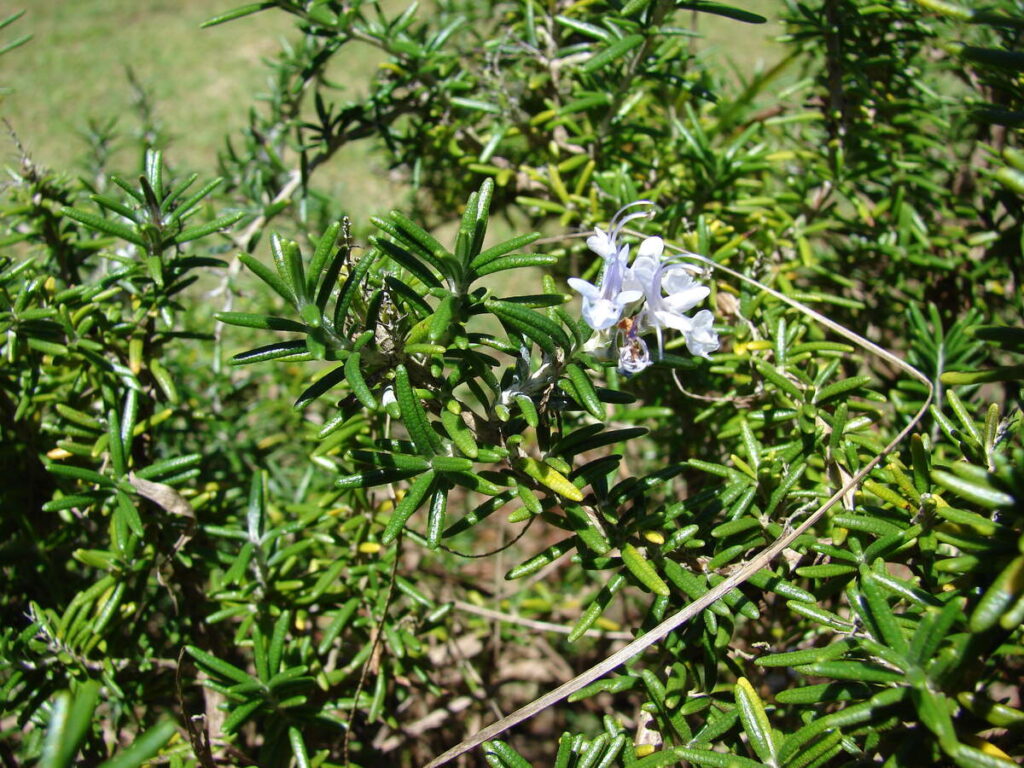
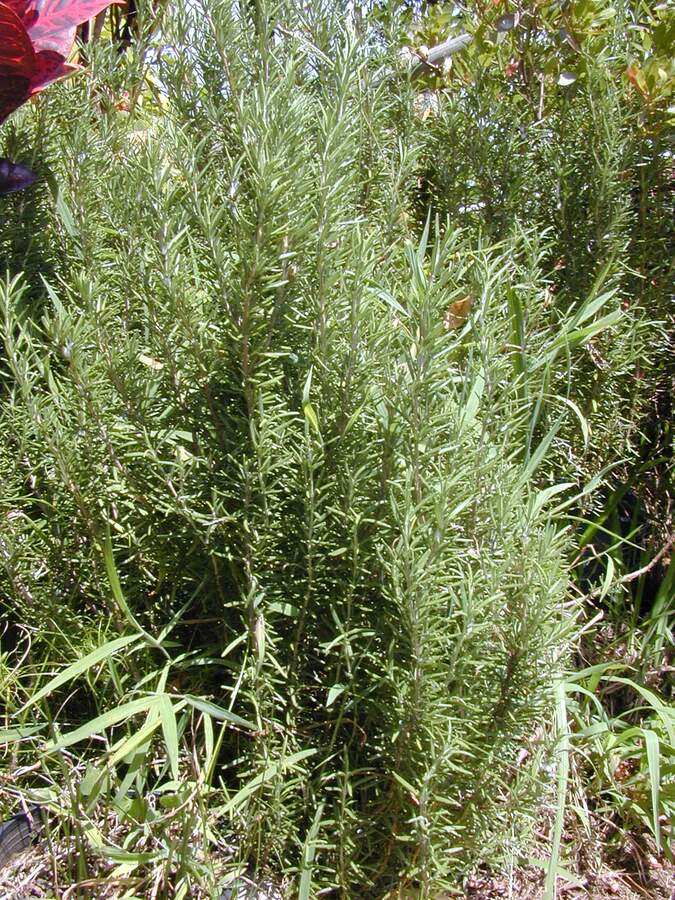
A sprig of rosemary brings a familiar aroma to roasted vegetables, bread and slow-cooked dishes. The same plant can also earn a place in a sunny garden: its evergreen foliage gives structure to borders, and its small flowers attract pollinating insects.
Rosemary is now called Salvia rosmarinus, although many labels still use Rosmarinus officinalis. It is a Mediterranean shrub in the mint family, not an annual herb that needs replacing after every harvest.
Get to know the plant
The narrow leaves are green above and paler beneath, with a strong scent when handled. Growth varies with the cultivar: some plants stand upright, while others spread or trail over a container. Check the label before choosing a plant for a hedge or a small pot. Flowers are often blue or violet, but pink and white forms also exist.
Choose a sunny position and soil that does not remain saturated after rain. In a garden with heavy, poorly drained soil, a raised bed or container is usually easier to manage. Indoors, a decorative corner away from the window is not a good substitute for a sunny growing spot.
Use a container with drainage holes and a free-draining growing mix. Match the pot to the plant rather than putting a tiny seedling into a very large volume of wet compost. Check that water can escape instead of collecting around the roots.
Watering without a fixed calendar
Feel the growing mix before watering. Pot size, wind, heat and recent rain all change how quickly it dries. Newly planted rosemary needs attention while its roots establish; an established shrub in the ground tolerates dry conditions better. Pots still need monitoring, especially during hot weather. Drought tolerance does not mean a small pot can be forgotten indefinitely.
Do not try to solve every yellow leaf with fertilizer. Check drainage and root conditions first. Rosemary generally needs little feeding in the ground; container plants may need modest supplementation as their growing mix becomes depleted. A compulsory monthly fertilizer schedule is not necessary for every plant.
Starting plants and keeping them compact
A healthy nursery plant is the simplest starting point. Rosemary can be grown from seed, but germination is slow; cuttings or layering are useful alternatives. Buy correctly identified plants from a reliable nursery and check for pests before bringing them home.
Light trimming after flowering helps keep the plant dense. Avoid relying on a severe cut into old, bare wood to rejuvenate a neglected shrub. Harvest small sprigs as needed rather than stripping the whole plant at once.
Using rosemary in the kitchen
Use the leaves fresh or dried as a seasoning. Culinary use is not a recommendation to take concentrated preparations as medicine. Rosemary can cause skin allergy in susceptible people; gloves are a sensible precaution when pruning or handling it extensively.
Do not simply put fresh rosemary into a bottle of oil and keep it on a shelf. Herbs in oil can create conditions for botulism. Safe preservation requires a tested method and its exact storage instructions; a decorative bottle is not a preservation process. See Clemson Extension’s guidance below rather than improvising.
Usamos cookies em nosso site para fornecer a melhor experiência de uso, lembrando suas preferências e visitas repetidas. Ao clicar em “Aceitar”, concorda com a utilização de TODOS os cookies.
Este site usa cookies para melhorar sua experiência enquanto você navega pelo site. Destes cookies, os cookies que são categorizados como necessários são armazenados no seu navegador, pois são essenciais para o

funcionamento das funcionalidades básicas do site. Também usamos cookies de terceiros que nos ajudam a analisar e entender como você usa este site. Esses cookies serão armazenados em seu navegador apenas com

o seu consentimento. Você também tem a opção de bloquear esses cookies. Porém, a desativação de alguns desses cookies pode afetar sua experiência de navegação.
Os cookies necessários são absolutamente essenciais para o funcionamento adequado do site. Esta categoria inclui apenas cookies que garantem funcionalidades básicas e recursos de segurança do site. Esses cookies não armazenam nenhuma informação pessoal.
Quaisquer cookies que possam não ser particularmente necessários para o funcionamento do site e sejam usados especificamente para coletar dados pessoais do usuário por meio de análises, anúncios e outros conteúdos incorporados são denominados cookies não necessários. É obrigatório obter o consentimento do usuário antes de executar esses cookies no seu site.