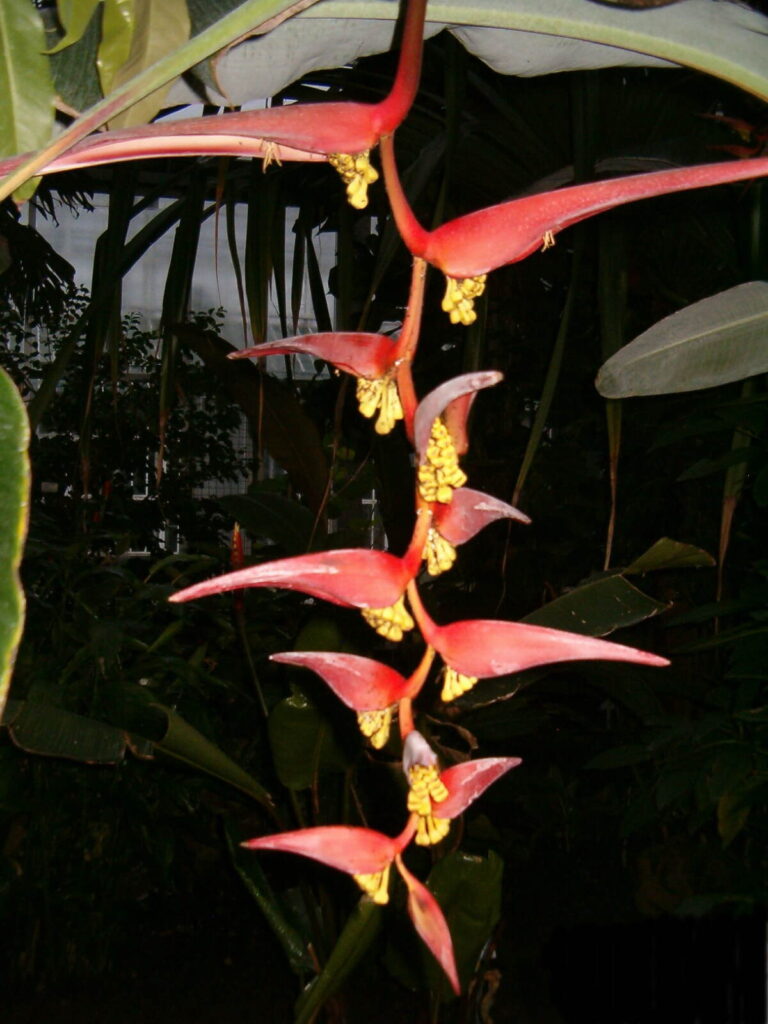
Heliconia collinsiana is a plant to admire from below as well as from a distance. Its hanging inflorescences bring red and yellow into the green canopy of a tropical garden. Before planting one, however, check the space available: this is a substantial herbaceous plant, not a compact flowering pot plant.
Recognising the species
Kew recognises H. collinsiana as a species native from southern Mexico to Central America. The scientific name matters when buying it: a label such as “hanging heliconia” does not identify a species, and H. rauliniana should not simply be substituted for this name.
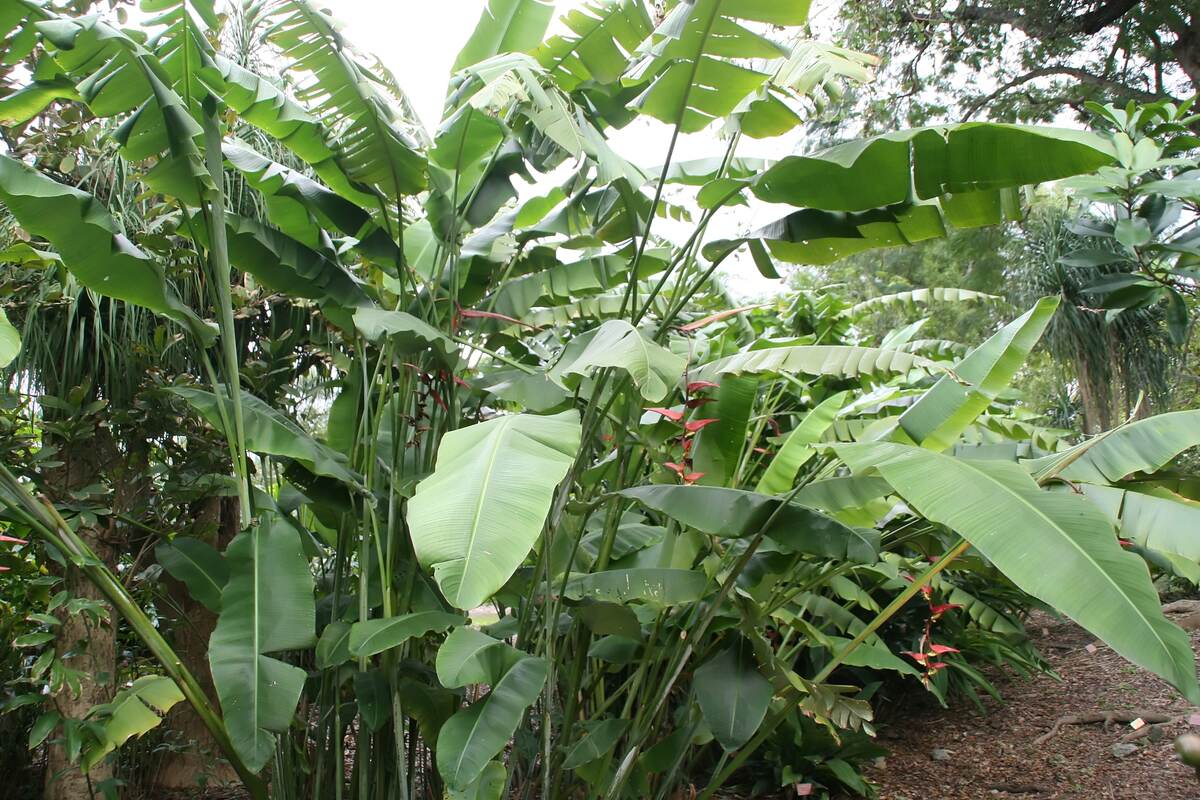
NParks describes plants reaching about 5 metres, with hanging inflorescences up to 60 centimetres long. Red to orange-red bracts surround yellow flowers. A pale waxy coating occurs on parts of the bracts and the underside of the leaves. That natural coating should not automatically be mistaken for a pest.
Room for the whole clump, not just the flowers. Photo: David J. Stang, CC BY-SA 4.0; resized and compressed.
Choosing the planting position
NParks lists sun or partial shade and fertile, moist, well-drained soil. This is not a reason to move a shade-grown plant abruptly into a hotter position. Ask the nursery about its growing conditions and assess the actual site, especially reflected heat from walls and paving.
A UFRPE study evaluated H. collinsiana among ten heliconia genotypes under partial shade in northeastern Brazil. It followed growth and flowering over 18 months. That gives useful regional context, but it is not a promise that every garden will follow the same flowering calendar. Record what happens in your own bed rather than treating a fixed month as a deadline.
Give the hanging stems a place where they remain visible. Planting behind a tall, dense shrub may hide the feature you bought it for. Leave access for watering and maintenance, and compare this descending silhouette with the upright Heliconia bihai.
Water and propagation
Check the soil before watering. The aim is moisture around the roots without prolonged waterlogging; rain and drainage matter as much as the watering can. A wilting plant in wet ground is a reason to investigate, not automatically add more water. Keep fertiliser use within label directions rather than assuming more will produce flowers sooner.
Division is the propagation method listed for this species. Work with healthy cultivated material and preserve a viable rhizome section with a growing point; a rhizome is an underground stem. Label divisions so they are not mixed with other heliconias. If a clump shows unexplained decline, postpone sharing it until the cause is understood.
If you cut stems for arrangements
Embrapa’s guide recommends harvesting heliconias during cooler hours and keeping cut stems hydrated. It specifically lists collinsiana among heliconias whose powdery-coated inflorescences should not be immersed in water. Handle the coloured structures gently rather than scrubbing away their surface. Its older commercial treatment recipes are not reproduced here as home-garden advice.
Use the plant ornamentally. This guide does not establish that its parts are edible or suitable for home remedies, and a lack of a toxicity warning is not proof of safety.
Usamos cookies em nosso site para fornecer a melhor experiência de uso, lembrando suas preferências e visitas repetidas. Ao clicar em “Aceitar”, concorda com a utilização de TODOS os cookies.
Este site usa cookies para melhorar sua experiência enquanto você navega pelo site. Destes cookies, os cookies que são categorizados como necessários são armazenados no seu navegador, pois são essenciais para o

funcionamento das funcionalidades básicas do site. Também usamos cookies de terceiros que nos ajudam a analisar e entender como você usa este site. Esses cookies serão armazenados em seu navegador apenas com

o seu consentimento. Você também tem a opção de bloquear esses cookies. Porém, a desativação de alguns desses cookies pode afetar sua experiência de navegação.
Os cookies necessários são absolutamente essenciais para o funcionamento adequado do site. Esta categoria inclui apenas cookies que garantem funcionalidades básicas e recursos de segurança do site. Esses cookies não armazenam nenhuma informação pessoal.
Quaisquer cookies que possam não ser particularmente necessários para o funcionamento do site e sejam usados especificamente para coletar dados pessoais do usuário por meio de análises, anúncios e outros conteúdos incorporados são denominados cookies não necessários. É obrigatório obter o consentimento do usuário antes de executar esses cookies no seu site.