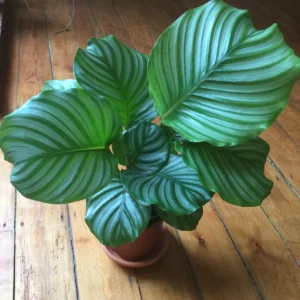
Ludisia discolor, the jewel orchid, is worth growing even when it is not in flower. Its velvety leaves carry fine, contrasting veins, while the undersides are often wine-red. Small white flowers rise above that dark foliage on upright spikes. In Brazil it is also called orquídea-pipoca, or popcorn orchid.
The important difference from many familiar orchids is below the leaves: this is a terrestrial species. It does not need to be mounted on a tree or treated exactly like an epiphytic orchid. A suitable potting mix, filtered light and careful watering are the foundations of its care.
Origin and appearance
Native to parts of southern China and Southeast Asia, this perennial orchid grows in humid forest environments. Its creeping, fleshy stems spread sideways, producing a compact clump. The leaves may be deep green, olive or purplish brown, with pale, pinkish or copper-coloured veins; their appearance varies between forms.
The small flowers are white with yellow details. The foliage provides the main display throughout the year, so the plant remains decorative between flowering periods. A shelf near a bright window, a sheltered patio in a suitable climate or a carefully managed terrarium can show off the leaf markings.
Choosing a pot and potting mix
Choose a healthy nursery-grown plant with firm stems and leaves. Check the undersides of the leaves and the stem joints before bringing it into a collection. Avoid a plant sitting in sour-smelling, waterlogged compost.
A shallow, fairly wide pot suits its spreading growth. It needs drainage holes: a decorative outer pot must not trap runoff around the roots. Ceramic and plastic pots dry at different rates, so adapt watering to the container rather than following a fixed calendar.
Use an airy mix for terrestrial orchids or a suitable free-draining houseplant mix. Unlike coarse bark alone, the medium should retain some moisture without remaining saturated. Fill the pot with the growing medium and position the plant at its previous level, without burying the base deeply. Handle the brittle stems gently, settle the mix around the roots and water, letting the surplus drain away.
Light, warmth and humidity
Filtered light is a good starting point. Strong direct sunshine can damage the leaves, but a dark corner is not the same as useful shade. Near a bright window, a curtain or some distance from the glass can soften the light. Observe the plant before moving it into a much brighter position.
Keep it in a warm, sheltered place, away from frost and cold draughts. It appreciates humid air, but humidity should come with ventilation. A tightly enclosed, constantly wet environment is not automatically better than an ordinary room.
Watering without drowning the roots
Check the potting mix before watering. When the surface begins to lose moisture, assess the mix below and the weight of the pot. Water thoroughly when needed and empty any saucer or outer container. Do not leave the roots continually soaked.
The interval changes with temperature, ventilation, pot size and the composition of the mix. A plant in a warm, airy position may need water sooner than one in a cool room. Avoid both prolonged waterlogging and repeatedly allowing the whole root ball to become bone dry.
During active growth, use a fertiliser suitable for orchids according to its label. More fertiliser is not a remedy for damaged roots, inadequate light or stagnant compost.
Flowers, pruning and propagation
The flower spikes rise above the leaves and carry many small blooms. The original Brazilian name refers to their popcorn-like appearance. Flowering time varies with growing conditions; a calendar alone cannot guarantee a display. Once the flowers finish, cut back the spent spike without damaging the leafy stems.
The species can be propagated from stem cuttings. Keep a healthy stem section in an appropriate moist, airy rooting medium and avoid burying or saturating it. New roots take time to develop; tugging repeatedly to check them can damage the cutting.
What to check when something goes wrong
Yellow or wilted leaves: inspect moisture and roots before changing the watering routine. A wet pot and a dry pot can both produce wilting, so symptoms alone are not enough. Our guide to yellow leaves on plants explains that first assessment.
Brown or scorched patches: review exposure to direct sun, recent changes in position and the watering history. Move a sun-stressed plant to filtered light rather than assuming every mark is an infection.
Slow growth or no flowers: consider the season, available light and root condition. Do not automatically add fertiliser or expose the orchid to cold to force flowering.
Soft stems, persistent wetness or pests: isolate an affected plant while identifying the problem. Correct drainage and watering first where relevant. Jewel orchids can host mealybugs and other pests; consult our guide to mealybugs and scale insects. Do not apply a fungicide or insecticide simply because a leaf is marked. Any product must be appropriate for the diagnosed problem and authorised locally for the intended use.
Usamos cookies em nosso site para fornecer a melhor experiência de uso, lembrando suas preferências e visitas repetidas. Ao clicar em “Aceitar”, concorda com a utilização de TODOS os cookies.
Este site usa cookies para melhorar sua experiência enquanto você navega pelo site. Destes cookies, os cookies que são categorizados como necessários são armazenados no seu navegador, pois são essenciais para o

funcionamento das funcionalidades básicas do site. Também usamos cookies de terceiros que nos ajudam a analisar e entender como você usa este site. Esses cookies serão armazenados em seu navegador apenas com

o seu consentimento. Você também tem a opção de bloquear esses cookies. Porém, a desativação de alguns desses cookies pode afetar sua experiência de navegação.
Os cookies necessários são absolutamente essenciais para o funcionamento adequado do site. Esta categoria inclui apenas cookies que garantem funcionalidades básicas e recursos de segurança do site. Esses cookies não armazenam nenhuma informação pessoal.
Quaisquer cookies que possam não ser particularmente necessários para o funcionamento do site e sejam usados especificamente para coletar dados pessoais do usuário por meio de análises, anúncios e outros conteúdos incorporados são denominados cookies não necessários. É obrigatório obter o consentimento do usuário antes de executar esses cookies no seu site.