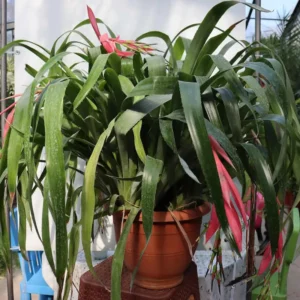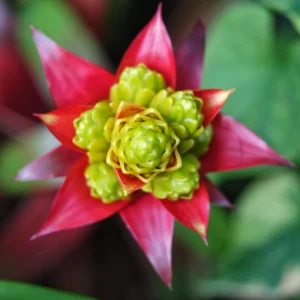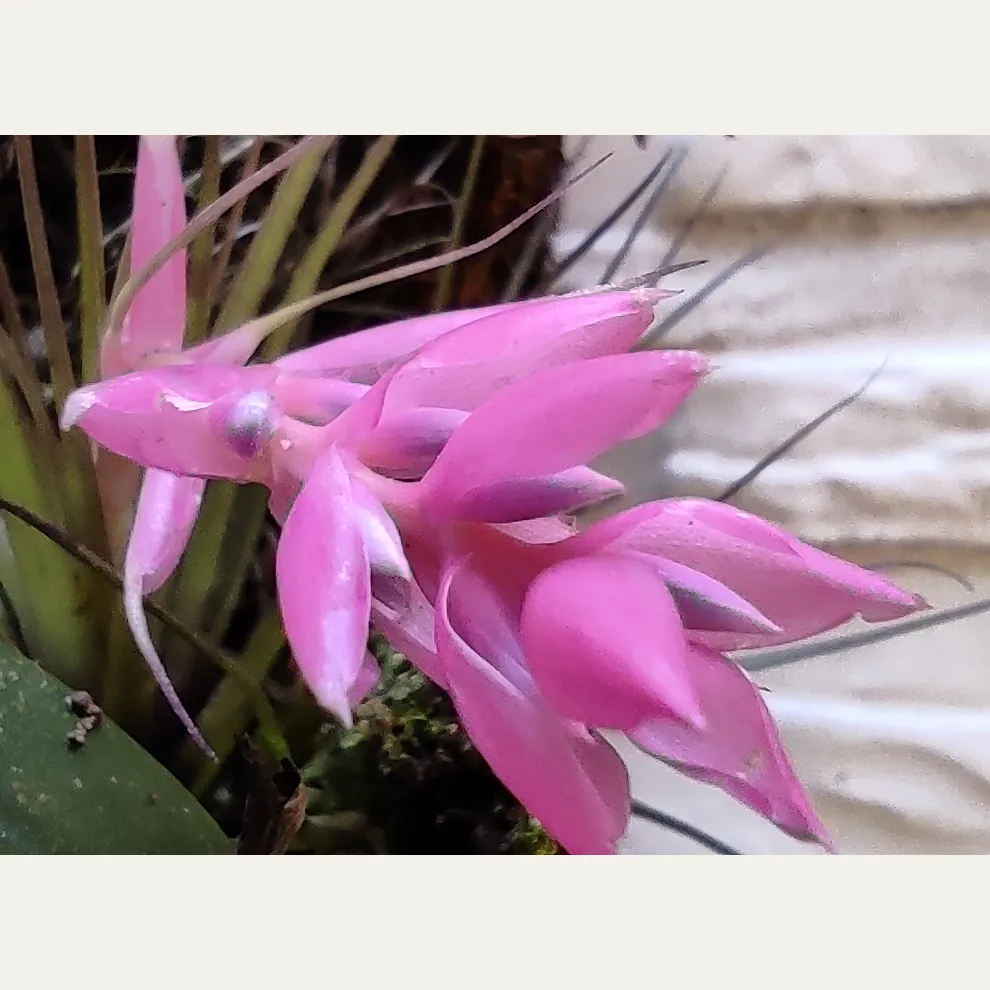
Tillandsia stricta forms small rosettes of grey-green leaves and can develop into a cluster of side shoots. When it blooms, pink bracts, the coloured leaves close to the flowers, accompany small purplish flowers. Its delicate appearance suits a display that keeps the plant visible, but the mount must also support healthy growth: water and air need to circulate without trapping moisture around the base.
Plant profile
Scientific name: Tillandsia stricta.
Family: Bromeliaceae.
Growth habit: It grows on trees as an epiphyte or on rocks as a lithophyte, according to Kew’s taxonomic record.
Native range: Parts of South America and Trinidad, including Brazil.
Foliage: Green to greyish leaves with trichomes.
Light: Bright, filtered light.
Propagation: Seeds or division.
How to mount it without trapping water
The Royal Horticultural Society’s profile of Tillandsia stricta describes growing it without soil, attached to a support. Choose a mount that allows you to remove or tilt the plant for watering and draining. Keep the base accessible for inspection. Do not bury the rosette in potting soil, and avoid fastening it so tightly that the leaves are crushed.
In its general air-plant guidance, the RHS advises positioning the plant so water can leave its centre, or shaking it gently after watering. Before returning it to a display, check for trapped water. The aim is to hydrate the plant and then allow it to dry, not to maintain a permanent reservoir.
Light, watering and everyday care
Singapore’s National Parks Board (NParks) recommends partial shade and reports leaf scorch in plants exposed directly to sunlight under local growing conditions. The leaves have trichomes, structures involved in absorbing moisture and nutrients. Protect their surface and do not choose a location solely for its decorative effect.
Airflow is essential. NParks links rot problems to poor air circulation and inadequate drying between watering sessions. Mounts that hold water for a long time need particular attention.
The RHS profile for Tillandsia stricta allows hydration by dipping the plant in water, followed by draining and drying. This is not a rule for every species in the genus. Adjust the intervals to the heat, humidity and drying you observe, rather than copying a schedule from a different climate. The society’s general guide favours suitable rainwater and warns against highly mineralised water.
Fertiliser should be dilute. Do not copy doses intended for soil-grown plants or apply concentrated fertiliser to the leaves. Remove dead leaves and check that the base remains firm before increasing watering.
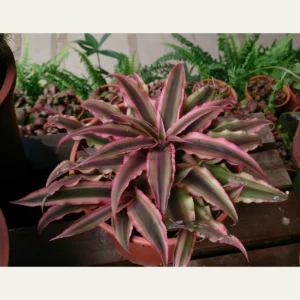
Bromeliads do not all share the same watering needs. For example, Cryptanthus bivittatus, the earth star, grows in a potting mix, unlike this mounted air plant. Identify the species before choosing a routine.
How to propagate it from pups
For T. stricta, the RHS recommends separating pups only once they are at least one-third of the mother plant’s size. Division is optional: leaving them attached allows a clump to form.
The following method follows the University of Vermont’s general air-plant guidance. Select a well-developed pup, hold the mother plant and ease the pup away with a gentle twist and pull at the joining point. Avoid pulling on the leaf tips. If it does not separate easily, do not force it; allow more time for growth. Place the young plant on an airy support and follow the light, watering and drainage advice above.
Flowering and warning signs
The RHS species profile advises removing rosettes that have died after flowering. The University of Vermont explains that an air plant’s mother rosette blooms once, then loses vigour as pups grow. Keep the new shoots rather than discarding the whole clump when the flowers finish. During flowering, water carefully to avoid soaking the flowers.
Darkening in the centre together with trapped water calls for a different response from gradual ageing after flowering. Check drying and airflow before adding more water. A recent move into strong sun is also worth considering when leaves look scorched. These signs guide your inspection, but none diagnoses a disease on its own.
What does the Brazilian name mean?
The Botanical Garden of Brazil’s Federal Rural University of Rio de Janeiro (UFRRJ) lists Tillandsia stricta under the common name cravo-do-mato. Other species also share this name. Look for the scientific identification when buying a plant or comparing photographs.
Common questions
Does it live on air alone? No. “Air plant” describes a way of growing, not an absence of water requirements. Hydration remains part of its care.
Can it live in a closed container? Air circulation and the ability to dry are priorities. Before using a decorative container, check whether it meets those needs.
Must I separate every pup? No. You can keep the clump together or propagate it using the procedure above, without setting a fixed number of months as a deadline.
Sources
Singapore National Parks Board (NParks).
RHS: general guidance for air plants.
Further growing guidance: RHS: Tillandsia stricta profile; University of Vermont: air plants; UFRRJ Botanical Garden: epiphyte field guide.
Photo: Nave do Conhecimento, CC0 1.0. Side context cropped and neutral margins added above and below to preserve the flower display; converted to WebP.