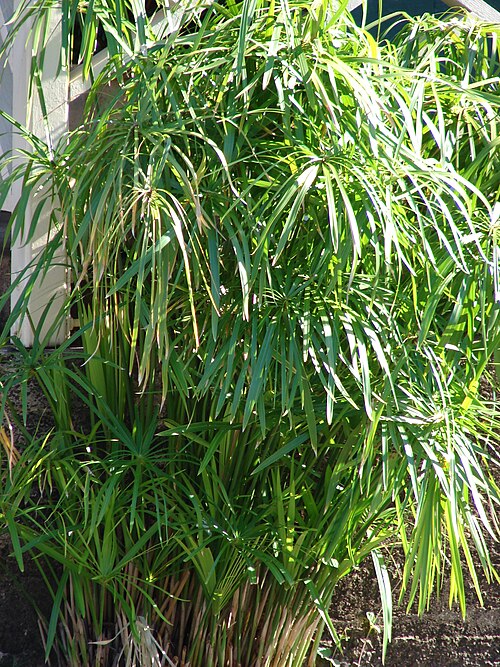
The umbrella sedge earns its common name from the green spokes at the tops of its stems. It can make a striking container plant, but its appetite for moisture comes with responsibilities: prevent escape into natural wetlands and avoid turning a decorative container into a mosquito breeding site.
The North Carolina Extension profile explains that the spreading green structures are bracts, rather than ordinary foliage leaves. True leaves are reduced around the stem base. The plant forms clumps and spreads through rhizomes and seeds. Its architectural shape, more than its small flowers, gives it ornamental interest.
Light and water: moist roots, not a dark corner
The Royal Horticultural Society lists sun or partial shade outdoors and bright filtered light under glass. It recommends moist, loam-based, peat-free potting compost and generous summer watering. The plant can grow as a bog or marginal plant; it is not a drought-tolerant houseplant.
Choose a position you can inspect easily. Check the substrate regularly instead of assuming a weekly watering schedule will always suffice. A hotter, windier position may require more attention than a sheltered one. Avoid placing the container where overflow or discarded plant pieces can enter a natural watercourse.
Prevent mosquito breeding without drying out the plant
For aquatic displays that cannot be emptied, seek advice from local vector-control services on a suitable maintenance plan. Health guidance notes that eggs can adhere to container walls; simply topping up the water is not adequate cleaning. Do not improvise chemical treatments in a planted container.
Think about escape before propagation
The University of Florida’s invasive-plant centre documents its spread into wet habitats and advises against planting it in Florida. That regional recommendation is not a universal legal ban. Elsewhere, check local guidance before planting or sharing it, and never introduce it into streams, wetlands or natural pond margins.
North Carolina Extension lists division and stem cuttings as propagation methods. However, being easy to multiply does not make multiplication desirable everywhere. Keep roots, seeds and cut material contained, and use appropriate local garden-waste disposal rather than dumping them outdoors.
A deliberate place in the garden
Where its cultivation is appropriate, the umbrella shape works best with enough visual space around it. Choose a manageable container and a maintenance routine before choosing the display. A native wetland plant recommended locally may offer a better option where escape risk is high.
Usamos cookies em nosso site para fornecer a melhor experiência de uso, lembrando suas preferências e visitas repetidas. Ao clicar em “Aceitar”, concorda com a utilização de TODOS os cookies.
Este site usa cookies para melhorar sua experiência enquanto você navega pelo site. Destes cookies, os cookies que são categorizados como necessários são armazenados no seu navegador, pois são essenciais para o

funcionamento das funcionalidades básicas do site. Também usamos cookies de terceiros que nos ajudam a analisar e entender como você usa este site. Esses cookies serão armazenados em seu navegador apenas com

o seu consentimento. Você também tem a opção de bloquear esses cookies. Porém, a desativação de alguns desses cookies pode afetar sua experiência de navegação.
Os cookies necessários são absolutamente essenciais para o funcionamento adequado do site. Esta categoria inclui apenas cookies que garantem funcionalidades básicas e recursos de segurança do site. Esses cookies não armazenam nenhuma informação pessoal.
Quaisquer cookies que possam não ser particularmente necessários para o funcionamento do site e sejam usados especificamente para coletar dados pessoais do usuário por meio de análises, anúncios e outros conteúdos incorporados são denominados cookies não necessários. É obrigatório obter o consentimento do usuário antes de executar esses cookies no seu site.