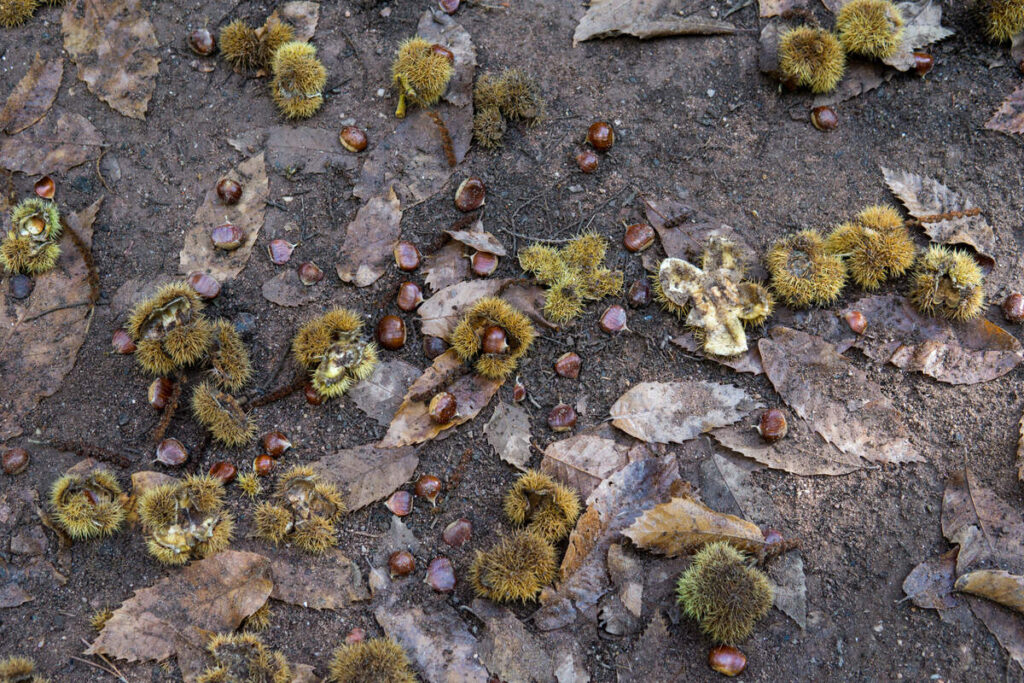
Sweet chestnut (Castanea sativa), also called European or Spanish chestnut, is the tree behind a familiar autumn food. But its appeal goes beyond the kitchen: mature trees develop a broad crown and deeply furrowed bark. This is a choice for generous outdoor spaces, not a small patio pot.
Recognising the tree
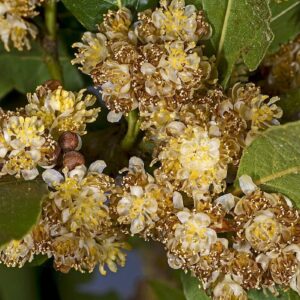
A member of the beech family, Fagaceae, sweet chestnut loses its leaves seasonally. The leaves are long, with conspicuous saw-like edges; flowers appear in elongated catkins. The brown nuts develop inside a prickly case called a burr. They are the fruits, while the burr is their protective cupule, not a guarantee that every case contains exactly two nuts.
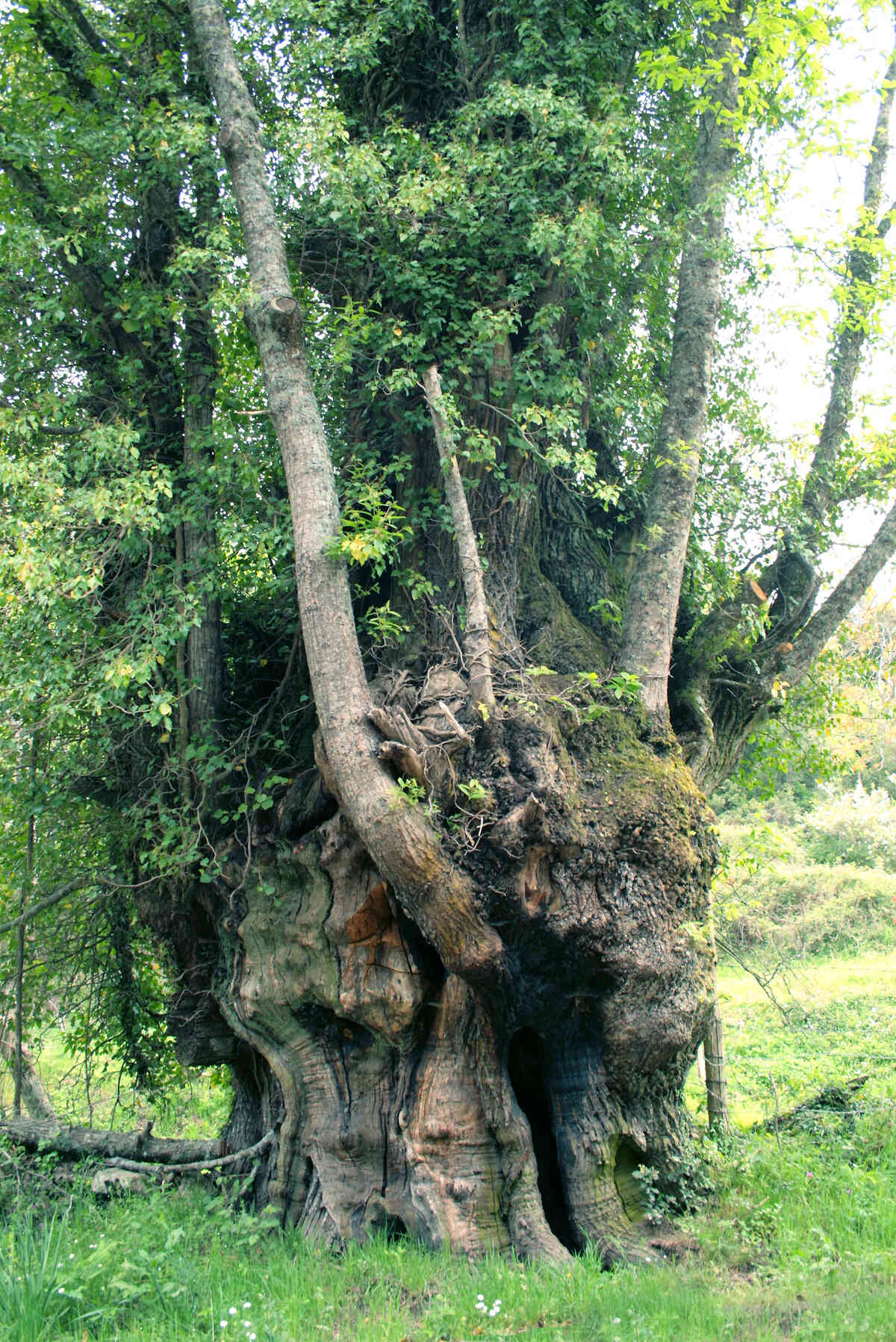
The European Commission’s tree atlas describes trees reaching 30–35 metres. A young nursery plant therefore needs a site chosen for its eventual size. Long-established trees also provide useful timber and have a history of cultivation extending well beyond modern ornamental gardens.
Before planting: climate, light and soil
Choose full sun and well-drained ground, with an acidic to neutral reaction. A large tree in an unsuitable, waterlogged site will not be rescued by frequent fertilising. Check available space and soil conditions before buying, and ask a local nursery which chestnut cultivars perform reliably in your climate.
In Brazil, the trade name castanha tipo portuguesa does not identify a single species. A Brazilian horticultural review documents both European and Japanese chestnuts and local selections. Do not assume that any tree sold under that name is pure C. sativa, or that a harvest calendar from another region applies to your garden.
Seedlings, grafting and a future harvest
Seeds can produce new trees, but they do not reliably preserve a cultivar’s fruit quality or growth characteristics. Grafted plants of known origin are a more predictable starting point when the aim is a crop. Compatibility between rootstock and scion matters; the Brazilian review describes this as an important part of nursery production.
Plan pollination too. Research on chestnut cultivars and selections in São Paulo found differences in flowering and ripening, with poor flowering synchrony associated with fewer nuts in some cases. Ask for suitable polliniser combinations rather than expecting an isolated tree to guarantee a full harvest. This is also why one universal planting distance or fertiliser schedule is not a useful orchard plan.
From the tree to the kitchen
Chestnuts can be roasted, boiled or made into flour. Unlike many oily nuts, they are notably starchy. Fresh nuts need prompt, cool storage: University of Missouri guidance recommends refrigeration in suitable containers, allowing wet nuts to dry on the surface first. Leaving a harvest warm can mean deterioration rather than a convenient pantry supply.
Do not confuse edible chestnuts with horse chestnuts (Aesculus). Horse chestnuts are poisonous. A brown, shiny seed or a familiar common name is not enough identification, and tasting is not a safe test. Use correctly identified food-grade chestnuts; seek poison-centre advice if an unknown or horse chestnut has been eaten.
References
RHS: Castanea sativa; European Commission JRC: sweet chestnut; Revista Brasileira de Fruticultura: chestnut cultivation in Brazil; Brazilian study of chestnut cultivars and selections; University of Missouri: chestnuts and storage; National Capital Poison Center: horse chestnut toxicity.
Cover: AudreyMuratet, CC BY-SA 4.0. Castanea sativa nuts and burrs in France; resized and compressed.