A basket of petunias can brighten a balcony for months, but flowers alone do not tell you the age or health of the plant. If a newly bought basket fades quickly, investigate its conditions rather than assuming it has simply reached the end of a one-year life. Choosing the right variety and providing enough light make a much better starting point.
What kind of petunia are you growing?
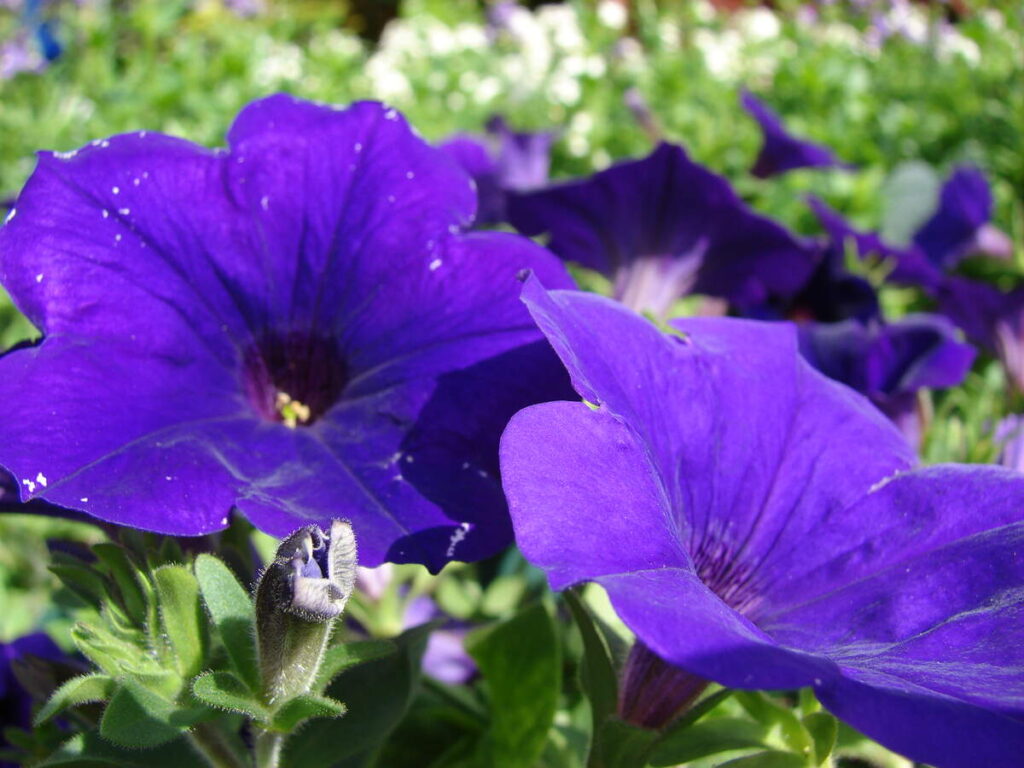
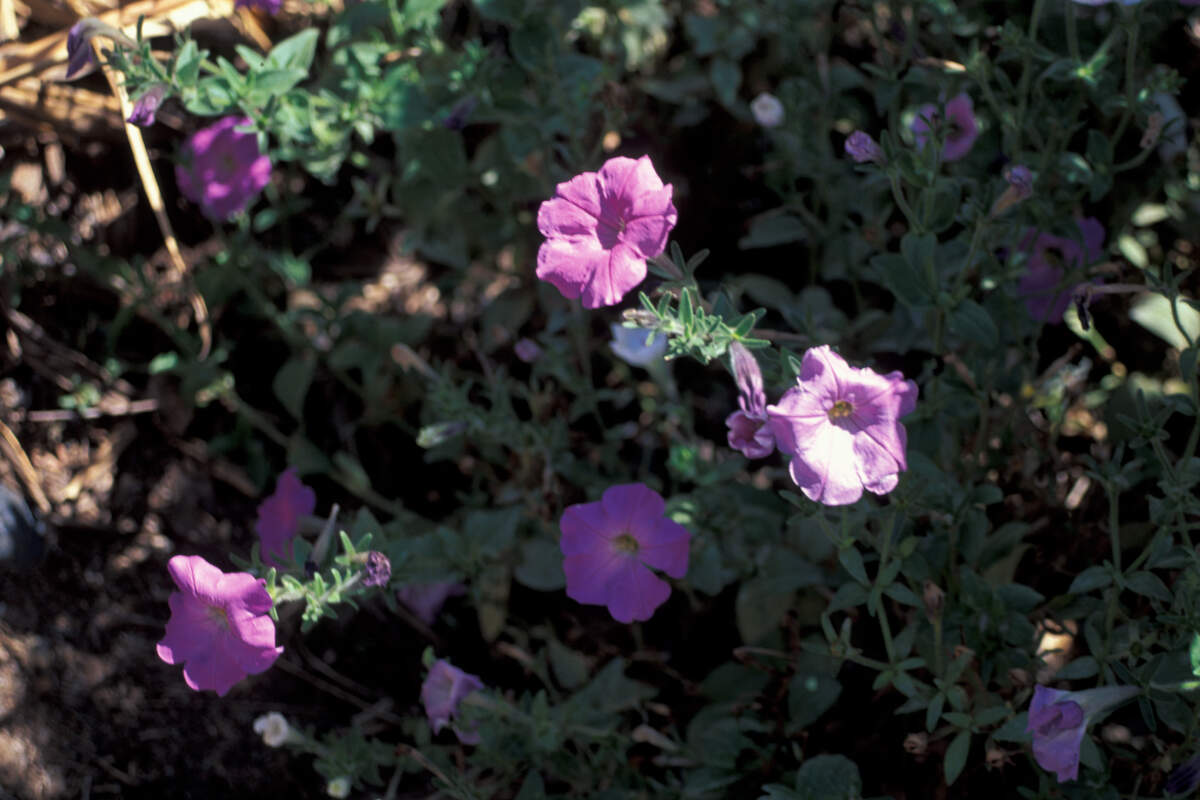
Garden petunias are mostly hybrids, often named Petunia × atkinsiana. Their ancestors come from South America. Some varieties form compact mounds; others trail from baskets or spread across beds. Flowers may be single or double, plain or patterned, and some are fragrant. Read the cultivar label before deciding how much space to allow.
These plants are commonly grown as seasonal annuals, although garden petunias are tender perennials. Frost and unfavorable conditions can end a display; flowering and producing seeds do not automatically mean that the whole plant must die. A universal twelve-month expiry date is not a useful care rule.
Sunlight and a suitable growing season
Petunias generally flower best in sun. University of Minnesota Extension recommends at least five to six hours of good sunlight; more shade usually means fewer blooms. Adapt that guidance to your climate and cultivar rather than placing every petunia in deep shade when the weather warms.
Heat tolerance varies. UF/IFAS describes petunias as popular winter annuals in Florida, while some spreading hybrids tolerate warmer conditions better. That is a regional example, not a planting calendar for all of Brazil. Choose a season suited to local weather and protect plants from frost.
Buying plants and settling them in
Choose sturdy, compact plants rather than weak, stretched stems. When a plant has been sheltered in a greenhouse, introduce it gradually to outdoor sun and wind over several days. Its first home should allow for drainage, access for watering and its eventual spread. For wall-mounted displays, see our vertical garden planning guide.
Check the potting mix before watering. Hanging baskets can dry much faster than garden beds, especially in wind and heat. Water the root zone thoroughly when needed and allow excess to drain away. Frequent tiny splashes are not a substitute for wetting the root ball, and standing water is not a reserve the roots can safely use indefinitely.
Feed according to the fertilizer label, the cultivar and any nutrients already in the potting mix. A container with controlled-release fertilizer does not need the same routine as an unfed bed. Avoid adding extra fertilizer simply because the plant has stopped flowering; first check light, water and root health.
Keeping the display going
Remove spent flowers where the cultivar needs it; many small-flowered types shed their old blooms without help. If stems become long and bare, pruning can encourage new growth, but retain healthy leaves. Saved seed may produce plants unlike the parent, so do not expect every hybrid to repeat its exact color or habit.
Seeds, wilting and other questions
Petunia seeds are tiny and need light to germinate. Sow on the surface of a clean, moist seed-starting medium and press gently rather than burying them. Keep moisture even, not saturated. If a clear cover is used, keep it out of direct sun and remove it after emergence. Transplant seedlings as they develop and acclimatize them before planting outdoors.
A wilted petunia may be short of water, but root rot, excess water, pests and other disorders are also possible. Check moisture and inspect the plant before soaking the pot. Recovery is not guaranteed by immersion. Persistent decline calls for diagnosis, not an automatic insecticide or an assumption of old age.
Pet safety
The ASPCA lists Petunia species as non-toxic to cats, dogs and horses. This is not advice to use ornamental flowers as food. Keep fertilizers and other garden products out of reach, and consult a veterinarian if a pet becomes unwell after chewing a plant.
Usamos cookies em nosso site para fornecer a melhor experiência de uso, lembrando suas preferências e visitas repetidas. Ao clicar em “Aceitar”, concorda com a utilização de TODOS os cookies.
Este site usa cookies para melhorar sua experiência enquanto você navega pelo site. Destes cookies, os cookies que são categorizados como necessários são armazenados no seu navegador, pois são essenciais para o

funcionamento das funcionalidades básicas do site. Também usamos cookies de terceiros que nos ajudam a analisar e entender como você usa este site. Esses cookies serão armazenados em seu navegador apenas com

o seu consentimento. Você também tem a opção de bloquear esses cookies. Porém, a desativação de alguns desses cookies pode afetar sua experiência de navegação.
Os cookies necessários são absolutamente essenciais para o funcionamento adequado do site. Esta categoria inclui apenas cookies que garantem funcionalidades básicas e recursos de segurança do site. Esses cookies não armazenam nenhuma informação pessoal.
Quaisquer cookies que possam não ser particularmente necessários para o funcionamento do site e sejam usados especificamente para coletar dados pessoais do usuário por meio de análises, anúncios e outros conteúdos incorporados são denominados cookies não necessários. É obrigatório obter o consentimento do usuário antes de executar esses cookies no seu site.