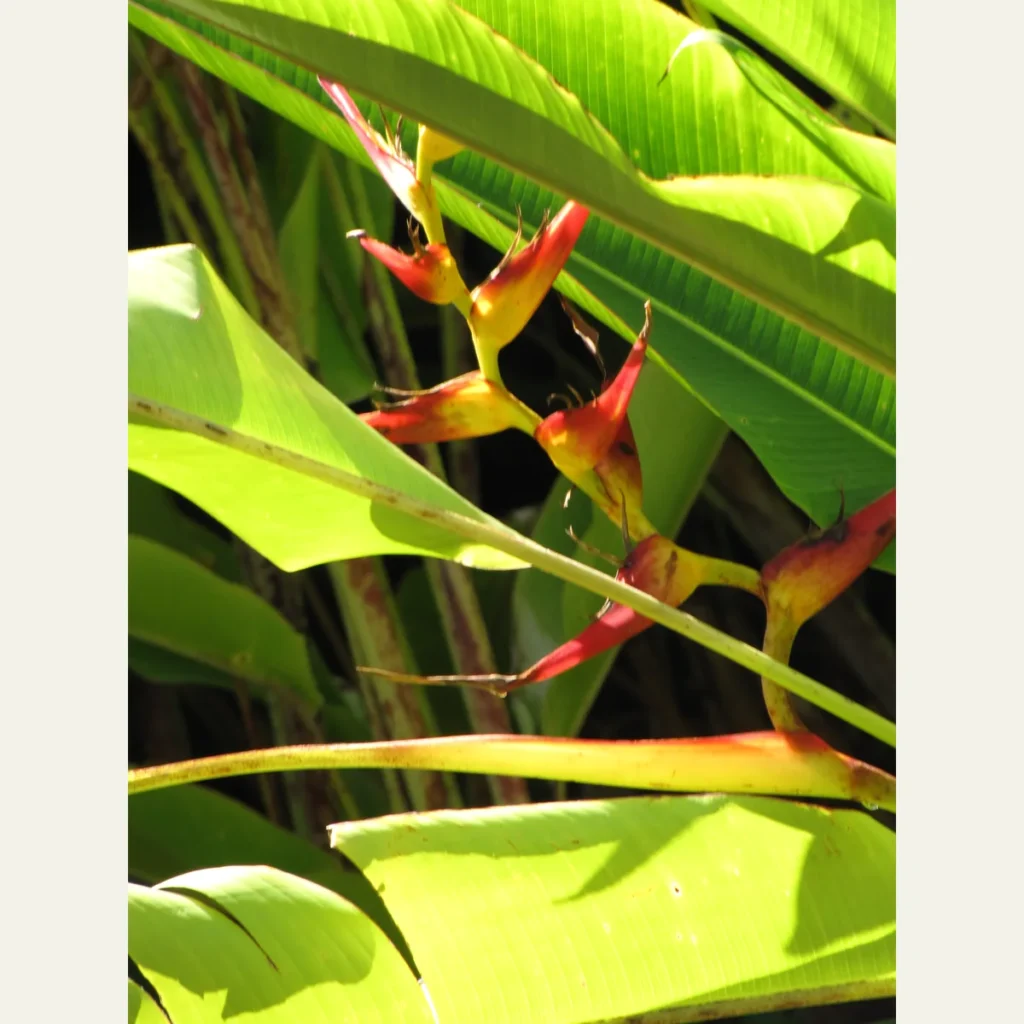
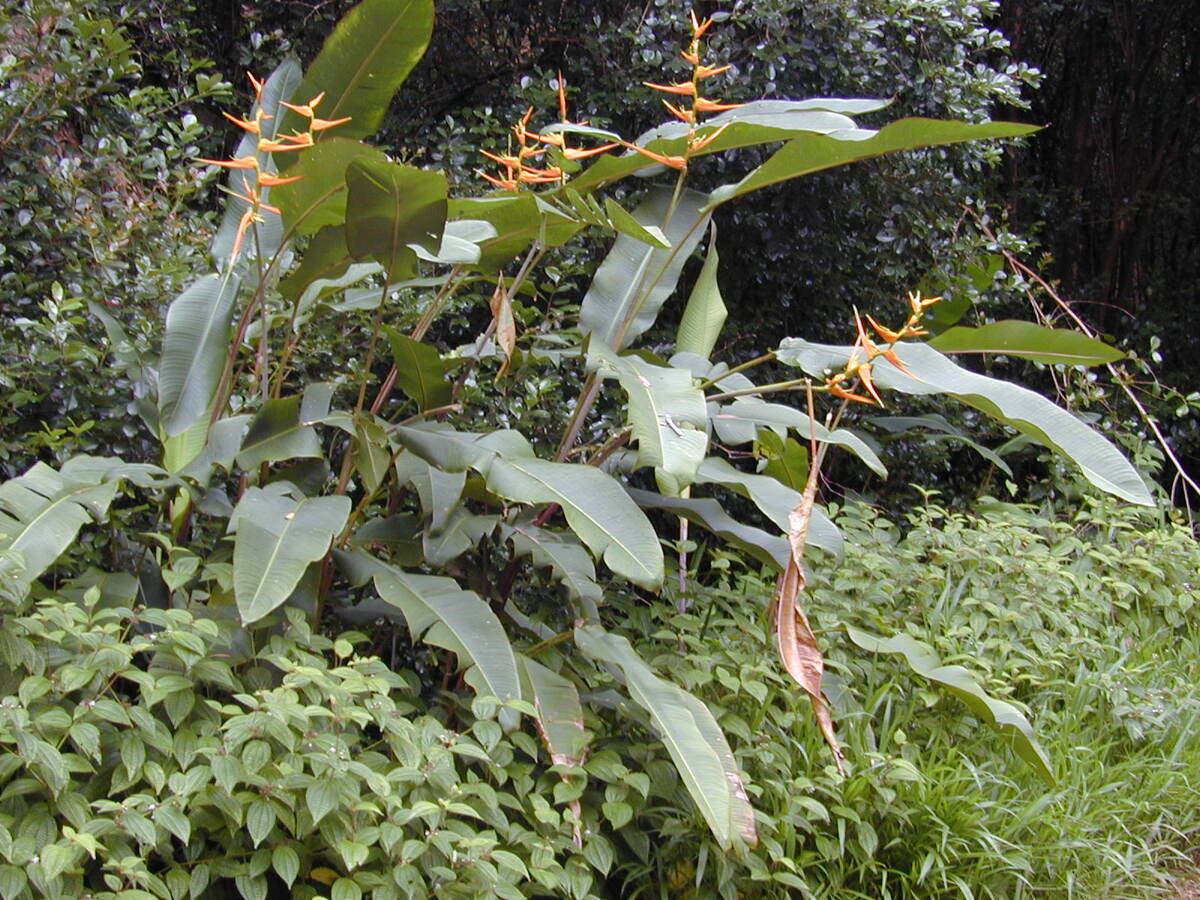
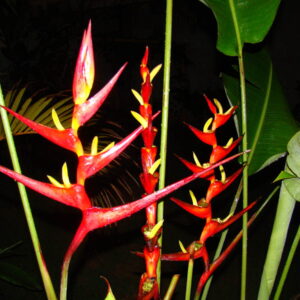
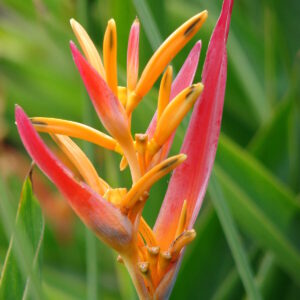
Heliconia latispatha brings large leaves and vivid upright flower stems to a tropical garden. The colourful structures are bracts, modified leaves around the smaller flowers. Underground stems called rhizomes produce new shoots and gradually enlarge the clump. Give it a generous bed, not just a gap between other plants.
Identity and growing space
Kew accepts Heliconia latispatha Benth. in Heliconiaceae. Its native range extends from eastern and southern Mexico to northeastern Peru and Venezuela, mainly in wet tropical environments. Despite the banana-like leaves, it is not a banana tree.
The UF/IFAS South Florida guide describes upright inflorescences with widely spaced triangular bracts, yellow to orange towards the base and scarlet near the tips. It lists full sun to partial shade and a height of 6–15 feet, roughly 1.8–4.6 metres. Use that as a planning range, not a guaranteed size for every planting.
The University of Hawai‘i warns that the vigorous growth of this species does not suit small gardens. Check the nursery label and leave access around the clump for maintenance. A label saying only “compact heliconia” is not enough to identify this species.
Planting a rooted nursery plant
For heliconias generally, UF/IFAS recommends planting in warm weather and providing fertile, moist soil. Plan how to contain spreading rhizomes before the bed fills up. Cold protection may be necessary outside reliably warm climates.
For an established container plant, the following is general perennial-planting guidance from Clemson: loosen roots circling the root ball, set the plant at its previous depth, fill around it and gently firm the soil. Water thoroughly to settle it. Avoid burying the crown, where the shoots meet the roots.
Water and nutrition
Keep the root zone moist and inspect it rather than relying on a fixed weekly schedule. Rainfall, heat and soil texture all change how quickly a bed dries. For sandy beds, UF/IFAS suggests incorporating compost before planting. More fertilizer cannot compensate for unsuitable light or a badly prepared planting site.
As Clemson advises for perennial beds, base fertilizer decisions on a soil test where possible. Follow the product label and local advice; do not copy a dose intended for another soil or climate.
UF/IFAS recommends dividing heliconias into substantial rhizome sections. A piece of root without a growing point is not the same thing as a viable division. Choose healthy material, rather than multiplying a clump showing unexplained decline.
Mississippi State’s general perennial guidance is useful here: lift carefully to retain roots, identify the growing points and separate pieces with a sharp tool. Replant at the previous level and water while roots establish. Wait for new growth before fertilizing the division. This is general handling advice, not a species-specific promise of rooting time.
Leaf damage: inspect before treating
EPAMIG studied leaf-eating caterpillars in plantings that included H. latispatha in São João del-Rei, Brazil. If leaves have been chewed, inspect both surfaces and folded foliage. A damaged leaf alone does not identify the culprit or justify preventive spraying.
Record when the problem started and whether irrigation, rainfall or temperature changed. Photographs of the whole plant, its base and affected leaves help a nursery or horticultural professional assess the situation. Yellowing is a symptom, not a diagnosis.
Flowers and garden visitors
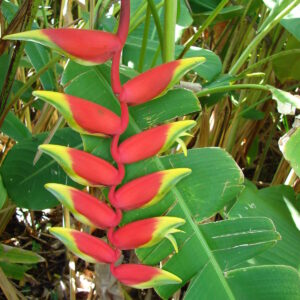
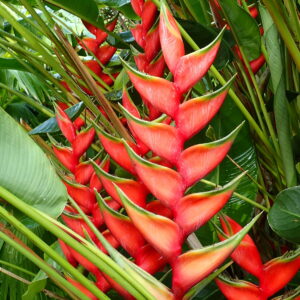
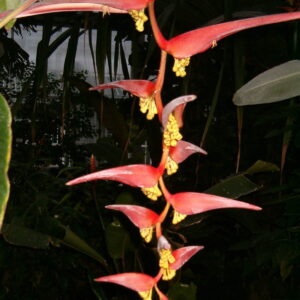
Bogotá Botanical Garden highlights this species’ value to birds. Leave space to observe visitors without blocking a path. For a contrasting flower shape, compare it with Heliconia rostrata and its hanging bracts; similar foliage does not mean identical growth or care.
Usamos cookies em nosso site para fornecer a melhor experiência de uso, lembrando suas preferências e visitas repetidas. Ao clicar em “Aceitar”, concorda com a utilização de TODOS os cookies.
Este site usa cookies para melhorar sua experiência enquanto você navega pelo site. Destes cookies, os cookies que são categorizados como necessários são armazenados no seu navegador, pois são essenciais para o

funcionamento das funcionalidades básicas do site. Também usamos cookies de terceiros que nos ajudam a analisar e entender como você usa este site. Esses cookies serão armazenados em seu navegador apenas com

o seu consentimento. Você também tem a opção de bloquear esses cookies. Porém, a desativação de alguns desses cookies pode afetar sua experiência de navegação.
Os cookies necessários são absolutamente essenciais para o funcionamento adequado do site. Esta categoria inclui apenas cookies que garantem funcionalidades básicas e recursos de segurança do site. Esses cookies não armazenam nenhuma informação pessoal.
Quaisquer cookies que possam não ser particularmente necessários para o funcionamento do site e sejam usados especificamente para coletar dados pessoais do usuário por meio de análises, anúncios e outros conteúdos incorporados são denominados cookies não necessários. É obrigatório obter o consentimento do usuário antes de executar esses cookies no seu site.