A snake plant is a good starting point for someone who wants greenery without a demanding watering routine. Its upright leaves give a room a strong shape, and established plants can cope with periods of dryness. The important distinction is between a plant that tolerates neglect and one that needs no care.
Which snake plant are we talking about?
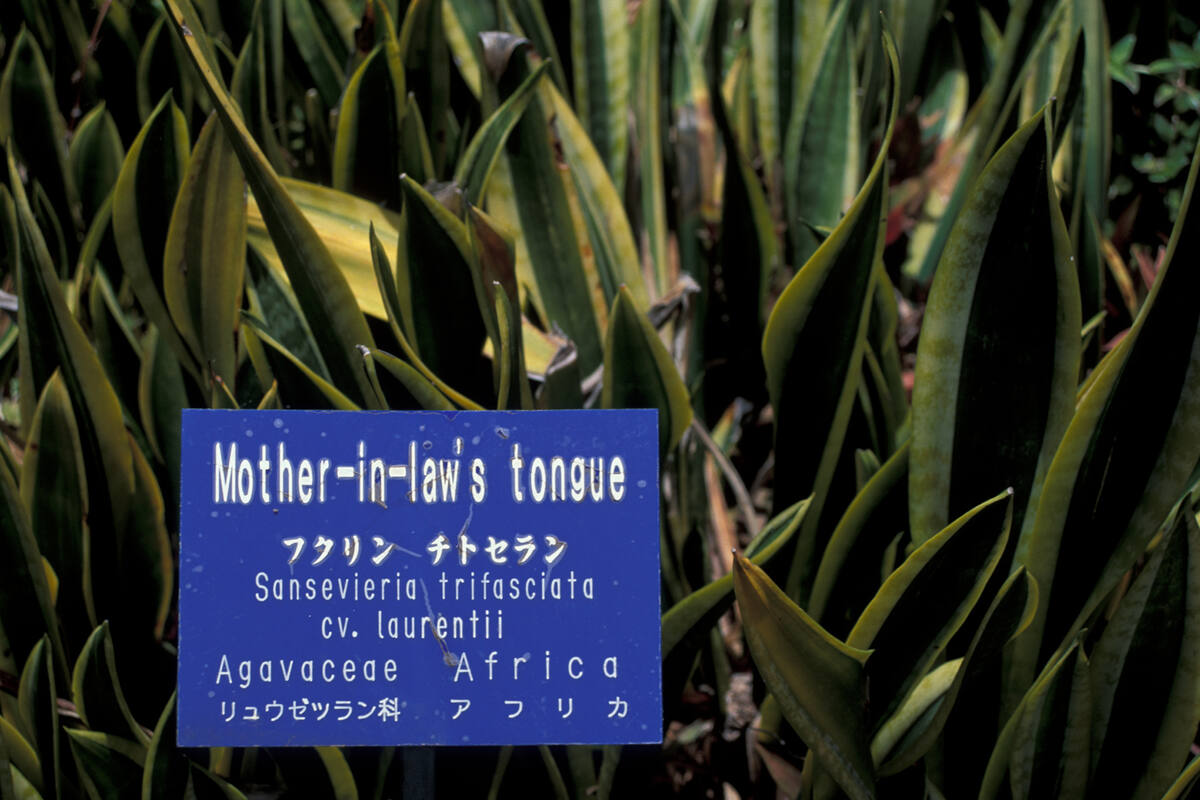
The familiar sword-leaved plant is Dracaena trifasciata, formerly Sansevieria trifasciata, in the Asparagaceae family. Kew records its native range in tropical Africa. In Brazil it is widely known as espada-de-são-jorge; mother-in-law’s tongue is another English name.
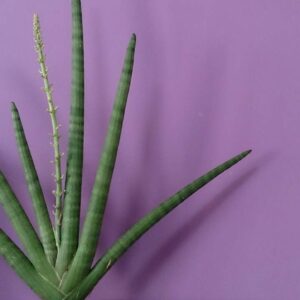
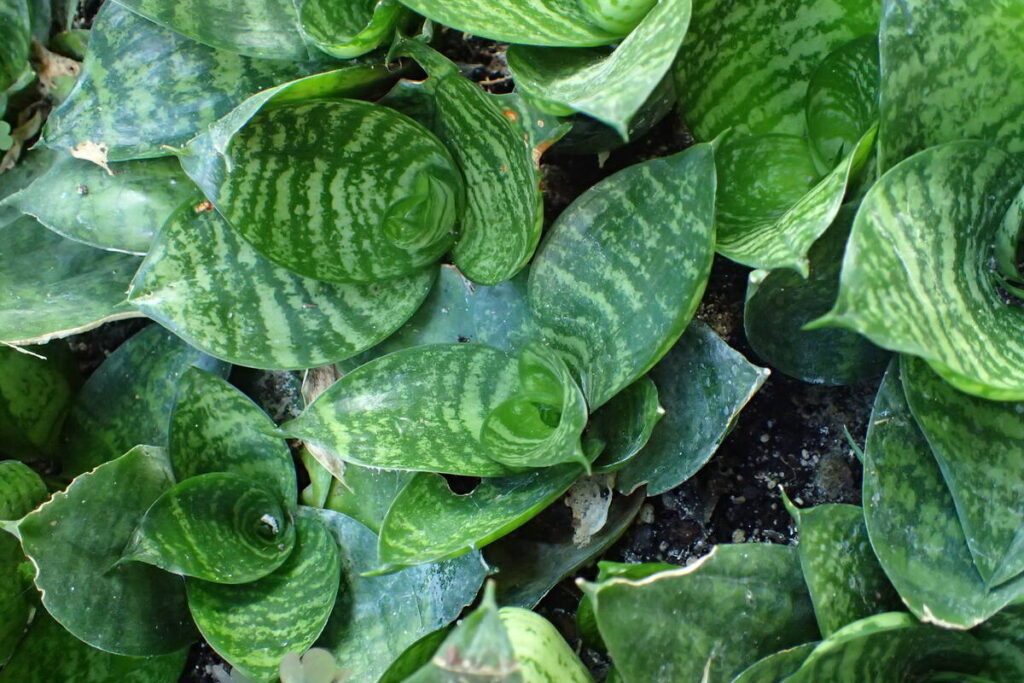
Several cultivated forms belong to this species. ‘Laurentii’ has yellow leaf margins; ‘Hahnii’ forms a compact, nest-like rosette; and ‘Moonshine’ has pale, silvery foliage. They are not three unrelated species. The cylindrical African spear, Dracaena angolensis, is a different species that shares the old Sansevieria name. Check the plant label rather than relying on a common name alone.
Where to put it
Choose a place with useful natural light, such as near a window. Snake plants tolerate dimmer positions, but growth slows there. A dark corner is not equivalent to a bright room. If you move a plant toward stronger sun, do so gradually: a sudden change can scorch leaves.
Ordinary indoor humidity is generally enough. Protect the plant from frost and cold draughts rather than trying to maintain an exact temperature of 30°C. Outdoors, consider your climate and local guidance before planting it in the ground.
Pot, drainage and watering
Use a container with drainage holes and a free-draining cactus or succulent potting mix. When roots and new shoots have filled the pot, move up only a little in size. An unnecessarily large container holds more wet mix around the roots.
Check the potting mix before watering and let it dry between waterings. There is no reliable once-a-week rule for every home. Light, season, container and temperature all affect how quickly it dries. Water the mix rather than the centre of the rosette, then empty the saucer or decorative outer pot. Persistent wetness is a common route to root rot.
Feeding and everyday maintenance
Feed modestly during active growth with a suitable houseplant fertiliser, following its label. More fertiliser is not a remedy for poor light or waterlogged roots. Remove dead or badly damaged leaves with a clean cutting tool, and wear gloves to avoid contact with sap.
Soft bases and collapsing leaves warrant a check of the roots and moisture conditions, not another automatic watering. Inspect for mealybugs and spider mites as well. Identify any pest before choosing a treatment, and use only a product labelled for the plant and situation.
Making new plants
Repotting is a convenient time to separate a well-rooted offset from the parent. Keep roots and leaves together and plant the division in a snug pot with draining mix. This is an accessible way to expand a collection without starting with an unrooted leaf.
Leaf-section cuttings are another option, but orientation matters: the end originally closest to the base must remain the bottom. Rooting takes patience. Most importantly, yellow-edged forms such as ‘Laurentii’ may produce green offspring from leaf cuttings. Iowa State University recommends division when you want to retain that variegation. A green new plant is therefore not always a sign of too little light.
Flowers and safety
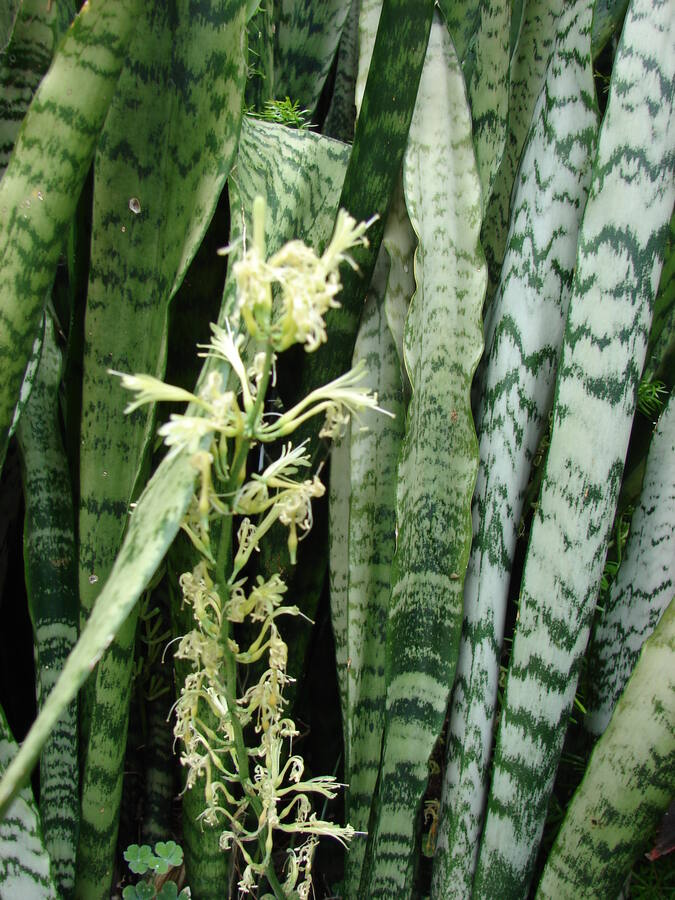
Snake plants can flower, although this is uncommon indoors. Small cream to greenish-white flowers may be fragrant, and orange berries can follow. Foliage remains the main ornamental feature, but saying the plant has no fruit or fragrance would be misleading.
Do not eat the plant. Embrapa describes gastrointestinal symptoms following ingestion, while the ASPCA lists it as toxic to cats and dogs, with nausea, vomiting and diarrhoea among possible signs. Keep it away from children and pets; its sap can also irritate skin. Seek medical or veterinary advice after suspected ingestion rather than trying a home remedy.
References
Kew: accepted name and distribution; NC State: cultivars, flowers and plant problems; New York Botanical Garden: light and maintenance; RHS: growing sansevierias; Iowa State: leaf cuttings and variegation; Embrapa: Floricultura Tropical, chapter 8, page 195; ASPCA: pet toxicity.
For another succulent with different uses and precautions, see our aloe vera growing guide.
Cover: compact ‘Hahnii’ rosettes, Krzysztof Ziarnek, Kenraiz, CC BY-SA 4.0; resized and compressed, under the same licence.