Water hyacinth is easy to admire and much harder to contain. Its lavender flowers rise above floating rosettes, but a mass of these plants can transform a pond or slow-moving waterway. In Brazil it is known as aguapé or gigoga; the name accepted by Kew is Pontederia crassipes, with Eichhornia crassipes as a synonym.
A floating freshwater plant
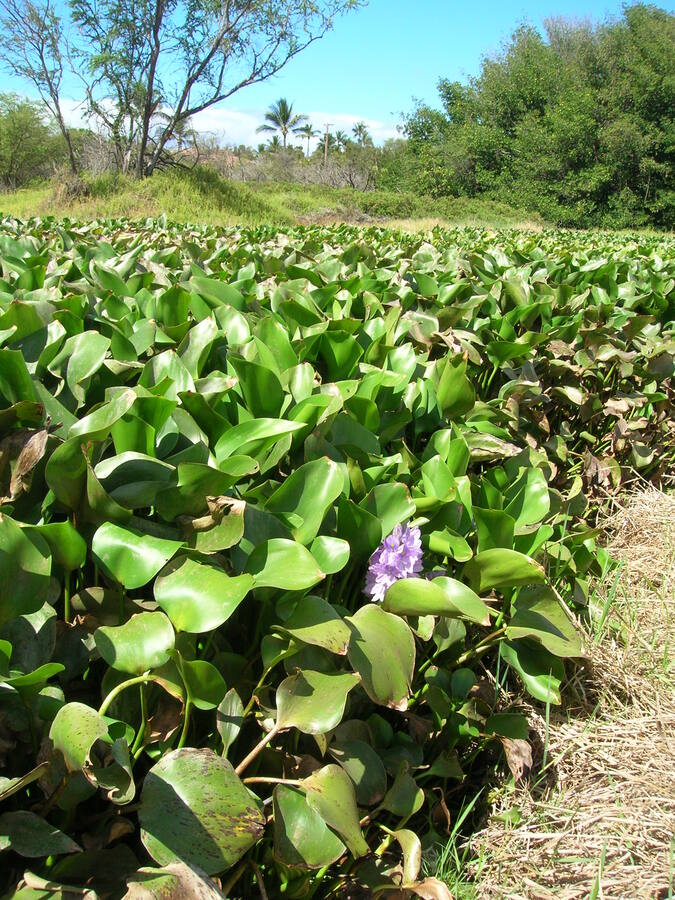
Native to tropical South America, including Brazil, this perennial belongs to the Pontederiaceae family. Glossy, rounded leaves often have swollen, spongy stalks that help the plant float. Fibrous roots hang into the water, and the flowers have a distinctive darker marking with a yellow spot.
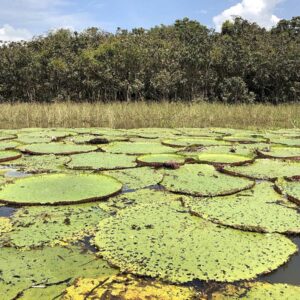
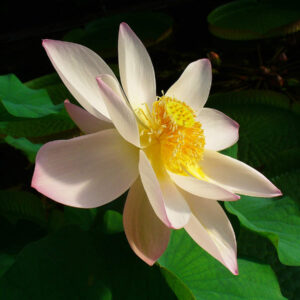
It is not a waterlily: Nymphaea waterlilies have a different growth form. Identifying an aquatic plant correctly matters before deciding how to manage it.
Why does it spread so quickly?
Water hyacinth produces daughter plants on horizontal stems, as well as seeds. Warm, nutrient-rich freshwater can favour vigorous growth. That does not mean every plant grows at a fixed weekly rate: temperature, available nutrients and site conditions influence the result.
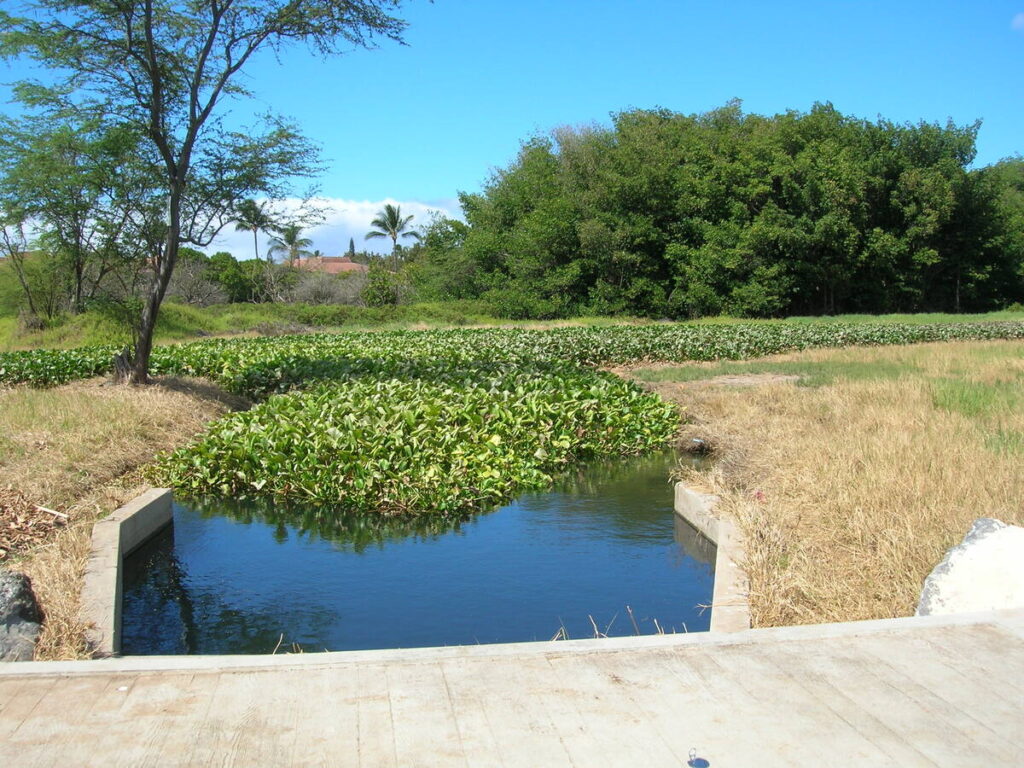
Outside its native range it has become an aggressive invader. Dense mats shade other aquatic vegetation and can obstruct access and water movement. When coverage becomes extensive, oxygen depletion can harm fish. A green surface is therefore not proof of a healthy pond.
Researchers have investigated this possibility in managed systems. A 2006 Unioeste study monitored water hyacinth in a slaughterhouse wastewater-treatment lagoon in Paraná, Brazil, and evaluated nutrient removal and composting of the resulting biomass. This was an experimental treatment system, not a recommendation to add the plant to any lake.
A separate study in the Paraíba do Sul and Imbé rivers measured metals in the plants, material attached to their roots and sediments. Roots were the main accumulation site within the plants. The practical lesson is caution: biomass taken from polluted water should not automatically be treated as clean garden compost. Its origin and possible contaminants need assessment.
What should a gardener do?
Do not release water hyacinth into rivers, drains or other water bodies, and do not transfer it between ponds. Before buying, keeping or transporting it, check the rules and environmental advice for your location. Being native somewhere does not make moving it elsewhere harmless.
If a water body is already covered, contact its manager or local environmental service for a suitable removal and disposal plan. Do not improvise chemical treatment. For a new ornamental pond, choose locally appropriate aquatic plants rather than introducing this fast-spreading species. Understanding its ecology is more useful than encouraging unrestricted cultivation.
Usamos cookies em nosso site para fornecer a melhor experiência de uso, lembrando suas preferências e visitas repetidas. Ao clicar em “Aceitar”, concorda com a utilização de TODOS os cookies.
Este site usa cookies para melhorar sua experiência enquanto você navega pelo site. Destes cookies, os cookies que são categorizados como necessários são armazenados no seu navegador, pois são essenciais para o

funcionamento das funcionalidades básicas do site. Também usamos cookies de terceiros que nos ajudam a analisar e entender como você usa este site. Esses cookies serão armazenados em seu navegador apenas com

o seu consentimento. Você também tem a opção de bloquear esses cookies. Porém, a desativação de alguns desses cookies pode afetar sua experiência de navegação.
Os cookies necessários são absolutamente essenciais para o funcionamento adequado do site. Esta categoria inclui apenas cookies que garantem funcionalidades básicas e recursos de segurança do site. Esses cookies não armazenam nenhuma informação pessoal.
Quaisquer cookies que possam não ser particularmente necessários para o funcionamento do site e sejam usados especificamente para coletar dados pessoais do usuário por meio de análises, anúncios e outros conteúdos incorporados são denominados cookies não necessários. É obrigatório obter o consentimento do usuário antes de executar esses cookies no seu site.