Dieffenbachia is grown for broad leaves patterned with cream, yellow or white. It can be a striking houseplant, but choosing a safe position matters just as much as choosing a bright one. Its sap can injure the mouth, skin and eyes. This guide covers cultivated Dieffenbachia generally; size and leaf patterns vary between cultivars.
Safety comes first
Do not allow children or pets to chew the plant. The danger is not limited to swallowing: sap on skin can cause irritation, and eye exposure can damage the cornea. Use gloves when cutting stems or removing leaves, avoid touching your face, and wash your hands afterwards. Keep discarded cuttings out of reach too.
After exposure, contact a poison centre or medical professional; seek veterinary help for animals. Difficulty breathing or swallowing is an emergency. These precautions reduce risk, not eliminate it. If the plant cannot reliably be kept inaccessible, choose a different houseplant.
Give it light, not a dark corner
Bright indirect light is a good starting point. Tolerating lower light does not mean thriving without adequate illumination. Strong direct sun can damage foliage, while a dim position slows growth. Keep the plant away from cold drafts and abrupt temperature changes.
Allow space for the cultivar you buy. Compact selections and large cane-forming plants do not share a single maximum height. A young tabletop plant may eventually need a floor-level position.
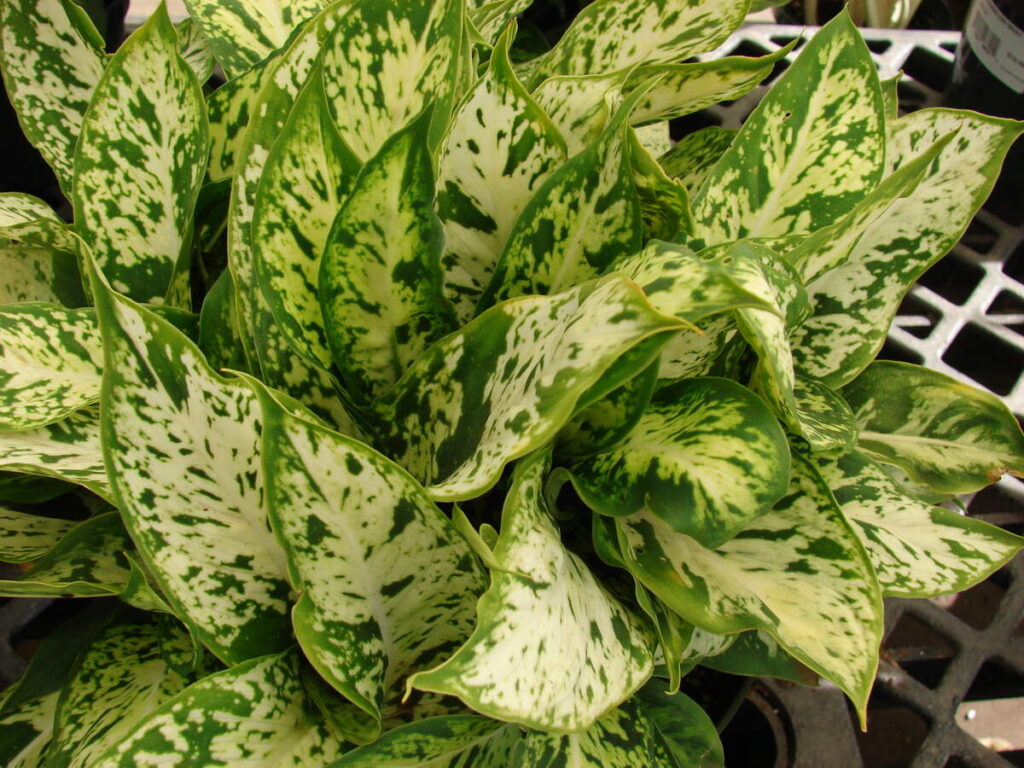
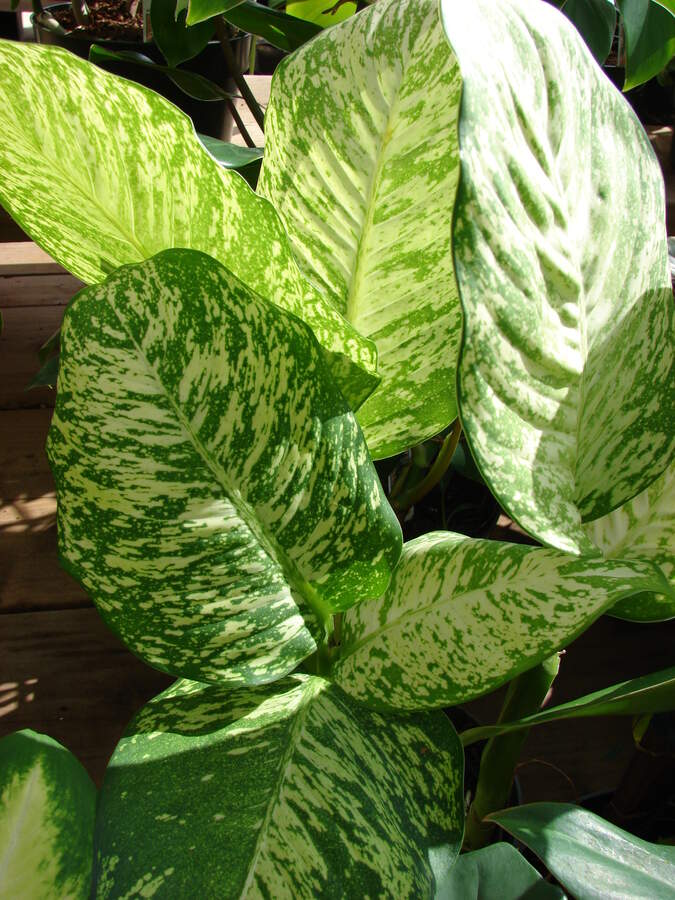
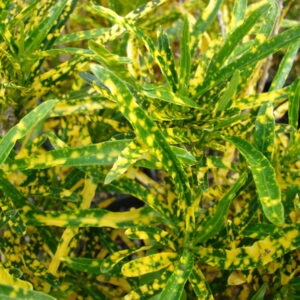
Dieffenbachia foliage; the source does not identify the cultivar. Forest & Kim Starr, CC BY 3.0; resized and compressed.
Water by the soil, not the calendar
Use a loose, well-drained potting mix and a container with drainage holes. Water thoroughly, let excess water escape and check the surface before watering again. UConn recommends waiting until the surface feels dry. Constantly wet soil can rot roots and stems; repeated severe drying is not good care either.
Feed according to the product label and the plant’s active growth. A slow-growing specimen in lower light needs less frequent fertilization than a vigorously growing one. More fertilizer is not a substitute for more suitable light.
Flowers and new plants
Dieffenbachia can flower, though it does so infrequently indoors. The flower structure includes a spadix surrounded by a spathe, and fruits may develop. It is cultivated primarily for foliage, not fruit or food.
Stem cuttings and division are used for propagation. Choose healthy material, protect yourself from sap and retain a bud on stem sections. Avoid trying to multiply a plant with unexplained soft rot: you may carry the problem into the new pots. Successful rooting still depends on moisture, light and the condition of the cutting.
Reading leaf problems
An occasional old lower leaf can yellow naturally. Widespread yellowing, soft stems or a declining plant need investigation. Check soil moisture, drainage, temperature and light before assuming an infection. Brown tips may reflect irregular watering or excess fertilizer, not necessarily a fungus.
Inspect for cottony mealybugs or fine spider-mite webbing, and separate an affected plant from the collection. Symptoms alone do not identify every pathogen, so avoid automatic fungicide treatment. Seek a diagnosis for persistent rot or unexplained decline.
Outdoor suitability also depends on location. UF/IFAS no longer recommends Dieffenbachia in Florida following its invasive-risk assessment. That is a regional recommendation, not a statement of a worldwide legal ban.
Usamos cookies em nosso site para fornecer a melhor experiência de uso, lembrando suas preferências e visitas repetidas. Ao clicar em “Aceitar”, concorda com a utilização de TODOS os cookies.
Este site usa cookies para melhorar sua experiência enquanto você navega pelo site. Destes cookies, os cookies que são categorizados como necessários são armazenados no seu navegador, pois são essenciais para o

funcionamento das funcionalidades básicas do site. Também usamos cookies de terceiros que nos ajudam a analisar e entender como você usa este site. Esses cookies serão armazenados em seu navegador apenas com

o seu consentimento. Você também tem a opção de bloquear esses cookies. Porém, a desativação de alguns desses cookies pode afetar sua experiência de navegação.
Os cookies necessários são absolutamente essenciais para o funcionamento adequado do site. Esta categoria inclui apenas cookies que garantem funcionalidades básicas e recursos de segurança do site. Esses cookies não armazenam nenhuma informação pessoal.
Quaisquer cookies que possam não ser particularmente necessários para o funcionamento do site e sejam usados especificamente para coletar dados pessoais do usuário por meio de análises, anúncios e outros conteúdos incorporados são denominados cookies não necessários. É obrigatório obter o consentimento do usuário antes de executar esses cookies no seu site.