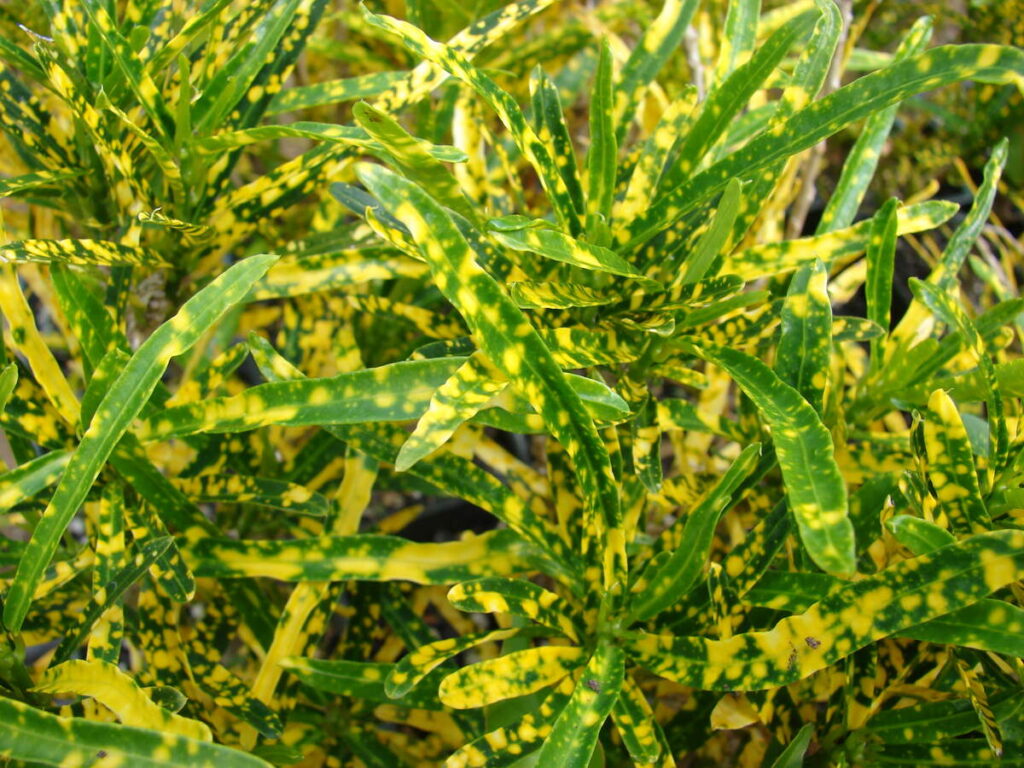
Garden croton (Codiaeum variegatum) brings colour without waiting for flowers. Its leathery leaves can mix green, yellow, orange and deep red on the same shrub. It suits containers and tropical gardens, but good colour depends on more than buying a bright plant: light, drainage and a stable environment matter.
One species, many leaf patterns
The familiar ornamental crotons are cultivars of Codiaeum variegatum, not a different species for every leaf colour. NC State describes ‘Petra’ with coloured veins, ‘Gold Dust’ with yellow spotting and ‘Spirale’ with twisted foliage. Shop names alone may not reliably identify a cultivar.
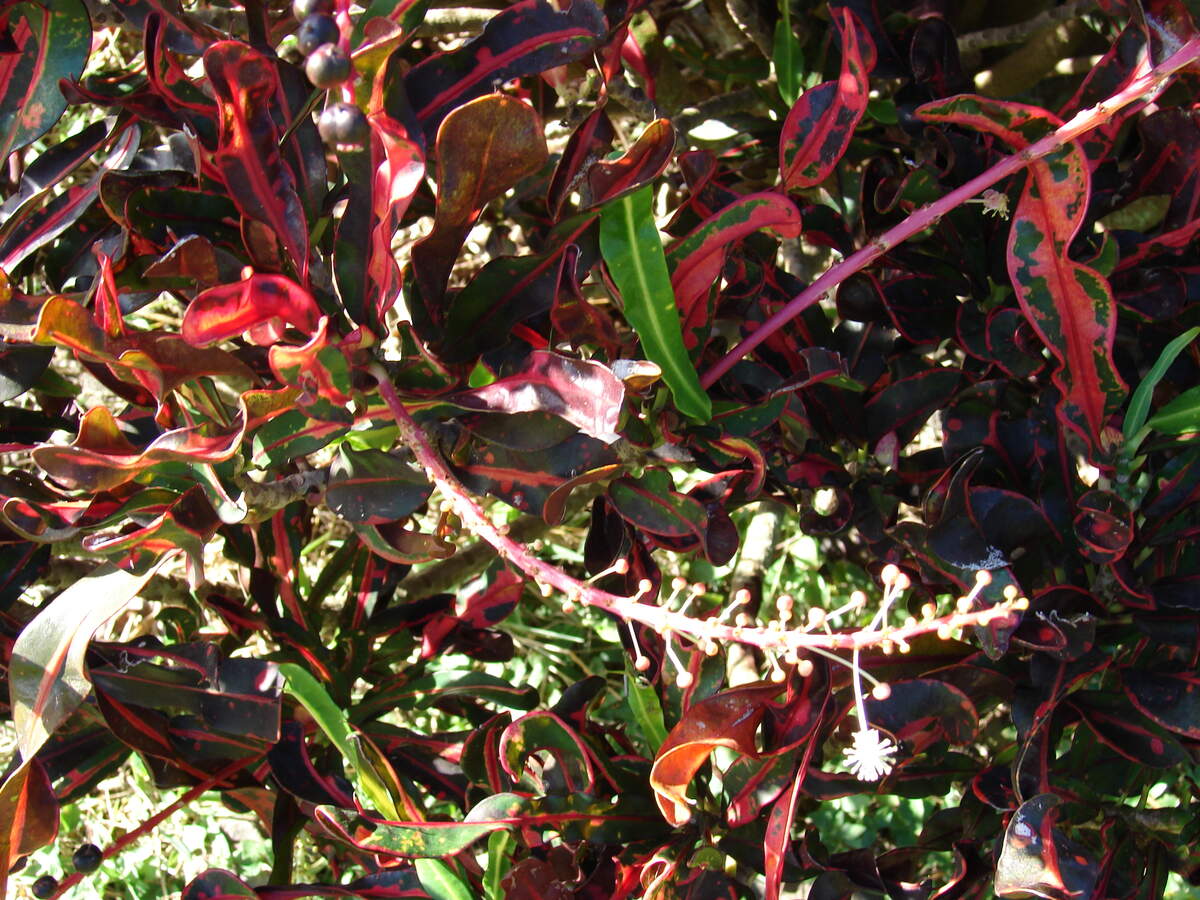
Outdoors in suitable tropical conditions, this evergreen shrub can reach about 3 metres; pot-grown plants are often smaller. It does flower, and pollinated flowers can produce small capsules containing seeds. The foliage, rather than the flowers, is the main attraction.
Light and temperature
Indoors, choose a very bright position with filtered light. A hot window with intense summer sun can scorch foliage. Outdoors, the right exposure depends on cultivar, climate and acclimatisation: do not move a plant straight from a shaded room into fierce sun. Colour changes are not a simple rule of “more sun means more yellow”.
Keep it warm and away from cold draughts. Ball’s Brazilian production guide gives 22–30°C as its preferred growing range, not a universal target of 38°C. Avoid temperature extremes, and protect container plants from cold weather.
Water, drainage and feeding
Check the potting mix before watering. When its surface dries, water thoroughly and let excess drain away; do not leave the pot standing in water. Growth and water use slow in cool conditions. A bigger pot is not automatically better: oversized containers can hold wet mix around the roots for too long.
Use a light, well-drained substrate. Feed according to the chosen product’s instructions and actual growing conditions, rather than applying an arbitrary monthly dose. More fertiliser does not guarantee brighter leaves: Ball notes that excess nitrogen can reduce colour intensity.
Wilting and falling leaves: investigate first
Both prolonged dryness and excess moisture can cause leaf loss. Sudden changes of location or temperature can also stress the plant. Before adding water to a wilted croton, check whether the root zone is dry or already wet. Inspect leaves and stems for mealybugs, scale insects and spider mites rather than treating every problem as thirst.
Pruning, propagation and safe handling
Pruning can encourage branching in a leggy plant. Stem cuttings and air layering are used for propagation; seedlings may differ from the parent, so seeds are not a reliable way to preserve a favourite leaf pattern. Keep cultivar identity and any propagation conditions supplied with the plant in mind.
Croton is ornamental, not edible. Queensland’s poisons centre reports mouth irritation from chewing leaves, bark or roots and dermatitis from sap contact. Wear gloves when pruning, avoid touching your eyes and keep the plant away from children and pets. Seek professional advice after ingestion or concerning symptoms rather than testing a plant’s safety yourself.
References
RHS: growing codiaeum; NC State: species and cultivars; NParks: Codiaeum variegatum; University of Wisconsin: care and problems; Ball Brasil: production guidance; Queensland Poisons Information Centre: safety.
Cover: Forest & Kim Starr, CC BY 3.0; resized and compressed. Codiaeum variegatum, cultivar unspecified.