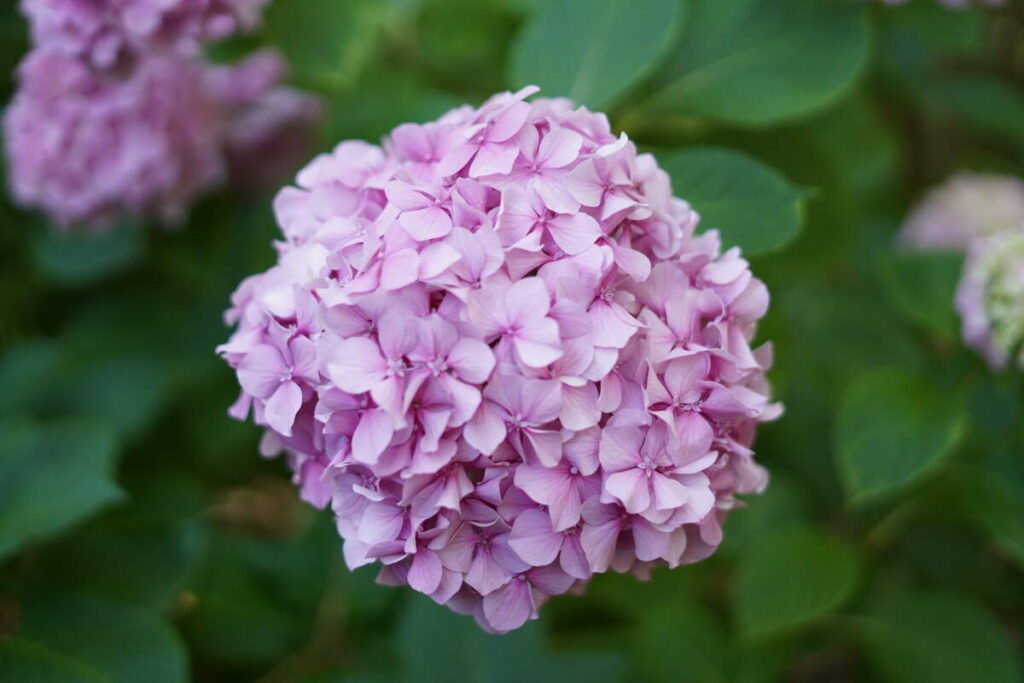
Bigleaf hydrangea (Hydrangea macrophylla) brings generous clusters of flowers to a garden, but its appeal is not a reason to treat every hydrangea alike. The variety you choose matters: it influences size, flowering and even how readily the colour changes.
Meet the plant
Kew recognises this member of the Hydrangeaceae family as native to parts of Japan. It is a deciduous shrub, with broad leaves and a rounded habit. NC State lists a typical height and spread of about 0.9–1.8 metres, though the cultivar is the better guide when planning a planting space. Its fruits are small capsules, not edible garden produce.
The familiar rounded flower heads are called mopheads. Lacecaps have a flatter centre of small fertile flowers surrounded by larger, showier sterile ones. Both belong in this group, so a flatter flower head is not a sign that something has gone wrong.
Light, soil and planting
Morning sunshine with afternoon shade is a useful starting point. Avoid a hot, exposed position. Use moisture-retentive soil that drains well, enriched with compost, and plant with the top of the root ball level with the surrounding ground. Water after planting and mulch the soil to slow drying. Containers are an option too. Cold can damage flower buds: choose a locally suitable cultivar and protect vulnerable plants when frost threatens.
Watering: check before reaching for the hose
Keep the root zone adequately moist during dry spells. However, drooping leaves do not always mean dry soil. A plant can wilt in afternoon heat and recover overnight while the soil remains moist. In that situation, extra watering is not the answer. Check the soil first, especially in pots; repeatedly soaking an already wet root zone can make matters worse.
Why blue flowers can become pink
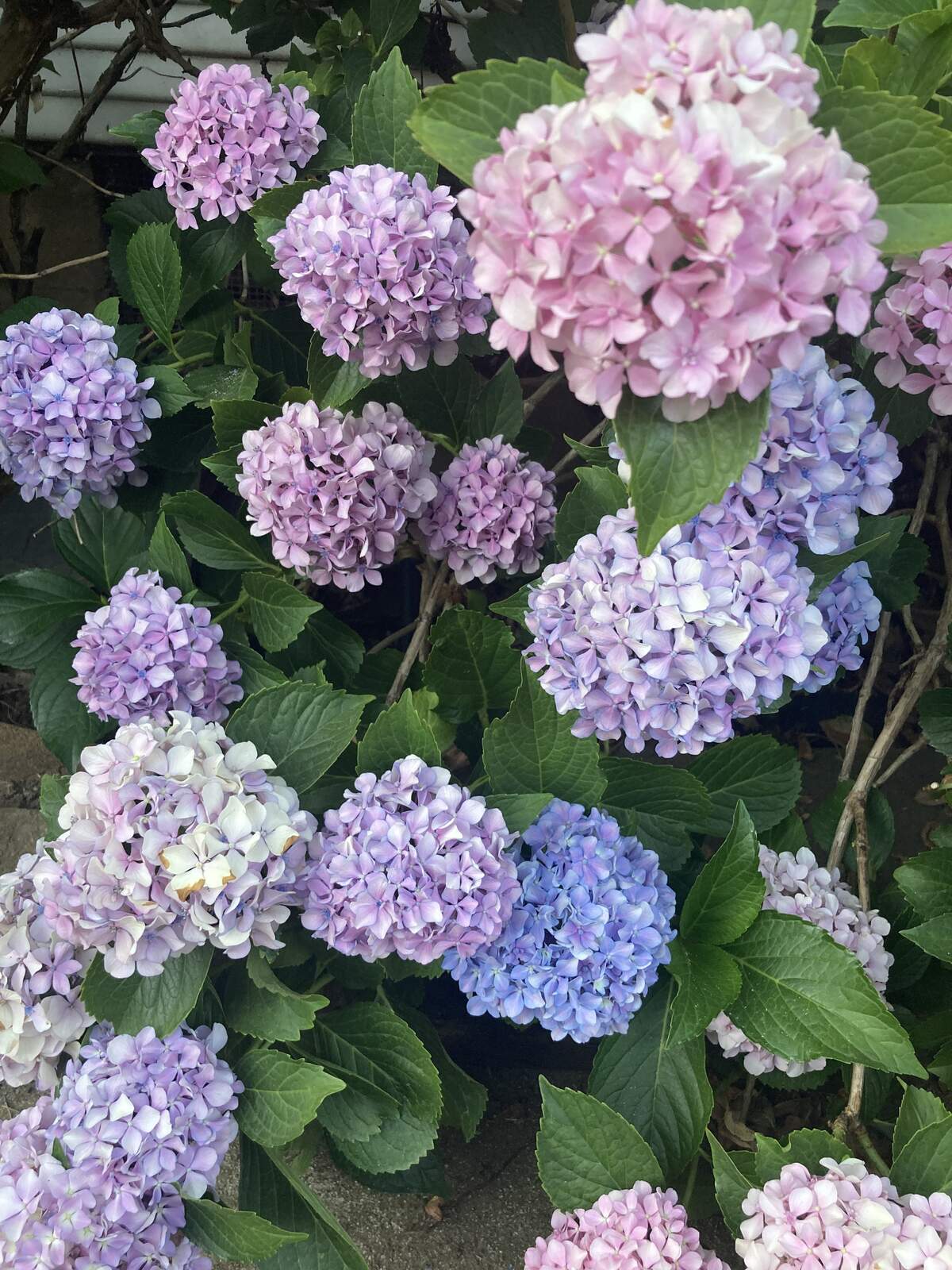
In responsive varieties, blue colour depends on aluminium reaching the flowers. Acidic soil generally makes aluminium easier for roots to absorb; as pH rises, pink becomes more likely. This is not a universal colour switch: some cultivars respond poorly and white forms do not simply turn blue.
Test the soil before changing its chemistry. The quantity of any amendment depends on the starting pH and soil type. Too much aluminium sulfate can injure the plant, and excess lime can lead to yellowing. Follow product instructions rather than an improvised recipe.
Pruning and flowering
Traditional bigleaf hydrangeas flower on stems formed the previous season. Cutting them back hard can remove the next display. Reblooming cultivars can also flower on new growth, so identify the variety before pruning. If shaping is needed, the usual window for traditional varieties is as flowers fade, before the next buds develop. Use the plant’s growth cycle, not a northern-hemisphere calendar date.
No flowers? Consider late frost, excessive pruning, deep shade and too much nitrogen before adding more fertiliser. Feeding should follow actual need and the product label, not an automatic monthly dose. Propagation is possible through softwood cuttings from non-flowering shoots or layering.
Safety and a practical first step
Do not eat the leaves, bark or flowers. NC State identifies ingestion risks and lists the plant as a problem for pets. Keep it out of reach of children and animals that chew plants. When buying, ask for the cultivar name and its mature dimensions: that simple detail makes light, pruning and colour expectations much easier to get right.
References
- Kew: accepted name and native range
- NC State: identification, dimensions and safety
- University of Georgia: growing bigleaf hydrangea
- UMass Amherst: colour and soil amendments
- University of Maryland: watering and flowering problems
- University of Arkansas: flower forms and reblooming cultivars
Cover photo: Francesco Tosoni, Botanical Garden of Pisa, CC BY-SA 4.0. Resized and compressed.